Your New Car Now Costs More Than Some People's Houses
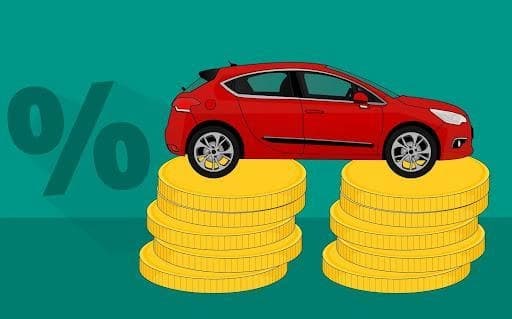
Remember when breaking the $30,000 barrier for average new car prices felt like the apocalypse? Well, buckle up, because September 2025 just gave us a new milestone to cry about: the average transaction price for a new vehicle in America has officially crossed $50,000 for the first time in history.
That's right. Fifty. Thousand. Dollars. According to Kelley Blue Book's latest data, the ATP hit $50,080 in September—a number so absurd that it deserves to be written out in full caps and maybe accompanied by some sort of air horn sound effect.
To put this in perspective, $50,000 is more than the median household income in many U.S. states. It's enough to buy a pretty nice used Porsche 911. It's a down payment on an actual house in some parts of the country. And now it's what you're expected to fork over for the privilege of driving a car with heated seats that you'll have to subscribe to unlock.
So what's driving this madness? Well, according to industry analysts at Cox Automotive, we can thank a perfect storm of factors. First, there's the ongoing shift toward SUVs and trucks, which command higher price tags than sedans. Americans love their big vehicles, and automakers are more than happy to oblige—especially when profit margins on trucks can reach into the stratosphere.
Second, there's the EV surge. Electric vehicles typically cost more than their gas-powered counterparts, and September saw a rush of buyers trying to snag the $7,500 federal tax credit before it expired on September 30. This pushed up the average even further, as shoppers splurged on pricier EVs to maximize their savings. Ironic, really—trying to save money by spending more.
Third, automakers have gotten really, really good at loading vehicles with features that used to be optional but are now standard—or worse, bundled into mandatory packages. Want blind-spot monitoring? Great, but you'll need to take the Premium Tech Package that also includes a panoramic sunroof, ventilated seats, and a sound system you'll never use to its full potential.
The real kicker? Industry experts warn this trend isn't slowing down. With incoming tariffs expected to add another $2,000 to $3,000 per vehicle, we could be looking at an average ATP pushing $53,000 by mid-2026. At this rate, we'll all be driving 10-year-old Civics until the wheels fall off—and honestly, those old Hondas will probably outlast whatever subscription on wheels Detroit dreams up next.
The gap between new and used car prices is widening too, which means dealers are pushing buyers toward pre-owned inventory where margins are thinner but at least you won't need to take out a second mortgage. Expect to see more creative financing offers, longer loan terms (hello, 84-month payments!), and salespeople working overtime to convince you that yes, you really do need that $1,200 paint protection package.
Here's the uncomfortable truth: the automotive industry has priced itself into a corner. With the average American household struggling to keep up with inflation, spending the equivalent of a year's salary on a depreciating asset feels less like transportation and more like financial self-sabotage.
But hey, at least that new car smell is free. For now.