Your Car Will Soon Park Itself While You're Shopping
While everyone is obsessed with fully autonomous cars driving themselves across the country, a much more practical application of self-driving technology is quietly taking over parking lots at airports and shopping malls. Autonomous valet parking systems are expanding rapidly, and they might be the first mass-market implementation of autonomous vehicle technology that actually makes sense for regular people. You drop your car at the entrance, walk away, and it parks itself. When you're done, you summon it via an app and it drives back. It's convenient, it saves space, and it doesn't require solving the impossible problem of Level 5 autonomy in all conditions.
The technology works in three main configurations. There's AVP with Autonomous Driving System, where the vehicle itself has all the sensors and computing power. There's AVP with Intelligent Infrastructure Systems, where the parking lot is equipped with sensors and cameras that guide the vehicle. And there's AVP with Cooperative Vehicle Infrastructure Systems, where the vehicle and infrastructure work together. Each approach has tradeoffs, but they all accomplish the same goal: your car parks itself without you.
Major players are making significant investments. Stanley Robotics has been operating autonomous valet systems at Lyon Airport and Charles de Gaulle Airport in Paris since 2015, and they've conducted trials at Gatwick Airport in London. These aren't small pilot programs anymore. We're talking about real commercial deployments handling thousands of vehicles. Bosch, Volkswagen, Ford, Audi, and Waymo are all developing their own systems. This technology is past the research phase.
The market numbers are staggering. The global automated valet parking system market was valued at $1.88 billion in 2024 and is expected to reach $3.35 billion by 2030, growing at over 10 percent annually. The AI-powered segment is growing even faster, with projections showing growth from $1.2 billion in 2024 to $7.8 billion by 2033 at a compound annual growth rate of 22.4 percent. This isn't some distant future technology. This is happening now.
Airports are the perfect use case. You arrive at the terminal, drop your car at a designated area, and it drives itself to long-term parking. No circling for spots, no riding shuttle buses from remote lots, no stressing about making your flight because parking is a nightmare. When you return, you request your car through an app, and it's waiting at the pickup area. The time savings and stress reduction are significant, especially for business travelers.
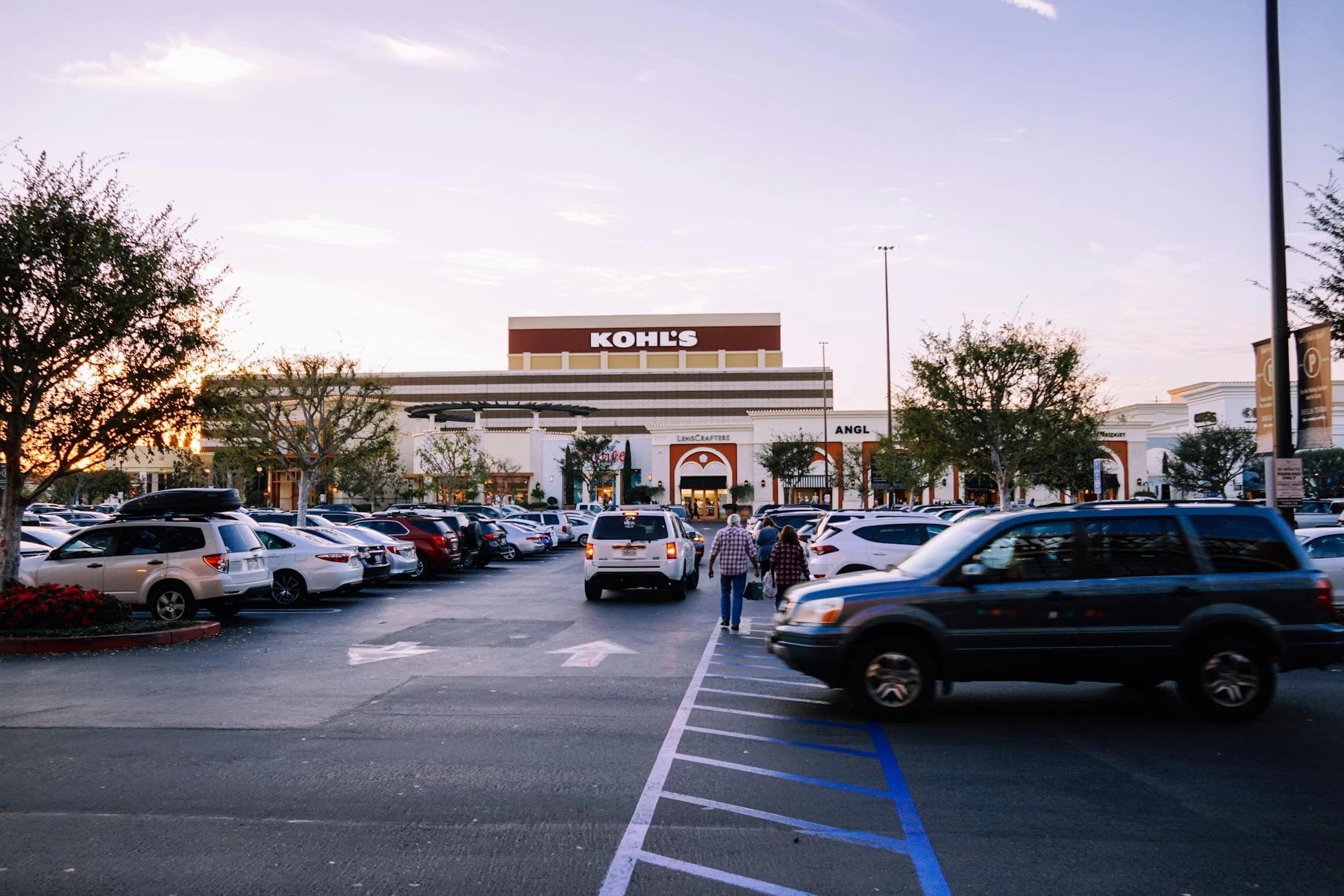
Shopping malls are another ideal application. Holiday shopping parking lot rage is real. People circle endlessly looking for spots, get into disputes over spaces, and waste time. Autonomous valet parking eliminates all of that. You drop your car at the entrance, shop for however long you want, and summon it when you're ready. The car might park in a distant area you'd never walk to, but you don't care because you're not walking there.
The space efficiency benefits are huge. Human drivers need wide lanes and space to open doors. Automated systems can pack cars much tighter because nobody needs to get in or out while parked. Stanley Robotics claims their systems can fit 50 percent more cars in the same parking space. For high-value real estate near airports and urban centers, that's a massive advantage.
The technology is also improving accessibility. People with mobility challenges who struggle with parking can simply drop their vehicle and walk straight into the building. Parents with small children don't have to wrangle car seats and strollers through crowded parking lots. Elderly drivers who have difficulty parking in tight spaces can avoid that stress entirely. These quality-of-life improvements matter.
Japan and Germany co-developed an international standard for automated valet parking that was officially issued in 2023. The standard provides operational procedures from reserving a parking space to picking up the vehicle, and it outlines three types of interface specifications to accommodate different global systems. This kind of standardization is critical for widespread adoption.
The business model makes sense for parking operators too. They can charge a premium for valet service while reducing labor costs since robots don't need salaries or benefits. The system operates 24/7 without breaks or shift changes. It's more reliable than human valets who might damage vehicles or lose keys. And customers are willing to pay extra for the convenience.
Asia Pacific is seeing the fastest adoption, particularly in Japan, South Korea, and China where urban density and high real estate costs make space efficiency critical. European airports are early adopters. The United States is catching up but lagging behind in deployment.
What makes autonomous valet parking so promising is that it solves a real problem people actually have. Parking is annoying. Finding a spot is stressful. Walking long distances from remote lots is inconvenient. Autonomous valet parking eliminates these pain points without requiring massive infrastructure changes or solving impossible technical challenges. It's autonomous driving in a controlled environment with low speeds and high predictability. That's achievable with current technology.
Is autonomous valet parking going to change the world? Probably not. But it doesn't need to. It just needs to make parking less of a hassle, and it absolutely does that. As the technology expands to more airports, malls, office buildings, and residential complexes, more people will experience the convenience firsthand. Sometimes the quiet innovations are the ones that matter most.