What's the better buy in 2026: EV or Hybrid?
Welcome to 2026, a year where the automotive landscape looks a bit like a morning-after party. The confetti of federal tax credits has been swept away, the music of $7,500 handouts has stopped, and we are all standing around the kitchen island wondering who is going to pay for the Uber home. If you were planning to save the planet and your bank account simultaneously by plugging into the grid, the math has recently become significantly more aggressive.
For years, the electric vehicle pitch was simple. Sure, the car costs as much as a small vacation home in the Midwest, but the government will give you a fat check and you will never pay for gas again. Fast forward to today, and that federal incentive has largely vanished into the legislative ether as of late 2025. Meanwhile, the hybrid is sitting in the corner, sipping a sensible 52 miles per gallon and looking like the only adult in the room.
To figure out which powertrain actually keeps your head above water over a five-year horizon, we have to look past the shiny touchscreens and into the cold, hard reality of depreciation, insurance premiums, and the hidden tax known as buying new tires every eighteen months.
The Ghost of Incentives Past
The biggest shift in the 2026 market is the absolute cratering of federal support. For those who missed the memo, the broad $7,500 tax credit for new EVs and the $4,000 credit for used ones effectively expired for vehicles acquired after September 30, 2025. Unless you are a business owner with a very creative accountant or you live in a handful of states with lingering local rebates, you are now paying the sticker price like everyone else.
This creates an immediate $7,500 handicap for the EV. In 2024, that credit acted as a bridge that leveled the playing field between a gas-powered crossover and its silent, battery-heavy sibling. In 2026, that bridge has collapsed. You are now starting your five-year journey in a financial hole that would make a Silicon Valley startup blush.
The Energy Equation: Home vs. The Wild
Let us talk about fuel. In 2026, the national average for a gallon of regular gas is hovering around $3.25. If you drive a modern hybrid like a Prius or a Civic Hybrid, you are likely seeing 50 miles per gallon. That works out to roughly 6.5 cents per mile.
On the electric side, residential electricity rates have climbed to an all-time high of about 17 cents per kilowatt-hour, largely thanks to the insatiable power hunger of AI data centers. If your EV gets about 3 miles per kilowatt-hour, you are spending roughly 5.7 cents per mile.
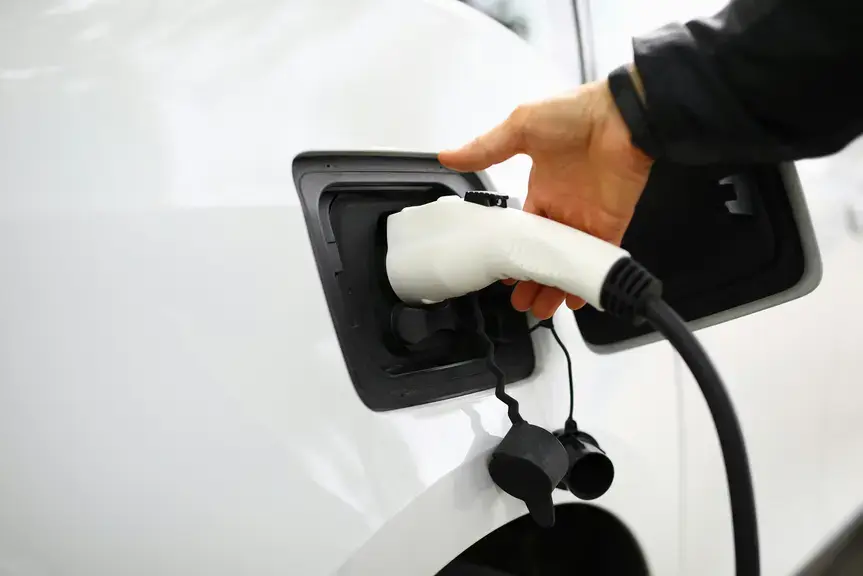
Wait, you might say, that is still a win for the EV. And you would be right, provided you only ever charge at home. The moment you pull into a public DC fast charger, the math does a backflip. Public charging rates in 2026 often sit between 40 and 50 cents per kilowatt-hour. At those prices, your EV cost per mile jumps to nearly 15 cents. In short, if you do not have a driveway and a Level 2 charger, you are paying double the fuel cost of a hybrid driver just for the privilege of sitting in a Walmart parking lot for forty minutes.
The Maintenance Myth and the Tire Tax
The common wisdom is that EVs are maintenance-free because they do not have oil, spark plugs, or the dignity-shredding anxiety of a timing belt. This is mostly true. On average, EV owners spend about 40 percent less on scheduled maintenance over five years. You will save roughly $2,500 in oil changes and fluid flushes compared to a hybrid.
However, the EV has a secret appetite for rubber. Because these cars weigh as much as a Victorian lead factory and deliver instant torque, they eat through tires at an alarming rate. Most EV owners are finding themselves at the tire shop 30 percent sooner than gas-car drivers. Furthermore, specialized EV tires are often 20 percent more expensive than standard sets. By the time you have replaced two sets of Michelin Pilot Sports, that $2,500 you saved on oil changes has effectively evaporated.

The Insurance Squeeze
Here is the part of the spreadsheet where people usually start drinking. In 2026, insuring an EV remains significantly more expensive than insuring a hybrid. On average, you can expect to pay 15 to 25 percent more in premiums.
Why? Because EVs are surprisingly easy to total. A minor fender bender that might cost $3,000 to fix on a Toyota Camry can result in a $20,000 battery replacement bill on an EV if the structural integrity of the pack is even slightly questioned. Insurance companies are not in the business of losing money, so they pass that risk directly to your monthly bill. Over five years, this premium gap can easily add $3,000 to $5,000 to your total cost of ownership.
The Depreciation Cliff
If you want to see a grown man cry, ask a 2023 Tesla Model 3 owner about their trade-in value. In 2026, the used EV market is a bit of a bloodbath. While traditional hybrids are holding onto about 50 to 55 percent of their value after five years, EVs are trending closer to 40 percent.
The reasons are twofold. First, the technology is moving so fast that a five-year-old EV feels like a five-year-old smartphone. It is functional, but the new ones are so much better that nobody wants the old one. Second, there is a persistent, lingering fear among used-car buyers regarding battery health. Even if the battery is fine, the perception of risk drives prices down. When you are selling a $50,000 car five years later, a 10 percent difference in retained value is a $5,000 loss you cannot ignore.

The 5-Year Calculator Guide
Let us put it all together. We will compare a typical 2026 Compact Hybrid (MSRP $32,000) against a 2026 Compact EV (MSRP $42,000). We will assume 12,000 miles driven per year.
The verdict is stark. In 2026, even with the cheapest home charging available, the EV will cost you roughly $11,000 more over five years than a comparable hybrid. If you are forced to rely on public charging, that gap widens to nearly $16,000.
To break even on an EV in 2026, you would need to drive nearly 30,000 miles per year, stay away from fast chargers entirely, and find an insurance company that has not checked its actuarial tables since the Obama administration.
The Enthusiast Verdict
Does this mean the EV is dead? Hardly. If you want the instant torque, the silent cabin, and the ability to pre-condition your climate control in a closed garage without accidentally carbon-monoxiding your family, the EV is still a fantastic piece of technology. It is a premium experience, and in 2026, we are finally seeing it priced like one.
However, the era of the EV as a frugal, money-saving hack for the average suburbanite is over for now. The hybrid has reclaimed the throne of rational transportation. It offers the safety net of gasoline, the efficiency of electric assist, and a resale value that does not look like a ski slope.
If you are looking to save money over the next five years, the math is telling you to put down the charging cable and pick up the pump. It might not be as futuristic, but your bank account will actually have enough left in it to buy a coffee in 2031.