Waymo Under Investigation Over Sudden Highway Phantom Braking
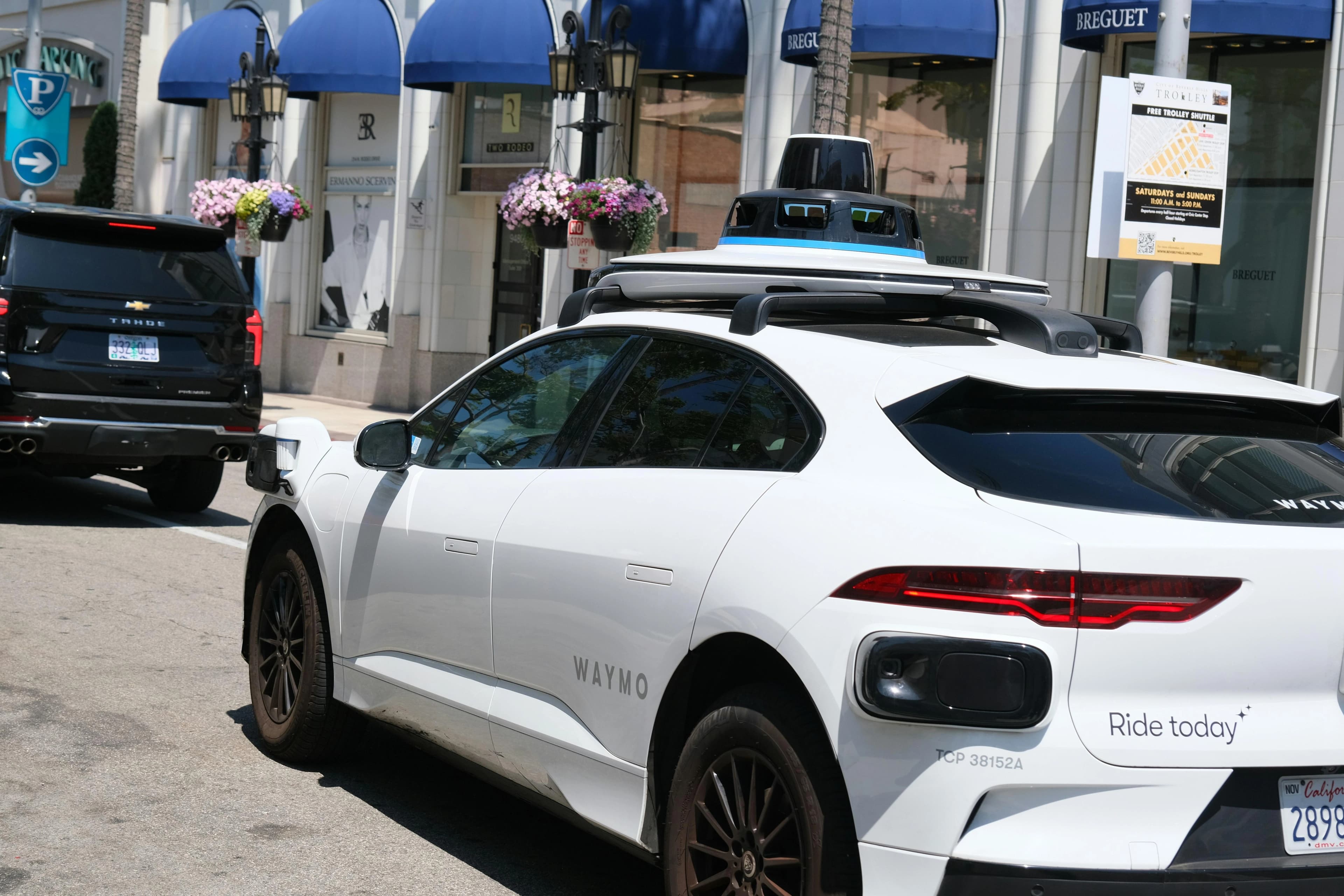
Remember when autonomous vehicles were supposed to eliminate human error, banish traffic jams, and usher in a utopian era of accident-free commuting? For years, tech executives and Silicon Valley visionaries promised that hyper-intelligent software stacks would easily outperform flawed human drivers. No more distracted texting, no more aggressive tailgating, and no more questionable split-second decisions at yellow lights. But while robotaxis have certainly mastered routine urban gridlock and predictable suburban loops, real-world driving has a funny way of throwing chaotic curveballs that confuse even the most sophisticated neural networks. Case in point: federal safety regulators have officially expanded their investigation into Waymo over a troubling series of unprovoked phantom braking incidents that leave driverless vehicles abruptly dropping anchor in high-speed traffic.
The National Highway Traffic Safety Administration opened an engineering analysis following at least 38 documented reports of Waymo’s autonomous Jaguar I-PACE fleet slamming on their brakes without any visible obstacle in sight. According to federal filings and consumer complaints, these abrupt stops frequently happen while the vehicles navigate high-speed highway entrance ramps, complex interchange merge lanes, and heavily congested urban arteries. To make matters even more nerve-wracking for nearby motorists, a significant cluster of these mysterious braking episodes coincided with adverse weather like heavy rain, dense fog, or blinding road spray. Imagine cruising down an on-ramp behind a driverless crossover on a rainy afternoon, only for the vehicle in front of you to stomp its brakes to a dead stop for an imaginary brick wall. It is the ultimate test of human reaction time, and not every trailing driver manages to pass it.
At the heart of the issue is the complex interaction between Waymo's multi-sensor hardware suite and its underlying perception algorithms. Modern robotaxis rely on a dense array of spinning lidar domes, high-resolution cameras, and radar sensors to build a three-dimensional map of the surrounding environment in real time. When conditions are clear and dry, these sensors feed crisp spatial data into the onboard supercomputers, allowing the safety controller to track pedestrians, cyclists, and nearby traffic with impressive precision. However, when heavy rain or atmospheric moisture enters the equation, water droplets and airborne spray can scatter laser beams and distort optical camera feeds. For a human driver, a sudden downpour simply means flicking on the windshield wipers, increasing follow distance, and adjusting speed. But for an automated perception stack tuned to hyper-cautious safety thresholds, atmospheric clutter can sometimes be misidentified as a solid physical hazard directly in the vehicle's path.
When the software perceives a potential collision threat, its hardcoded safety priorities take over instantly. The system is programmed to err on the side of extreme caution, choosing to stop immediately rather than risk hitting an unidentified object. While that fail-safe logic makes sense in theory, dropping to a complete standstill in an active merge lane creates a massive new hazard for everyone else sharing the road. Trailing human drivers, who naturally expect traffic on an entrance ramp to accelerate up to highway speeds, are suddenly forced to perform emergency evasive maneuvers. Federal investigators are now carefully scrutinizing whether Waymo’s current software calibration creates an unacceptable risk of rear-end collisions, particularly in regions where sudden weather changes are a daily reality.
For Waymo, which has logged tens of millions of commercial rider miles across major metropolitan areas including Phoenix, San Francisco, Los Angeles, and Atlanta, this heightened regulatory scrutiny comes at a critical juncture. The company has consistently maintained that its autonomous driving system is statistically far safer than human drivers, pointing to data showing significant reductions in police-reported crashes and injury-causing impacts compared to human-driven vehicles. Furthermore, Waymo engineers are continually updating their perception algorithms via over-the-air software patches designed to filter out ambient environmental noise and refine radar sensor fusion logic. Yet despite those steady technical improvements, phantom braking remains one of the most stubborn and frustrating edge cases in the entire autonomous vehicle industry.
As federal regulators digest telemetry logs and sensor recordings from the reported incidents, the safety agency could ultimately request specific software modifications, sensor hardware adjustments, or operational restrictions that limit driverless commercial deployments during severe weather. For the broader automotive industry, the investigation serves as a sobering reminder that closing the final gap between human-level spatial reasoning and artificial intelligence requires solving thousands of rare, chaotic edge cases. In the meantime, human drivers sharing the road with driverless fleets would be wise to maintain a generous follow distance, keep a sharp eye on brake lights, and stay alert whenever rain clouds begin to gather overhead.