VW Recalls 44,000 ID.4s Because The Batteries Might Be A Little Too Spicy
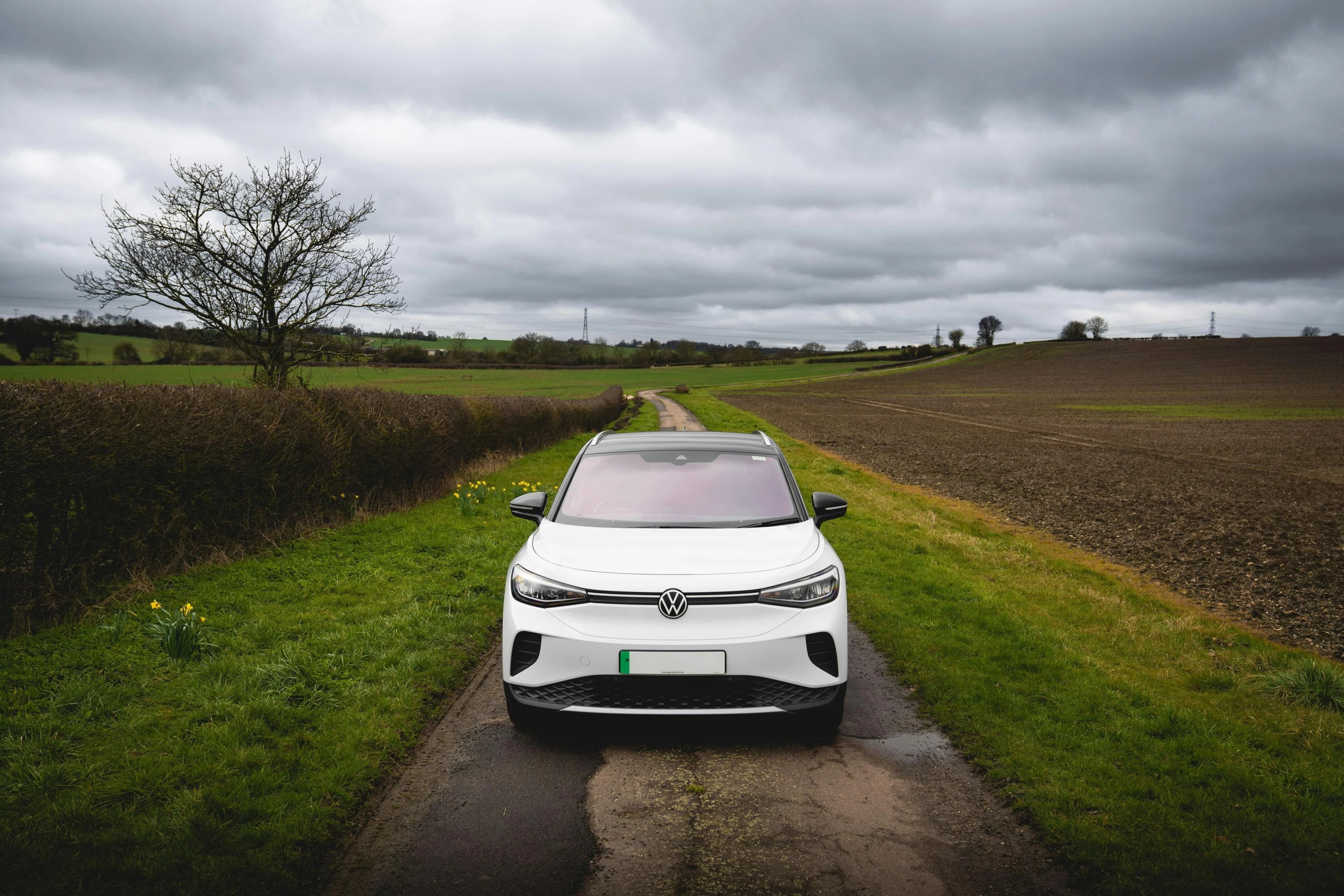
If you own a Volkswagen ID.4, specifically one built between late 2022 and early 2025, you might want to clear some space in the driveway—specifically, the part of the driveway that isn't near your house, your garage, your neighbor's fence, or anything else you’d prefer to keep un-charred. Volkswagen has issued a massive safety recall for nearly 44,000 ID.4 crossovers today, citing a critical battery defect that could lead to a fire. And yes, the dreaded "Park Outside" advisory is in full effect, which is exactly what every EV owner wants to hear in the dead of winter.
The National Highway Traffic Safety Administration (NHTSA) dropped the notice this morning, and the details are about as comforting as a Check Engine light flashing at you on a lonely desert highway. The issue stems from the high-voltage battery modules, specifically those manufactured by supplier SK Battery America at their Georgia facility. According to the defect report filed by Volkswagen, the battery cells may contain misaligned electrodes—a “production deviation” that sounds suspiciously like a polite engineering euphemism for “we didn't stack the pancakes straight.”
Here is the technical nightmare scenario: If those internal electrodes shift or touch due to the misalignment, they can cause a short circuit within the cell. That short circuit generates heat. If the heat cannot dissipate fast enough, it leads to thermal propagation. In non-engineer speak? The battery gets too hot, the chemicals get angry, and the car catches fire. This isn't a theoretical risk cooked up by a simulation, either. Volkswagen is aware of actual thermal events in the field, which is why they aren't taking chances with this one.
The recall specifically affects 43,881 vehicles produced between September 2022 and April 2025. If you are driving one of these Chattanooga-built EVs, you are effectively driving a very comfortable, very quiet incendiary device until you get the fix. This is a massive headache for Volkswagen at a time when they really didn't need one. The ID.4 is their volume seller—the friendly, approachable face of their electric revolution in the States. It was supposed to be the "Golf of EVs," the car that normalized electric driving for the masses. Instead, having to tell 44,000 customers that their family hauler is currently a fire risk is not exactly the "Das Auto" marketing vibe they were going for in 2026.
It also highlights the incredible fragility of the modern EV supply chain. We are seeing how a single manufacturing error at a sub-supplier plant—one specific line at a factory in Commerce, Georgia—can ripple out to tens of thousands of driveways across the country. It brings back bad memories of the Chevy Bolt and Hyundai Kona recalls of the early 2020s, reminding us that while battery tech has improved, the chemistry is still volatile if you don't treat it with white-glove perfection.
So, what is the fix? It’s a mix of software wizardry and heavy lifting. Dealers will first install advanced diagnostic software designed to monitor the battery for the tell-tale electrical signatures of electrode failure. If the software gives the battery a clean bill of health, you’re good to go (though the software will keep watching). However, if the software detects the specific anomaly associated with the defect, the dealer will have to replace the affected battery modules entirely for free.
Until that happens, VW advises owners to limit their charging to 80% capacity to reduce stress on the cells and, again, please do not park the car inside your garage while it’s charging overnight. This creates a logistical nightmare for owners who rely on home charging setups inside tight garages, or for those who live in condo complexes where "parking outside" isn't really an option.
If you own an ID.4, check your VIN immediately on the NHTSA website. And maybe invest in a really long extension cord, because you’re going to be parking in the yard for a while. The service bays at VW dealers are about to get very, very crowded, and the loaner car fleet is about to be stretched thin. Good luck out there.