Toyota's Hilux Goes Electric (And Hydrogen) But America Still Can't Have One
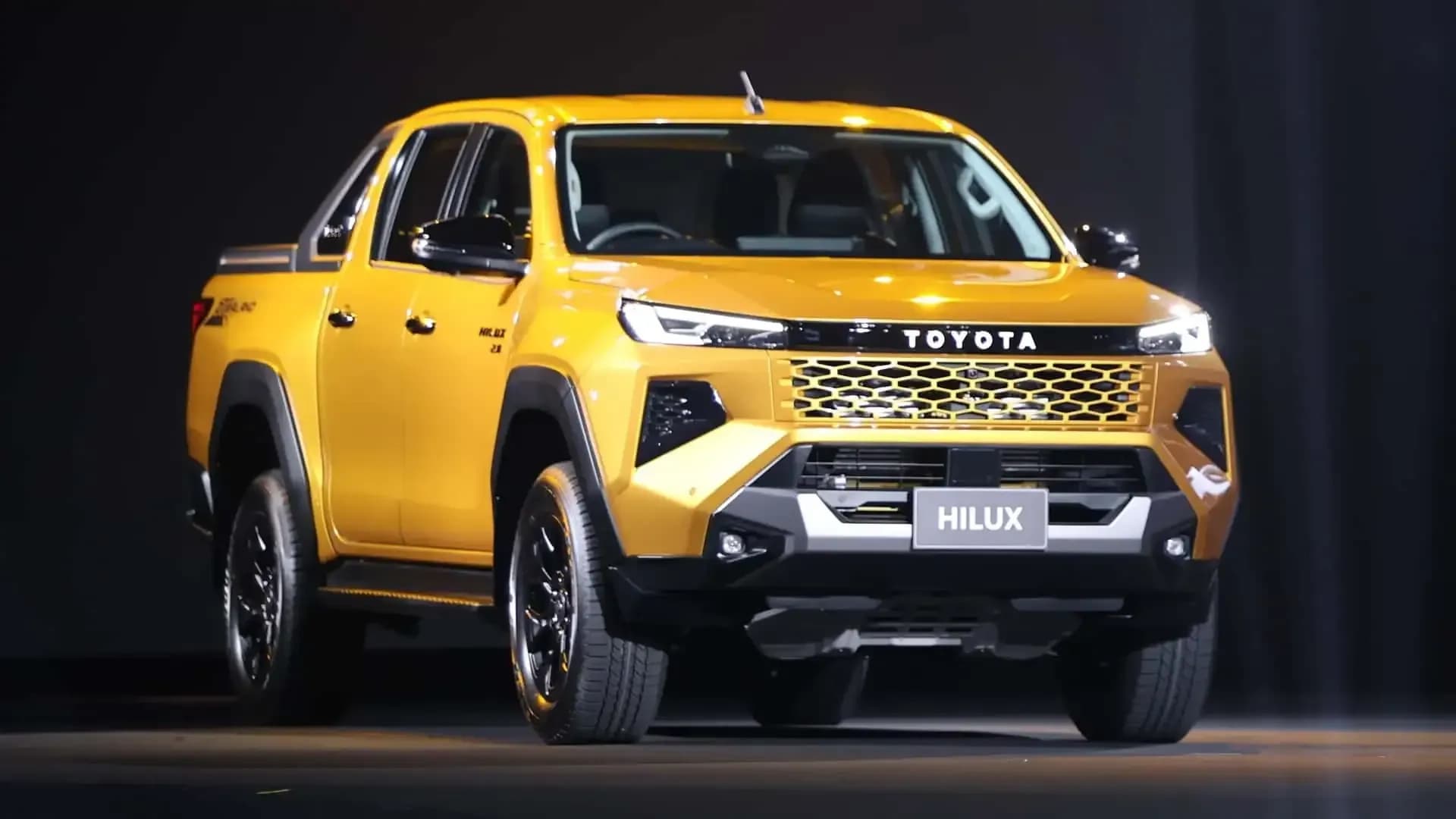
Image courtesy of Toyota
The Toyota Hilux is legendary. Top Gear couldn't kill one despite drowning it in the ocean, dropping it from a crane, and setting it on fire. It's been the backbone of industries, militaries, and revolutions across 133 countries. It's so reliable that it's practically a meme. And now, after 57 years of diesel-powered immortality, Toyota's dragging it—kicking and screaming, probably—into the electric age.
At a world premiere in Bangkok on November 10th, Toyota unveiled the ninth-generation Hilux with something nobody expected: a battery-electric variant. That's right, the truck that's survived wars, apocalypses, and Jeremy Clarkson is now available with exactly zero cylinders and a whole lot of electrons. Toyota's calling it their "multipath approach" to carbon neutrality, which is corporate speak for "we're hedging our bets because we have no idea what's going to work."
The electric Hilux comes with dual motors—one per axle—producing a combined 193 horsepower and respectable torque figures. The 59.2 kWh battery pack is good for about 150 miles on the WLTP cycle, which translates to maybe 126 miles on the EPA's more realistic testing. That's...not great. Put a payload in the bed or hook up a trailer, and you're looking at range that makes range anxiety look like a rational response rather than paranoia.
To be fair, Toyota seems to know this isn't a cross-country hauler. The battery is optimized for what Toyota calls "best-in-class" charging speeds (though they conveniently didn't specify what those speeds actually are) and supports up to 150 kW DC fast charging. For job sites, farms, and urban commercial use where trucks return to base daily, it could work fine. For actual truck stuff like towing your boat six hours to the lake, you'll want the diesel.
Speaking of diesel, Toyota isn't abandoning combustion engines. The ninth-gen Hilux will be available with 2.8-liter turbodiesel options (with and without mild-hybrid tech), plus a 2.7-liter gasoline variant in certain markets. Maximum payload on the diesel hits 2,205 pounds with towing capacity at 7,716 pounds—making it far more capable than the EV version for traditional truck tasks.
But wait, there's more! Toyota's also promising a hydrogen fuel cell electric version (FCEV) coming in 2028 for Europe and Oceania. Yes, hydrogen—the alternative fuel that's been "the future" for approximately 30 years but never quite arrives. Toyota remains one of the few automakers still betting big on hydrogen, collaborating with BMW to launch the German automaker's first production fuel cell vehicle the same year. Whether this is visionary or stubborn is still up for debate.
Design-wise, the new Hilux adopts what Toyota calls a "Cyber Sumo" theme, which sounds like something a marketing intern came up with after watching too much anime. The front end gets aggressive new styling with slim LED headlights connected by a central bar carrying the TOYOTA name in classic lettering. It's definitely more modern than the outgoing model, though whether it's better looking is subjective.
Inside, there's a massive upgrade in quality and tech. Dual 12.3-inch screens handle the digital instrument cluster and infotainment, there's a wireless device charger, and the MyToyota app lets fleet managers monitor up to 10 vehicles. The EV model gets a single-action shift-by-wire drive selector because, well, there's no transmission to select through.
Now for the bad news: if you live in the United States, you can't have one. Any of them. The Hilux hasn't been officially sold in America since the mid-90s when it was replaced by the Tacoma. Toyota has no plans to bring the new Hilux stateside because it would compete with their own Tacoma, and apparently, internal competition is bad or something. Never mind that Americans might actually want the option of the world's most proven truck platform.
The electric Hilux launches in Asia starting in 2026, with European deliveries beginning in December 2025 for diesel variants. Australia gets the full lineup, including the wild new "Rugged X" off-road variant with serious protection and recovery gear. Meanwhile, America gets to watch from the sidelines like always, wondering why we can't have nice things.
Toyota's multipath strategy makes sense from a global perspective—different regions have different infrastructure, different needs, and different regulations. Offering diesel, gasoline, hybrid, electric, and eventually hydrogen means something for everyone. But that 150-mile EV range feels more like checking a box than building a genuinely competitive electric truck. Then again, if anyone can make limited range work through sheer reliability and reputation, it's Toyota. The Hilux has survived worse than skeptical automotive journalists.