Toyota Finally Brings the Cheap EV We Wanted: 2026 C-HR Confirmed for US
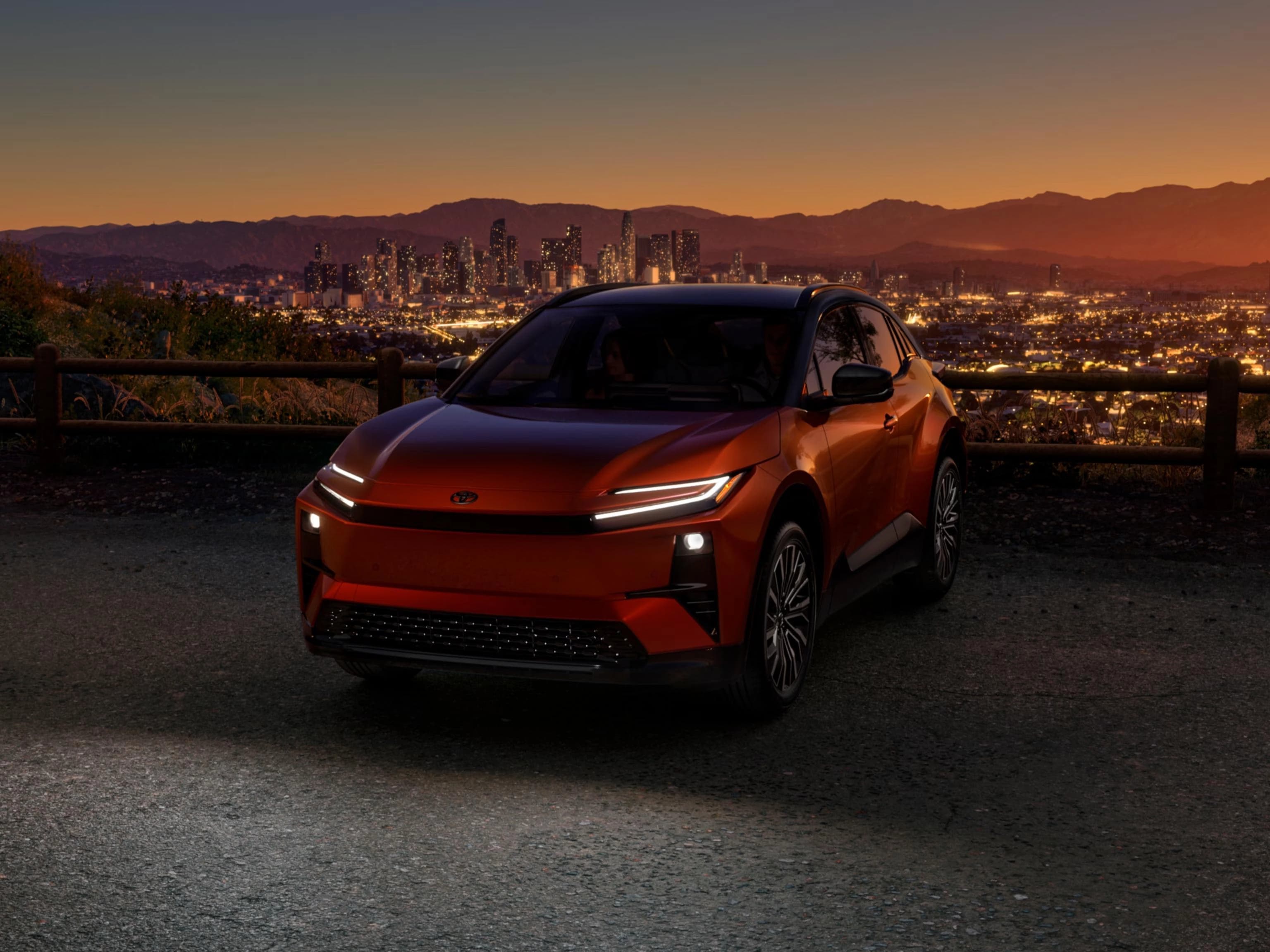
Image courtesy of Toyota
It took them long enough, didn't it? After years of watching Hyundai and Kia run circles around the affordable EV segment while Toyota executives muttered quietly about "multi-pathway strategies," hydrogen dreams, and hybrids being the "real" solution, the giant has finally woken up. And it appears that when Toyota finally decides to show up to the party, they bring the good tequila.
Breaking this morning, Toyota confirmed that the C-HR is returning to American shores for the 2026 model year. But this isn't the C-HR you remember—that funky, underpowered crossover that looked like a Pokémon and drove like a sewing machine. The new 2026 C-HR has ditched the anemic gas engine entirely for a battery pack, and it is coming for your wallet with a vengeance. The headline isn't the range (a respectable, if not earth-shattering, targeted 260 miles) or the styling (which now looks like a furious robot beetle, in a good way). The headline is the price: Toyota is targeting a starting MSRP of under $35,000.
Let’s pause and appreciate how rare that number is in 2026. For the last five years, the automotive industry has seemingly conspired to convince us that an "Electric Vehicle" is synonymous with "Luxury Barge." We have seen an endless parade of $60,000 electric trucks, $80,000 SUVs, and sedans that cost more than a starter home in the Midwest. The average transaction price of a new car has been hovering in the stratosphere, leaving normal buyers clinging to their decade-old Civics.
Toyota, typically late to the party but impeccably dressed when they arrive, seems to have realized that what the market actually wants isn’t another six-figure humidor on wheels that can crab-walk. We want a Corolla-grade appliance that runs on electrons, has Apple CarPlay, and doesn’t require a mortgage refinance to acquire. This is a direct shot across the bow of the Volvo EX30 and the base-model Chevy Equinox EV, both of which have struggled to stay "cheap" once dealer markups and options packages get involved.
Crucially, the 2026 C-HR will ship with a native NACS (Tesla) port right out of the factory. No adapters, no dongles, no praying to the gods of Electrify America that the handshake works. You just plug it into a Supercharger and go. This effectively eliminates the two biggest hurdles for new buyers: "I can't afford it" and "I can't charge it." By adopting the NACS standard natively, Toyota is admitting what we all knew: the Supercharger network is the only one that matters for mass adoption.
However, we need to talk about the "Toyota Tax." The MSRP is one thing, but actually getting a hot new Toyota for sticker price is another. We all remember the RAV4 Prime fiasco, where dealers were slapping $10,000 "market adjustments" on them because they were rare unicorns. If Toyota can’t build enough of these C-HRs to satisfy demand, that sub-$35k price tag will be nothing more than a marketing myth.
This is where being a smart shopper matters. If you are looking to verify if a "cheap" EV is actually a good deal—or if you're cross-shopping this against a used Model Y or a barely-driven Ioniq 5—it’s worth running a report through Price360. While we can't inspect a brand-new car on a dealer lot, checking the history of comparable used EVs can show you just how much depreciation is hitting the segment. It helps you decide if buying a new C-HR is actually the smarter financial move, or if picking up a depreciated rival for $25k is the real hack.
Technically, we expect the C-HR to utilize Lithium Iron Phosphate (LFP) battery chemistry to hit that price point. That means it might be a bit heavier and a bit slower to charge in freezing temps than its nickel-based cousins, but LFP batteries are durable, cheaper, and can be charged to 100% daily without degradation anxiety. That is a trade-off most commuters will happily take.
Toyota’s strategy here is dangerous for the competition. They possess the unique brand loyalty to convince your Aunt Susan to finally trade in her 2014 RAV4 for an EV, simply because it has a Toyota badge and "feels safe." If they can actually deliver these in volume without the dealer markup shenanigans, the 2026 C-HR might just be the Model T of the modern electric era—functional, attainable, and everywhere.