Toyota bZ Finds Its Groove: The EV Tortoise Finally Passes the Hare
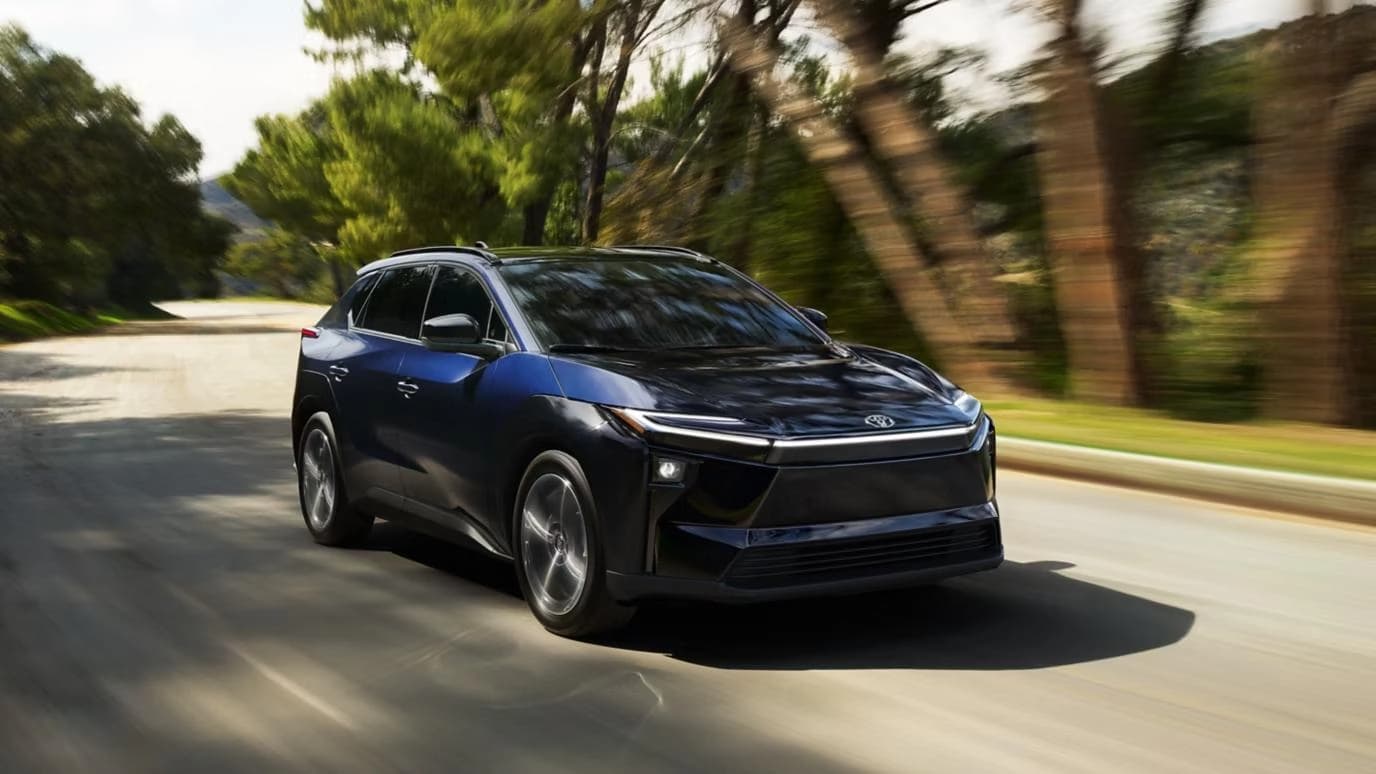
Image courtesy of Toyota
There was a time, not so long ago, when mentioning the Toyota bZ4X in a room full of car enthusiasts was a great way to start a debate about whether Toyota had actually forgotten how to build cars. Between wheels that wanted to go on their own adventures—the dreaded torque bolt recall—and range figures that seemed to vanish the moment the temperature dropped below sixty degrees, Toyota’s first real EV effort was, to put it gently, a bit of a mess. It felt like a compliance car built by a company that would rather be doing literally anything else, like perfecting a hydrogen-powered toaster. But as we look at the fresh sales data from January 2026, the narrative has shifted so hard it might give you whiplash. The 2026 Toyota bZ—having wisely dropped the 4X suffix that sounded like a budget graphics card—is currently sitting as the fourth best-selling electric vehicle in the United States.
The numbers don’t lie, even if they are a bit shocking to those of us who remember the bZ4X's rocky debut. Toyota moved 2,769 units of the bZ in January 2026 alone. To put that in perspective, that figure comfortably clears the Hyundai IONIQ 5, the Ford Mustang Mach-E, and even the three-row Kia EV9. In a world where the Tesla Model Y and Model 3 still reign supreme, Toyota has quietly snuck into the runner-up pack, proving that you should never underestimate the power of a brand that people actually trust to get them to work on a Tuesday morning. It turns out that when Toyota fixes the fundamentals—like adding a native NACS port for Supercharger access and bumping the range to a respectable 314 miles—people are more than happy to trade flashy pixel headlights for a badge they know will still be working in the year 2040.
The redemption arc here is purely mechanical. For the 2026 model year, Toyota swapped out the old hardware for new eAxles equipped with silicon carbide semiconductors and a larger 74.7-kWh battery pack that actually delivers on its promises. They also fixed the charging curve, meaning you no longer need to pack a novel and a sleeping bag while waiting for the car to juice up at a public station. Under ideal conditions, the new bZ can now hit an eighty percent charge in about thirty minutes. More importantly, Toyota is playing the affordability card with a level of aggression we haven't seen in the EV space lately. With a starting price around $34,900 and some localized incentives or customer cash bonuses bringing that closer to $30,000, the bZ is making a very compelling case for the sensible shopper who just wants a car that happens to be electric.
It is a fascinating moment for the industry. While other manufacturers are busy trying to turn their cars into rolling smartphones with subscription-based heated seats and augmented reality dashboards that distract you from the actual road, Toyota doubled down on being a car company. They took a flawed product, listened to the chorus of complaints, and spent two years quietly making it better. For the average buyer, that reliability matters more than a zero-to-sixty time that can liquefy your internal organs—though the new AWD bZ is no slouch, hitting sixty miles per hour in just 4.9 seconds.
The interior has seen a massive glow-up as well. Gone is the cramped, somewhat confusing layout of the first generation. It has been replaced by a much sleeker 14-inch multimedia screen that comes standard across all trims, along with a redesigned center console that actually has space for modern smartphones. Toyota even threw in two wireless charging pads because they finally realized most of us travel in pairs.
This sales surge isn't just a U.S. phenomenon either. In Japan, the bZ was the top-selling domestic EV in the last quarter of 2025, marking the first time Toyota has overtaken Nissan in that segment. In Canada, sales surged over five hundred percent compared to the previous year. It seems the world was simply waiting for Toyota to take the electric transition seriously. By focusing on range, charging infrastructure, and a price point that doesn't require a second mortgage, Toyota has turned its biggest electric failure into a legitimate market leader. The lesson here is simple: never bet against the company that basically invented the hybrid market. They might be late to the party, but they usually bring the best snacks.