Toyota Built a Seven Cylinder Dual Engine Camry Because Normal Is Boring
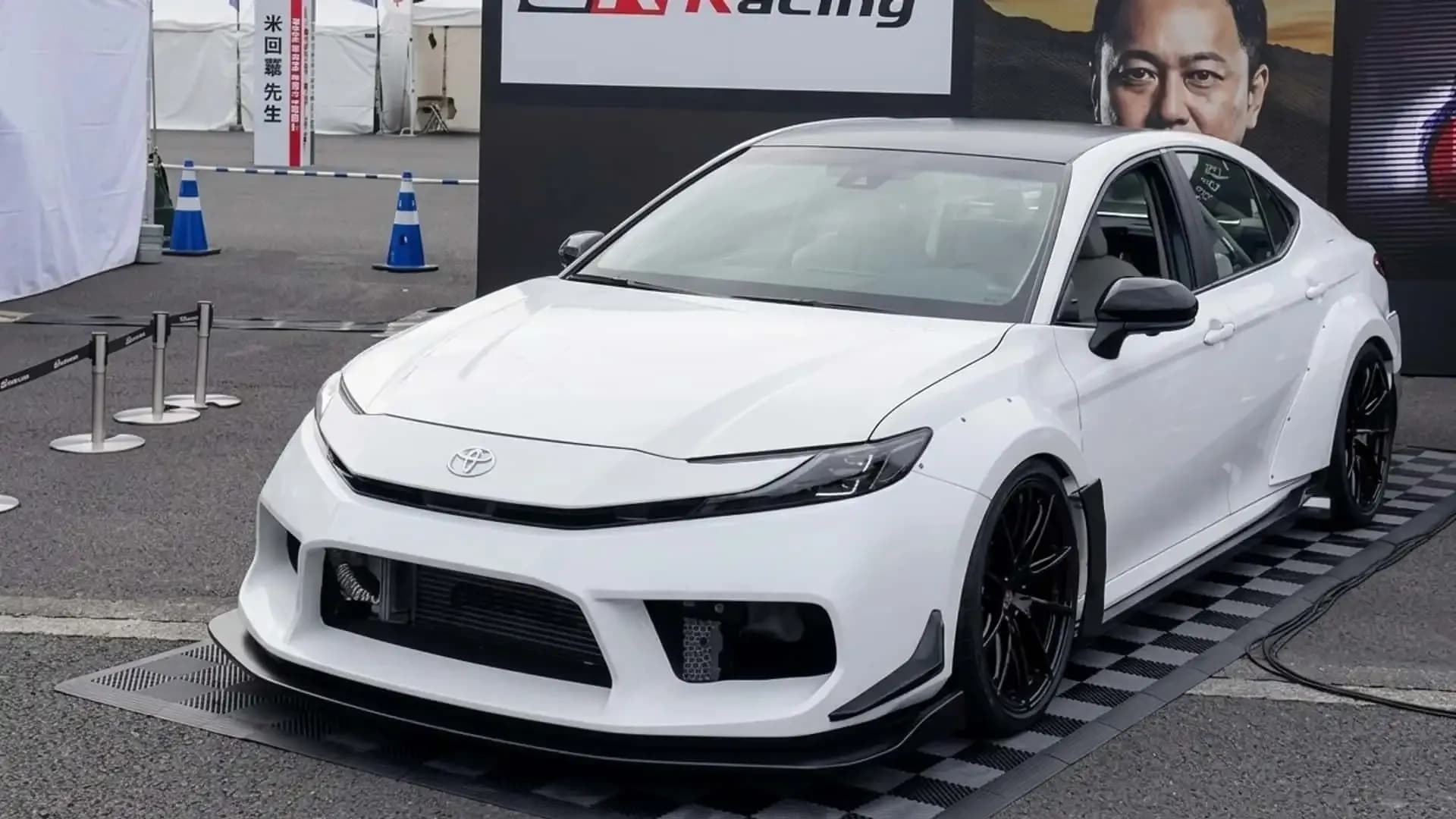
Photo by: Nikolai Aksenov / YouTube
The Toyota Camry has spent the last few decades earning a well-deserved reputation as the ultimate automotive security blanket. It is the sensible, ultra-reliable midsize sedan that you recommend to your cousin who views driving as a chore, or the dependable workhorse that populates airport taxi lines around the globe. It does its job flawlessly without demanding any drama or attention. However, the engineering team over at Gazoo Racing clearly decided that the Camry had spent far too much time being polite, so they threw the corporate rulebook directly into a tire fire.
At the recent Fuji Speedway gathering ahead of the grueling twenty-four hour Super Taikyu race, Toyota stunned the automotive world by pulling the sheet off a one-of-one project car known as the Camry GR. This build was the result of a friendly, internal skunkworks competition designed to celebrate the American-built sedan entering the Japanese market. Instead of just adding a loud exhaust and some racing stripes, the engineers engaged in some pure mechanical madness. They created a car that defies basic engineering arithmetic by sporting a grand total of seven cylinders.
To achieve this bizarre cylinder count, the build team did not spend millions designing a completely custom inline-seven engine from scratch. Instead, they took a wonderfully chaotic approach by installing two completely separate powertrains into a single chassis. Under the hood sits a conventional front-engine setup utilizing a three-cylinder unit, heavily reminiscent of the turbocharged powerplant found in the acclaimed Gazoo Racing hot hatches. Not content with just one source of propulsion, the team did some major automotive surgery to the rear of the vehicle, removing the back seats entirely and mounting a secondary four-cylinder engine directly inside the trunk space.
By combining these two distinct powerplants, this unique Camry effectively operates with an all-wheel-drive layout where the front and rear axles are driven by entirely separate engines. The combined output of this mechanical duet reaches a staggering seven hundred horsepower. The sound echoing across the speedway during its public debut was described as absolute Japanese domestic market aggression, venting spent gases through a custom side-exit exhaust system that completely eliminates any hint of the standard car's quiet commuter personality.
Of course, stuffing an entire second combustion engine into the rear of a midsize family sedan requires massive structural modifications. With the rear passenger area completely deleted, the vacant space was filled with a complex, custom-fabricated roll cage that ties the chassis together to provide the necessary safety and structural rigidity required to handle seven hundred horsepower on a race track. The trunk area is now completely dominated by mechanical plumbing, cooling lines, and the second engine block, rendering the car entirely useless for a typical weekend grocery run but infinitely more capable of tearing up a road course.
The exterior of the vehicle received an equally dramatic transformation to match its insane mechanical configuration. The car features a custom widebody kit that dramatically flares out the wheel arches to accommodate wider, track-ready rubber mounted on aggressive black alloy wheels. The front end is dominated by a deep front splitter and massive functional air ducts designed to feed the cooling systems, while the rear features a towering aerodynamic wing that keeps the trunk-mounted engine pressed firmly against the asphalt at high speeds. The resulting stance is menacing, looking far more like a purpose-built time attack weapon than a sensible four-door commuter.
In a modern automotive landscape heavily focused on strict emissions compliance, corporate efficiency mandates, and predictable hybridization, a project like the seven-cylinder Camry is a beautiful reminder that automotive passion is alive and well. It showcases a corporate culture under chairman Akio Toyoda that actively encourages engineers to step away from their calculators, embrace their inner hot-rodder, and build something purely for the joy of performance. While this widebody monster will obviously never see a production line or grace a local dealership showroom, it serves as a glorious monument to what happens when brilliant automotive minds are simply given the freedom to play.