The Robotaxi That Couldn't Handle a Little Smoke: Zoox Recalls Entire Fleet
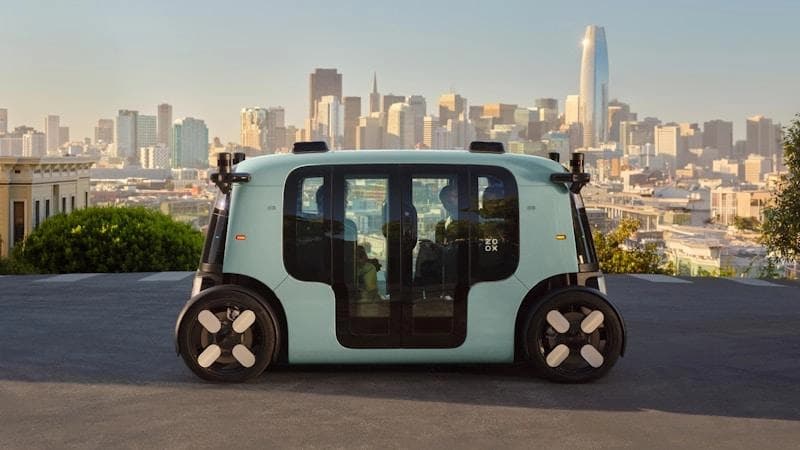
Image courtesy of Zoox
We have been promised the driverless future for a long time. It was supposed to consist of sleek, steering-wheel-free pods effortlessly gliding through our cities, leaving us free to check our emails or take a napping break. Instead, what we often get is a highly sophisticated, multi-million-dollar toaster getting thoroughly flummoxed by a cloud of smoke.
The autonomous vehicle division of Amazon, known as Zoox, has officially issued a voluntary safety recall for its entire fleet of 105 robotaxis. This decision comes after a June 2026 incident where one of their fully autonomous, pedal-free vehicles encountered an active fire scene. To be fair, fire scenes can be stressful for human drivers too. But human drivers generally do not freeze in place, block emergency responders, and require a remote tech support worker to digitally reverse them out of harm.
According to reports, the Zoox robotaxi in question had no passengers on board when it drove directly into a thick cloud of smoke billowing from a nearby fire. Faced with a sudden loss of visibility, the vehicle did what any panicked computer would do: it braked sharply, got incredibly confused, and came to a dead stop. As emergency crews tried to navigate the scene, the robotaxi remained parked like an oversized paperweight, obstinately blocking the path of the firefighters. It took a remote operator taking over the digital reins to put the vehicle into reverse and clear the road.
This is not a great look for a company that wants us to trust its boxy, futuristic lounges on wheels. In response to the smoky standoff, Zoox rolled out a software update on July 15, 2026. This patch is designed to enhance the existing capabilities of detecting and responding to heavy smoke. It is a necessary fix, but it highlights a recurring issue in the autonomous vehicle space: the tendency for real world chaos to easily disrupt lines of complex code.
The federal government was not particularly amused by this incident. On July 8, 2026, National Highway Traffic Safety Administration Administrator Jonathan Morrison sent a public letter warning autonomous vehicle companies about these exact scenarios. Morrison wrote that emergency scenes are not rare or extreme edge cases, and that an inability to detect and appropriately respond to such situations represents a functional insufficiency. Essentially, the regulator argued that if a self-driving machine cannot handle a fire engine with flashing lights and some smoke, it is simply not ready for public roads.
Indeed, this is the fourth software-related safety recall for the Zoox fleet. The brand has faced a series of hiccups over the last couple of years. In March 2025, there was a recall for unexpected hard braking. In May of that same year, there was a collision with a passenger car, closely followed by an incident where a robotaxi clipped an electric scooter. Each of these events required a software patch to teach the digital driver how to navigate everyday road hazards.
To be fair to the engineers at Zoox, they are not the only ones struggling with the realities of urban driving. Competitors like Waymo have had their own fair share of embarrassing encounters. By March 2026, Waymo vehicles had been involved in at least six documented incidents where first responders had to physically move the driverless cars away from active emergency scenes. When a computer gets confused, it tends to default to a safe stop, which unfortunately often means stopping exactly where emergency workers need to go.
Currently, Zoox continues to run free rides for select test groups in Las Vegas and San Francisco, with plans to expand testing to Miami and Austin. These vehicles are incredibly advanced pieces of engineering, built without steering wheels, pedals, or traditional driver controls. At their best, they offer a smooth, futuristic glimpse of urban mobility. But as this latest recall proves, the gap between a controlled simulation and the messy, smoke-filled reality of our streets is still a work in progress. For now, human drivers still hold the crown when it comes to navigating a smoke screen.