The Repo Man Is Coming: Subprime Auto Loans Hit Crisis Levels
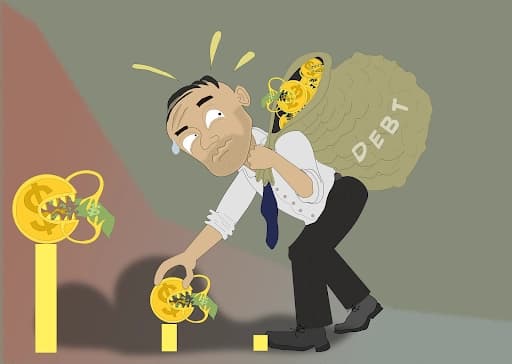
If you thought the subprime mortgage crisis was bad, wait until you hear about what's happening in auto lending right now. According to new data from Cox Automotive, nearly 10% of subprime auto borrowers are either in default or about to have their cars repossessed. That's not a typo—one in ten.
"There's no room for error," Jonathan Smoke, chief economist at Cox Automotive, told CNN this week. And he's not wrong. For millions of Americans with shaky credit, a car isn't just transportation—it's the lifeline to keeping a job, feeding a family, and maintaining some semblance of financial stability. Lose the car, and everything else starts to crumble.
The subprime auto loan market has always been the canary in the coal mine for economic trouble. When people can't make their car payments, it usually means broader financial stress is brewing. And right now, that canary is looking pretty wobbly.
Here's what's particularly alarming: these numbers represent borrowers who already made it through the brutal 2023-2024 period when late payments and repos surged. The current 10% default rate is what's left after the weakest borrowers already lost their vehicles. These are the survivors—and they're still struggling.
So what happens if the labor market softens and layoffs become more common? Economists warn it could trigger a cascade of defaults that would make 2023 look like a warm-up act. We're talking potentially hundreds of thousands of additional repossessions, flooding used car lots with inventory that nobody can afford to buy.
The root cause? A toxic combination of factors that reads like a how-to guide for financial disaster. First, vehicle prices have skyrocketed—see our previous article about the $50K barrier—making it harder than ever for subprime buyers to find anything remotely affordable. Second, interest rates on these loans are astronomical, often exceeding 15% or even 20% APR. Third, loan terms have stretched to absurd lengths, with 72- and 84-month loans becoming commonplace just to keep monthly payments barely manageable.
Let's do some unfortunate math: if you're paying 18% APR on a $35,000 loan over seven years, you're looking at monthly payments around $700 and a total cost approaching $60,000. That's more than the car is worth by the time you finish paying it off. You're underwater from day one, trapped in a rolling financial disaster with no exit strategy.
The stabilization that Cox Automotive mentions in their report—the fact that things aren't actively getting worse—is cold comfort when you're already at crisis levels. It's like saying the house fire has stopped spreading while everything is still burning.
What makes this especially brutal is that many of these borrowers had no choice but to take these loans. Public transportation in most of America ranges from inadequate to non-existent. You need a car to work, and if your credit is shot, you take whatever financing you can get—even if the terms are predatory.
The automotive industry, meanwhile, continues to march merrily toward higher prices and fewer affordable options. Good luck finding a new car under $25,000 that isn't a stripped-down penalty box. The segment has essentially been abandoned, leaving subprime buyers to fight over aging used inventory at inflated prices.
Welcome to 2025, where owning a car costs as much as a house used to, and losing that car could cost you everything else.