The Internal Combustion Engine Strikes Back: Toyota, Mazda, and Subaru Team Up
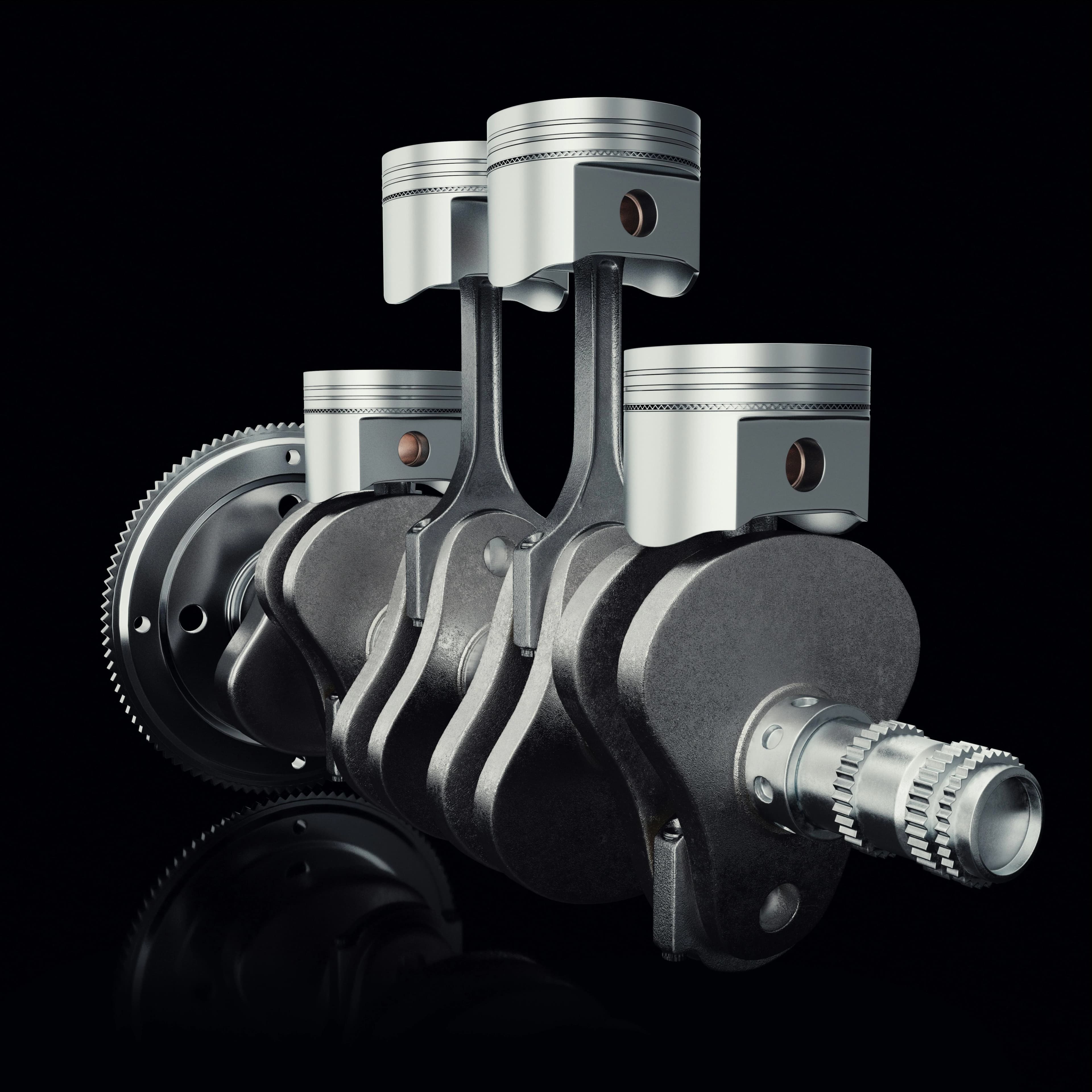
If you spend too much time on certain corners of the internet, you’d be forgiven for thinking that the internal combustion engine (ICE) is already a museum piece, sitting next to the steam engine and the floppy disk. But the engineers at Toyota, Mazda, and Subaru clearly didn't get that memo. Or, more likely, they read it, crumpled it up, and used it to light a fire under a brand-new collaboration project that was announced today.
The three Japanese automakers—historically rivals who occasionally hold hands—have unveiled a joint roadmap for a new generation of high-efficiency internal combustion engines. This isn't a nostalgia trip. They aren't bringing back the 2JZ or the 4-rotor. These are engines designed explicitly for the realities of the 2030s: carbon neutrality, hybridization, and extreme thermal efficiency.
The headline here is "Multi-Pathway." It’s a phrase Toyota’s former CEO Akio Toyoda has been shouting from the rooftops until he was blue in the face. The logic is simple: The enemy is carbon, not the engine itself. If you can make an engine that burns cleaner, sips fuel, and integrates perfectly with an electric motor, you can decarbonize the planet faster than if you wait for everyone to be able to afford a $50,000 EV and a home charger.
What makes this collaboration so juicy for enthusiasts is that the companies are playing to their unique, weird strengths. They aren't building one generic "Global Engine."
- Subaru is doubling down on the Boxer layout. Why? Because it’s flat. A flat engine means a low center of gravity and, crucially, a low hood line. In an era where aerodynamics are king for efficiency, being able to design a sleek, wind-cheating nose is a massive advantage.
- Mazda, the eternal rebels, are pursuing the rotary engine. But not for direct drive—they see the rotary as the ultimate range extender. It’s tiny, smooth, and power-dense. Imagine an EV that drives on battery for 100 miles, but has a shoebox-sized spinning triangle in the trunk to get you across the country.
- Toyota is bringing the inline-four mastery, focusing on smaller displacement, high-compression units that are essentially designed to be generators first and propulsive units second.
This is a direct challenge to the "EV Only" narrative pushed by many Western governments and automakers. These Japanese giants are betting that the future isn't a light switch flip to batteries, but a long, messy gradient where hybrids reign supreme for decades. And frankly, looking at the current sales data where hybrids are flying off lots while EVs languish, they look like the smartest guys in the room.
There is also the "Carbon Neutral Fuel" angle. These engines are being designed with e-fuels and hydrogen in mind. If we can figure out how to produce synthetic gas at scale (a big "if," granted), these cars become carbon-neutral without needing a lithium mine.
For the car enthusiast, this is a stay of execution for the mechanical soul of the machine. Sure, these won't be the roaring V8s of the 60s. They will be quiet, computerized, and heavily assisted by electric motors. But they are still machines that breathe air and burn fuel. They still have pistons (or rotors) that move. In a world rapidly becoming digitized and silent, there is something deeply comforting about Toyota, Mazda, and Subaru looking at the combustion engine and saying, "We’re not done with you yet." It’s a victory for engineering diversity, and ultimately, that’s a victory for us drivers.