The Government Just Leaked Tesla's Cybercab Secrets
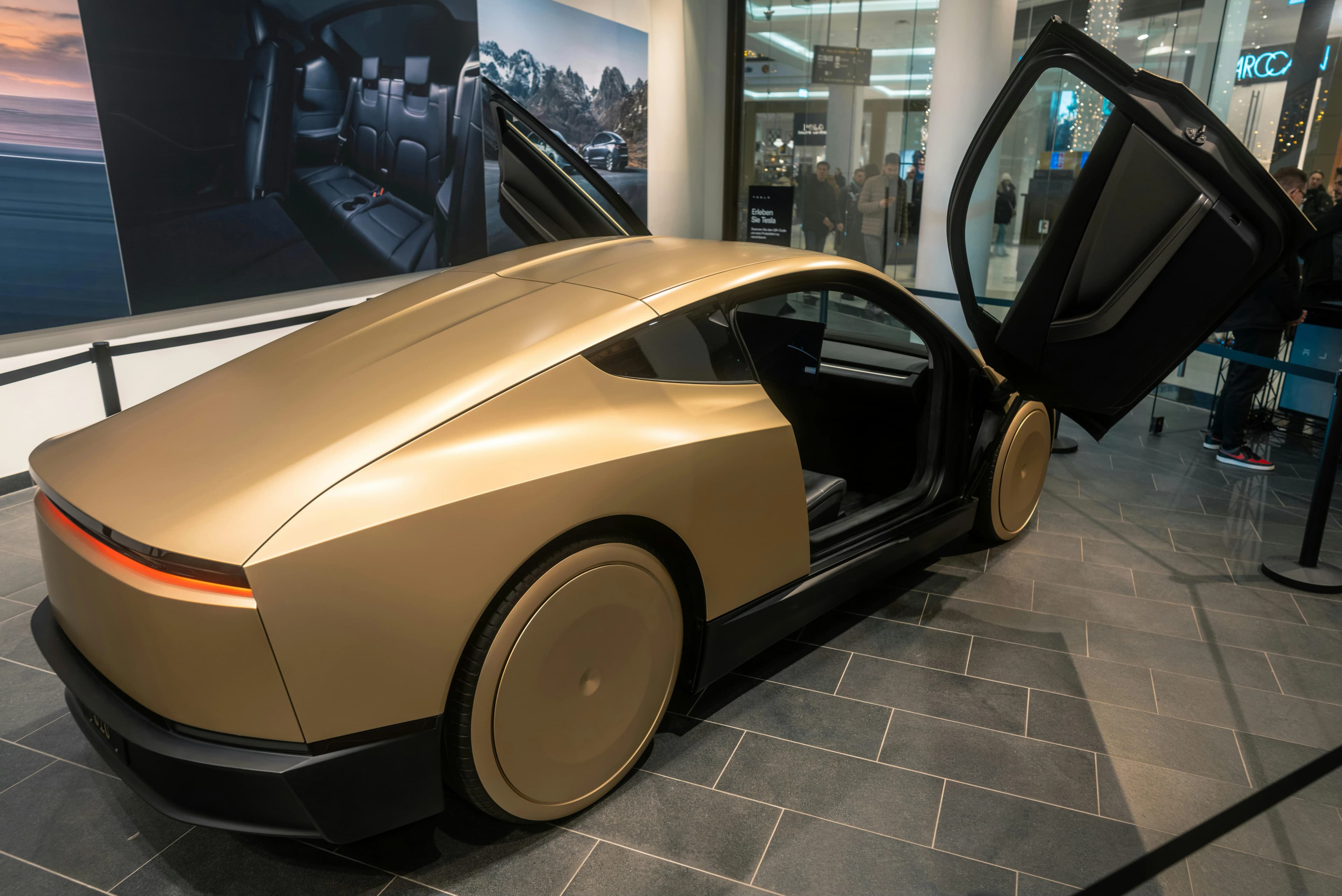
For more than a decade, the automotive world has listened to grand promises regarding the imminent arrival of a driverless future. Corporate presentations have painted a beautiful picture of a world where steering wheels and foot pedals are obsolete relics of the past. But while marketing events can rely on high-tech showmanship and highly controlled demonstrations, regulatory bodies require cold, hard technical data before any machine is permitted to enter the stream of public commerce. Thanks to newly published certification documents from the Environmental Protection Agency, the automotive world finally has an unfiltered look at the actual mechanical engineering underlying the highly publicized Tesla Cybercab robotaxi.
The official Certificate of Conformity reveals several technical surprises that depart significantly from traditional design philosophies. Perhaps the most notable revelation is that the Cybercab utilizes a front-wheel-drive configuration. This is a fascinating choice for a company that has built its fierce reputation on the high-performance dynamics of rear-wheel-drive and dual-motor all-wheel-drive systems. From an engineering standpoint, however, a front-wheel-drive layout is an incredibly rational decision for a purpose-built fleet vehicle. By packaging the electric motor exclusively at the front axle, engineers eliminate the need for a complex rear subframe and additional driveshafts, drastically reducing manufacturing complexity, maximizing cabin floor space, and slashing production costs.
According to the government filing, the front-mounted permanent magnet motor produces two hundred and nineteen horsepower, drawing electricity from a relatively compact lithium-ion battery pack with a usable capacity of roughly forty-eight kilowatt-hours. The document also lists an official curb weight of three thousand one hundred and thirteen pounds. While that figure makes the Cybercab comfortably lighter than a standard Model 3 sedan, it is surprisingly substantial for a tiny two-seat vehicle that completely lacks heavy mechanical components like steering columns, pedals, or traditional dashboard controls. To put that into perspective, a traditional two-seat sports car like a Mazda Miata scales in at just over two thousand three hundred pounds, illustrating the significant weight penalty that modern battery packs still impose on compact vehicle platforms.
Range and efficiency figures outlined in the government testing protocols are equally revealing. The unadjusted laboratory test cycle registered a massive charge-depleting range of four hundred and eighteen miles. However, the regulatory agency applies a standard correction multiplier of conviction to these raw laboratory numbers to accurately simulate real-world environmental factors such as climate control usage, highway aerodynamic drag, and varied driving styles. Once this adjustment is calculated, the realistic driving range lands right around two hundred and ninety-three miles. This closely aligns with the early targets whispered by company insiders and confirms that the vehicle will be highly capable of handling extended urban shifts without needing constant battery replenishment.
The real triumph is the astonishing energy efficiency rating. The Cybercab achieved an official certification of one hundred and sixty-five watt-hours per mile, cementing its status as the most efficient production electric vehicle documented to date. To give that achievement proper context, the closest mass-market competitor requires nearly thirty percent more energy to cover the exact same distance. This extreme efficiency demonstrates just how much utility can be squeezed out of a smaller battery pack when a vehicle is aerodynamically optimized and stripped of non-essential passenger weight.
With the official federal certification now secured, the legal path toward introducing the vehicle to public roads has advanced significantly. The company is actively guiding toward volume manufacturing and intends to deploy autonomous fleet operations across several states by the end of the year. While significant software refinement and state-level legal frameworks still present formidable hurdles, these official documents prove that the mechanical foundation is fully realized.