The "Fratzonic" Era Begins: First Dodge Charger Daytonas Hit Driveways (And The Internet Is Confused)
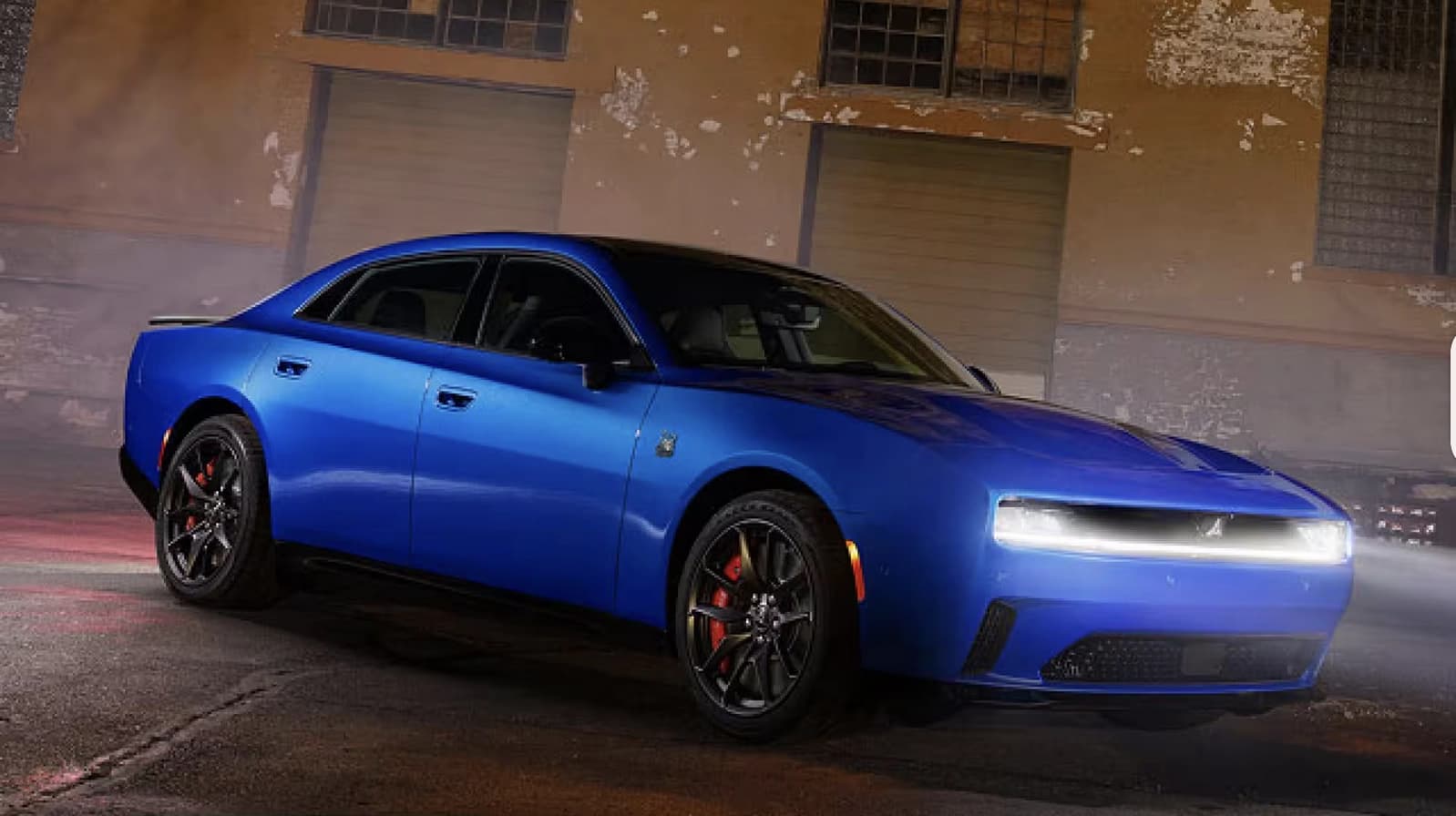
Image courtesy of Dodge
The first customer deliveries of the 2026 Dodge Charger Daytona Scat Pack are officially happening this week, marking what is arguably the most controversial moment in modern muscle car history. It is the death of the Hemi and the birth of the... Fratzonic?
If you’ve been living under a rock (or perhaps happily cruising in a 2015 Hellcat, blissfully ignoring the future), you might have missed Dodge’s solution to the "silent EV" problem. They didn’t just add a speaker to the bumper; they built an actual exhaust system for a car that doesn’t exhaust anything. The "Fratzonic Chambered Exhaust" pushes air through baffled pipes to generate a 126-decibel roar that rivals the outgoing Hellcat. It is loud, it is aggressive, and it is entirely unnecessary in the way that all the best muscle car features are.
Now that real people—not just PR-managed influencers or journalists on a tight leash—are getting their hands on them, the internet is absolutely losing its mind. TikTok and YouTube are currently flooded with videos of owners revving their electric cars in driveways from Detroit to Dallas. The comments sections are a war zone, split perfectly down the middle between "This is the future" and "Kill it with fire."
One camp calls it the "cringiest thing since the Elon Musk dance," arguing that fake noise is like wearing a padded muscle suit to the gym. If it’s electric, be electric, right? Why pretend to be a dinosaur? It’s a valid point. There is an inherent dishonesty to a car that simulates the byproducts of combustion. It’s like a veggie burger that bleeds beet juice—impressive engineering, sure, but are we just trying too hard to replicate the thing we just killed?
But the other camp? They’re admitting something begrudgingly: it’s actually kind of fun.
The sound isn't a 1:1 recording of a V8. It has a synthetic, sci-fi overlay—a low-frequency thrum that vibrates your chest just like a big-block engine would. When the car idles, it grumbles. When you stomp the pedal to hit 60 mph in 3.3 seconds, it screams. And speaking of speed, let's not forget the specs. The Scat Pack delivers 670 horsepower and utilizes a "PowerShot" feature that gives you a burst of extra passing power. It’s terrifyingly fast, despite weighing as much as a small moon.
Dodge took a massive gamble here. They bet that the "soul" of a muscle car wasn’t just the gas explosion, but the visceral vibration and the "hey, look at me" theater. Early reports suggest they might have pulled it off better than anyone expected. The sheer absurdity of an electric car that can rev at a stoplight is so uniquely Dodge that it transcends the "fake" label and circles back around to being cool. It’s reminiscent of the Hyundai Ioniq 5 N’s simulated gear shifts—another feature that sounded stupid on paper but proved to be incredibly engaging in practice.
We have to give Dodge credit for refusing to build a boring car. In a world of jelly-bean-shaped EVs that hum like refrigerators and focus solely on aerodynamic efficiency, the Charger Daytona is a brick that screams at you. It’s imperfect, it’s heavy, and it’s weird. But maybe a little silliness is exactly what the car world needs to keep from going numb. If the choice is between a silent, soulless commute and a car that growls at pedestrians, I think I know which one the enthusiasts will pick—even if they have to hold their nose about the "fake" exhaust for the first few miles.