The Ford Mustang GTD Is Being Hailed As The "Best Muscle Car Ever"
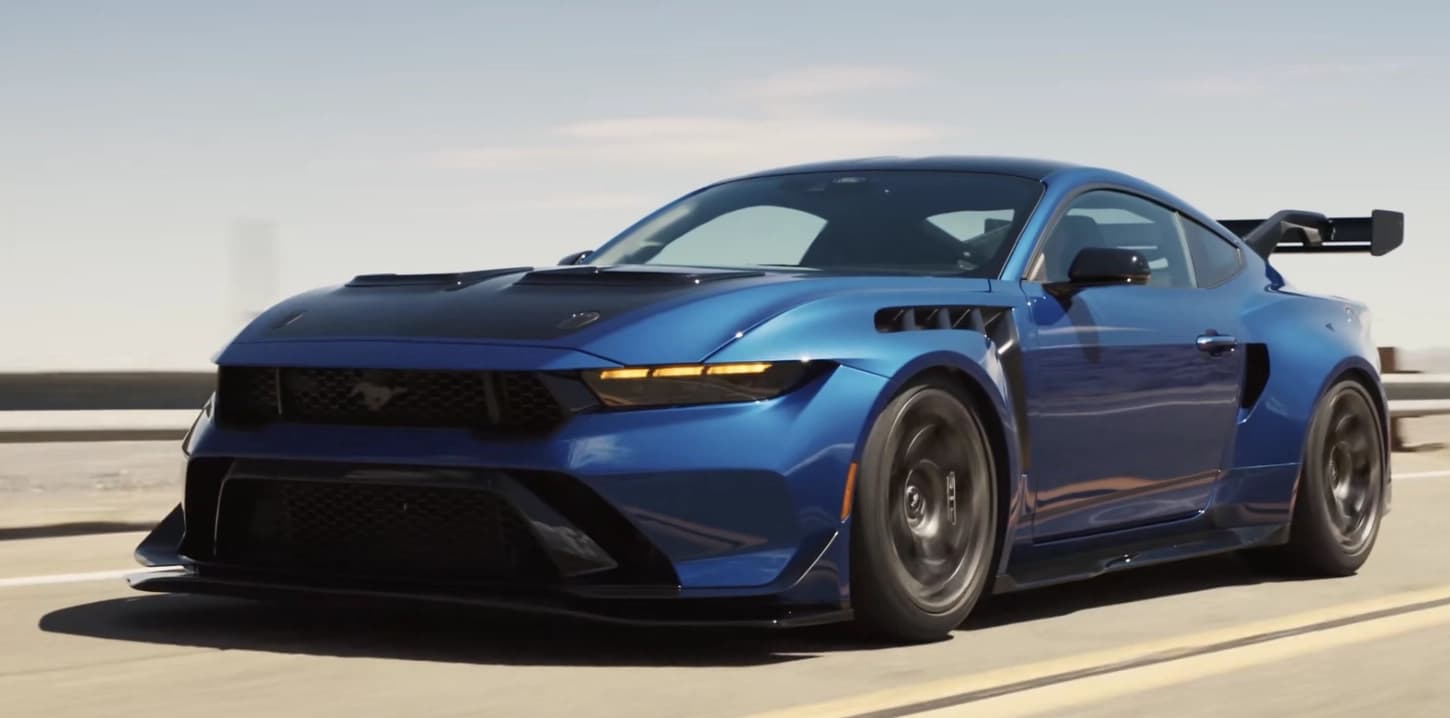
Image Courtesy of Ford
There was a moment when we all thought Ford had lost the plot. When they announced a Mustang that would cost over $300,000, sounded like a fighter jet, and targeted the Porsche 911 GT3 RS, most of us assumed it was a fever dream cooked up by a marketing department that had inhaled too many tire fumes. It seemed like a "jump the shark" moment—a desperate attempt to make the Mustang relevant in a supercar conversation where it didn't belong.
Well, the reviews are starting to trickle out, and it turns out Ford wasn't dreaming. They were dead serious. And terrifyingly competent.
The Mustang GTD (which stands for Grand Touring Daytona, in case you forgot) is barely a Mustang. Sure, it looks like one—if that one spent three years exclusively doing steroids at a gym owned by Carroll Shelby. But underneath the skin, this thing is a race car that somehow tricked the DMV into giving it a license plate. It shares almost no mechanical DNA with the rental car you pick up at Hertz.
The headline figures are staggering: over 800 horsepower from a supercharged 5.2-liter V8. But horsepower is cheap these days. You can get 800 horsepower in a Dodge Challenger if you don't care about turning corners. The GTD is different. The GTD is obsessed with corners.
To achieve a near-perfect 50/50 weight distribution, Ford did something insane: they moved the transmission to the back of the car. It’s a transaxle now, connected to the engine by a carbon fiber driveshaft. This is the kind of engineering you see in Corvettes and Ferraris, not pony cars. They installed a semi-active suspension system so complex that they literally cut a window into the cabin where the rear seats used to be, just so you can watch the Multimatic DSSV dampers working while you drive. It’s audio-visual theater for the mechanically inclined.
It has active aerodynamics that look like they were stolen from a Formula 1 paddock, including a rear wing that snaps open and shut to reduce drag on straights (DRS). This isn't just for show; the car generates massive downforce, sucking it into the pavement at speeds that would make a standard GT500 take flight.
Early impressions suggest that this car achieves the impossible: it has the soul of a Detroit muscle car with the precision of a German track weapon. It is loud, brash, and unapologetically American, but it doesn't fall apart when you show it a hairpin turn. It grips, it rotates, and it attacks the tarmac with a level of sophistication that frankly shouldn't be possible for a car wearing a Blue Oval.
The buying process for this car is just as intense as the engineering. You couldn't just walk in and buy one; you had to apply. Ford hand-picked the owners, presumably to avoid the inevitable "Cars and Coffee" disasters and immediate flipping on Bring a Trailer. They want these cars on tracks, not in climate-controlled bubbles.
Is it worth $325,000? In a world where supercars regularly cross the half-million-dollar mark, maybe. It is certainly more interesting than another McLaren. It represents the absolute peak of internal combustion engineering—a final, screaming "V8 salute" before regulations force everyone into silence.
Ford set out to build a Mustang that could lap the Nürburgring in under seven minutes. Whether they hit that official time or not almost doesn't matter anymore. They built a monster that challenges the European elite on their own terms, using American brute force refined by world-class engineering. It’s the best muscle car ever made, largely because it stopped being a muscle car and became something entirely different.