The Electric Jeep Recon Is Here, But Is It $67,000 Cool?
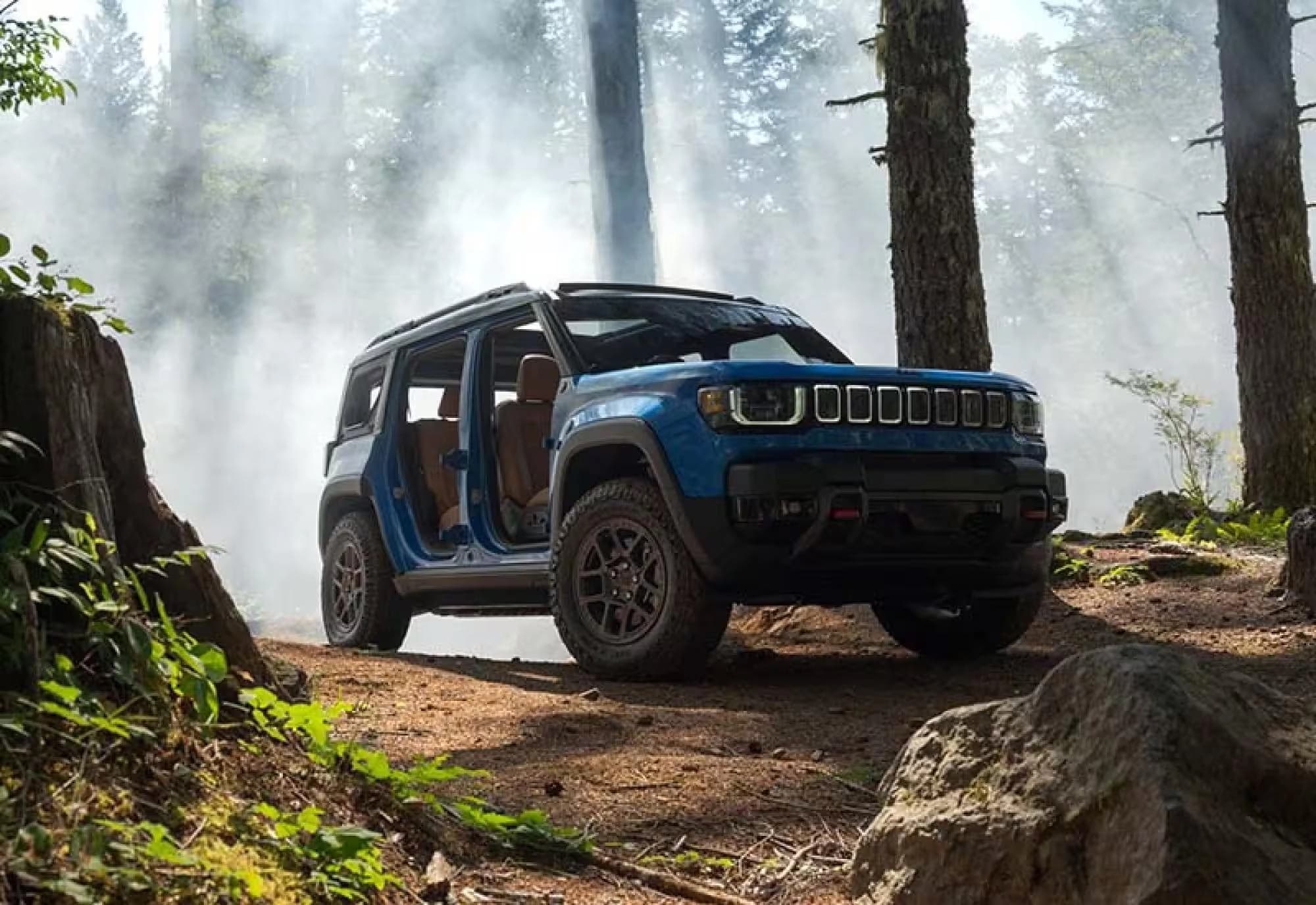
Jeep has finally given us the full download on the Recon, the electric spiritual successor to the Wrangler, and it leaves us with one burning question: How much is "cool" worth to you? Because Jeep thinks it's worth about $67,000.
The Recon is undeniably cool. It looks like what would happen if a Wrangler and a Rivian had a baby in a futuristic military bunker. It has the boxy silhouette, the aggressive stance, and yes, the party trick we all wanted: the doors come off. The glass comes out. The roof slides back. It offers that open-air freedom that, until now, was the exclusive domain of the Wrangler and Bronco.
It’s built on the STLA Large platform, which is a unibody construction rather than the traditional body-on-frame of the Wrangler. Purists will clutch their pearls at that, but the reality is unibody structures are stiffer and handle better on-road, which is where this thing will spend 99% of its life.
But then you look at the spec sheet, and things get a little... complicated. The launch edition, dubbed the "Moab," starts at $66,995. For that pile of cash, you get 650 horsepower (awesome) and a 0-60 time of 3.6 seconds (terrifying in a brick). But you also get a projected range of just 230 miles.
230 miles. In 2025. For a vehicle designed to go into the wilderness.
Let's play out the scenario. You live in Denver and want to hit a trail. You drive 80 miles on the highway to the trailhead. Highways are the enemy of boxy EVs; the aerodynamic drag eats battery life like Pac-Man. That leaves you, optimistically, 140 miles of range. You air down the massive 33-inch tires (which kills efficiency), put it in 4-Low (which kills efficiency), and spend four hours crawling over rocks. By the time you get back to the pavement to air up, you are going to be staring at that battery percentage gauge with the kind of anxiety usually reserved for bomb disposal technicians.
Jeep has thrown a lot of tech at this problem. The Recon features the new UConnect 5 system with a "Trails Offroad" app integration, which supposedly helps with dynamic range mapping on known trails. It has locking differentials, legitimate clearance, and skid plates everywhere. It will absolutely crush a trail. It has the hardware to be a beast.
But unlike the new Scout Terra with its range extender, the Recon is pure electric. Once you’re out of juice, you are just a very expensive piece of trail art. You can't just carry a jerry can of electricity. This fundamentally changes the nature of off-roading, turning it from an adventure into a math problem.
There are other compromises too. The "Frunk" is disappointingly small—barely enough for a charging cable, let alone a week's worth of camping gear. And while it fits 33-inch tires stock, the wheel wells look tight for anyone hoping to slap on 35s or 37s without a Sawzall and a prayer.
Jeep is likely banking on the fact that most people won't actually take it to Moab. They'll take it to Whole Foods, where 230 miles is plenty and the "doors off" mode is just for flexing in the parking lot. For the suburban commando, the Recon is perfect. It’s silent, fast, and looks tough.
But for the hardcore enthusiasts—the people who made Jeep what it is—the Recon feels like a toy for the wealthy rather than a tool for the adventurous. It’s a beautiful, fast, capable machine. But at nearly $70k with a range that low, it’s asking you to make a lot of compromises for the privilege of being silent on the trail. The Wrangler 4xe plug-in hybrid, which lets you wheel in silence but drive home on gas, suddenly looks like the smarter buy. The Recon is the future, sure, but it feels like the technology hasn't quite caught up to the ambition.