The "Budget" List: Edmunds Names The Only 5 Affordable Cars Left For 2026
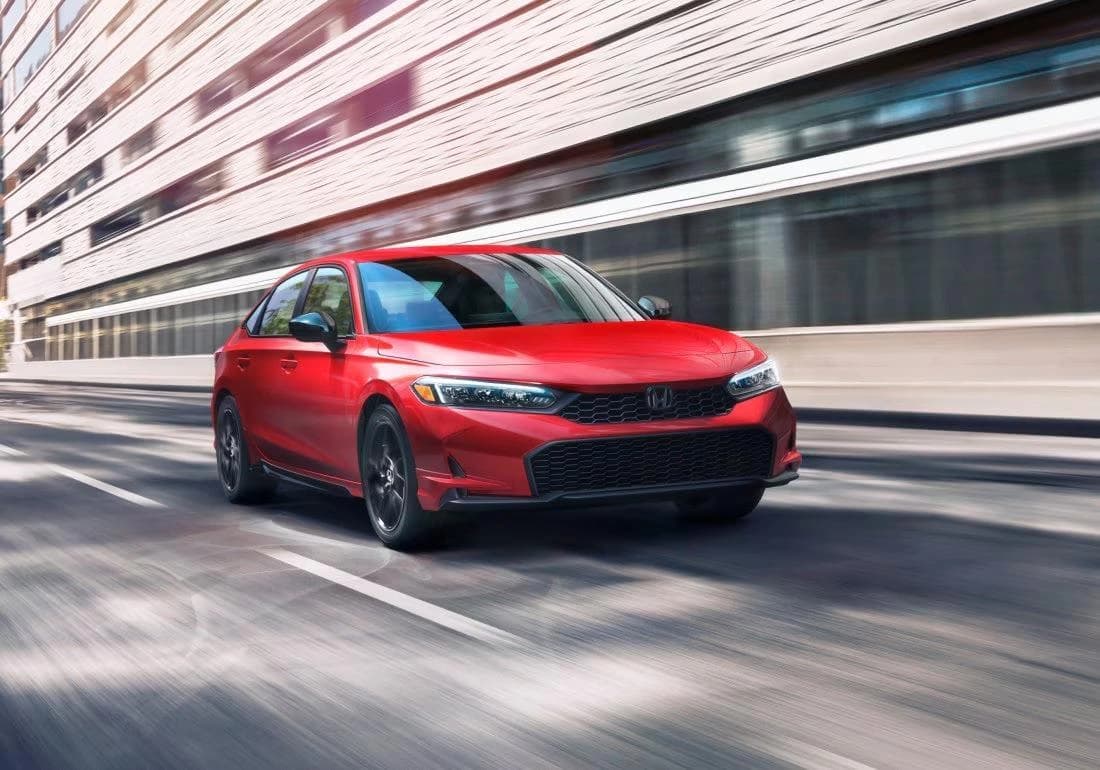
Image courtesy of Honda
If you’ve been waiting for new car prices to magically crash back to 2019 levels, I have some bad news: they haven’t. But if you’ve been waiting for a reputable source to tell you what you can actually buy without selling a kidney, I have some slightly better news. Edmunds has just dropped its list of the "Top 5 Affordable Cars for 2026," and it serves as a sobering yet helpful reality check for the American car shopper.
The list, released yesterday amid a flurry of CES tech announcements that nobody can afford, cuts through the noise of six-figure EVs and highlights the heroes of the driveway. The criteria? A mix of base price, fuel economy, and that elusive "bang for your buck" factor. The winners aren’t surprising, but they are reassuringly solid.
First up is the 2026 Honda Civic. At a starting price of around $25,790, the Civic remains the undisputed king of "I need a car that works, looks good, and won’t bankrupt me." Edmunds praises the LX sedan for offering enough room for a family of four and 36 mpg, which is about as close to having your cake and eating it too as you’ll get in this economy. The Civic has effectively replaced the Accord as the default family sedan for many, simply because it’s grown so much in size and refinement. It’s the car you buy when you want to feel smart, not cheap.
Next is the 2026 Toyota Camry, specifically the Hybrid. With a starting sticker just over $30,000, it’s the midsize sedan that refuses to die. The big news for 2026 is that the hybrid powertrain is standard across the board (a move Toyota made a while back that is paying dividends now), delivering anywhere from 43 to 51 mpg. You can even get it with all-wheel drive, which effectively kills the argument for needing a crossover if you live anywhere south of the Arctic Circle. It’s boring, yes, but in the same way a really good index fund is boring. It just works.
Then we have the crossover brigade. The 2026 Hyundai Kona ($26,950) takes the small SUV crown, mostly because it’s not actually that small anymore. It’s grown into a properly useful vehicle that fits actual human adults in the back seat. For those needing more space, the Kia Sportage Hybrid ($31,735) gets the nod for its 42 mpg rating and "near-luxury" interior. Finally, for the big families, the Hyundai Palisade ($41,035) sneaks onto the list as the "budget" three-row option. It’s a sad state of affairs when $41k is considered a budget option, but have you priced a Tahoe lately? Exactly.
What’s interesting here isn’t just the cars, but the commentary on the market. We are seeing a bifurcation where "entry-level" is disappearing, replaced by "value-level." The Mitsubishi Mirages and Kia Rios of the world are largely gone or irrelevant. The floor has been raised.
For shoppers, this list is a good starting point, but the real battle is at the dealership. Sticker price is one thing; "market adjustments" are another. This is where tools like OptiCar come in handy—scanning millions of listings to find the dealer actually honoring that $25k MSRP on a Civic rather than slapping a $5,000 "protection package" on it. It’s a jungle out there, and while Edmunds gives you the map, you still have to hike the trail.
Ultimately, this list proves that the affordable car isn’t dead; it’s just evolved. It’s safer, faster, and more efficient than the "cheap cars" of yesteryear. You’re paying more, sure, but you’re also getting a vehicle that won’t feel like a penalty box in five years. And in 2026, that’s about the best win we can hope for.