The 2025 Toyota 4Runner Proves Evolution Beats Revolution
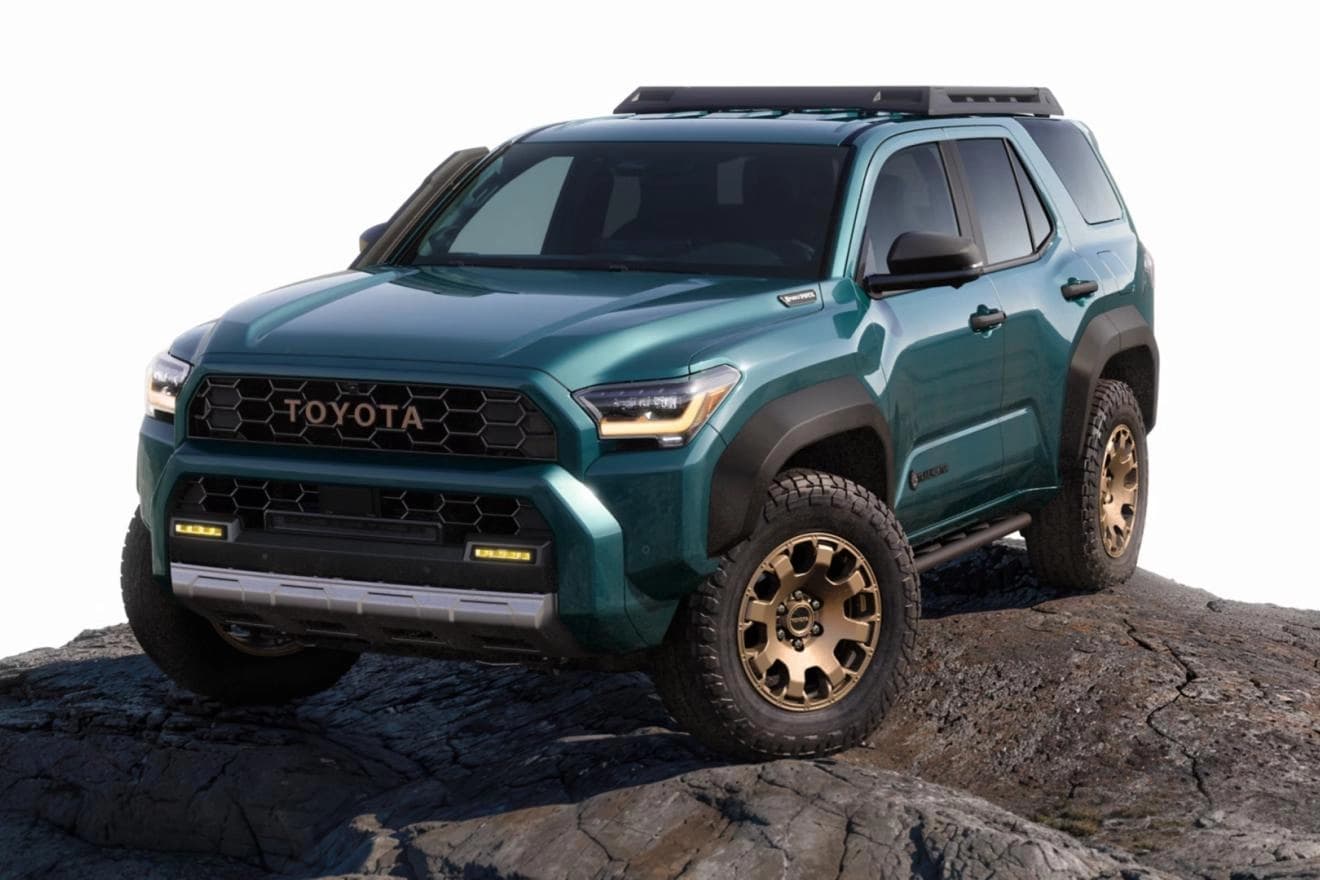
Image courtesy of Toyota
The Toyota 4Runner is the automotive equivalent of a cast-iron skillet. It’s heavy, ancient, crude, and refuses to break. It’s an anachronism that has somehow survived the crossover apocalypse. For 15 years—an eternity in car years—Toyota sold the exact same truck, and for 15 years, people bought every single one of them, usually paying full sticker price. For 2025, Toyota finally moved it to the modern TNGA-F platform, sharing its bones with the Tacoma, Land Cruiser, and Tundra. The reviews dropped this week, and the verdict is in: They managed not to ruin it.
In an era where every SUV is morphing into a jelly-bean-shaped crossover with fifty touchscreens and a CVT, the new 4Runner feels refreshingly defiant. It still has a solid rear axle. It still has high ground clearance. And crucially, it still has the roll-down rear window. If Toyota had removed that window, there would have been riots at the headquarters in Plano. It is the single greatest feature in automotive history for dog owners, and its retention proves that Toyota actually listens to its fans. It’s a small detail, but it symbolizes the entire ethos of the truck: utility over aerodynamics.
The big news, of course, is the powertrain. The unkillable 4.0-liter V6 and its prehistoric 5-speed transmission are gone. In their place is a turbocharged 2.4-liter four-cylinder, available with or without hybrid assist. The hybrid "i-FORCE MAX" pumps out 326 horsepower and a massive 465 lb-ft of torque. Yes, there will be weeping and gnashing of teeth in the comments section about "turbo reliability" (see our last article about the Tundra), but let’s be real: the old V6 was a gas-guzzling dog that made noise without making speed. The new powertrain brings the 4Runner into the 21st century without neutering its character. It finally has the torque to turn big tires without hunting for gears on the highway.
A major point of discussion in the reviews is the internal rivalry with the new Land Cruiser. They are built on the same platform, have the same engine, and are roughly the same size. So why buy the 4Runner? The answer seems to be attitude. The Land Cruiser is trying to be a bit more dignified, a bit more "premium retro." The 4Runner is the rowdy younger brother. It’s the one that wants to do donuts in the mud. It’s lighter, feels a bit more nimble on the trail, and crucially, you can get it in the TRD Pro trim with the "IsoDynamic" suspension seats.
Let’s talk about those seats. They have their own shock absorbers built into the backrest to dampen lateral and vertical movement. It is completely overkill. It is engineering lunacy. And it is absolutely awesome. It’s the kind of feature that makes no sense on a spreadsheet but makes total sense when you’re bounding across the Mojave Desert at 50 mph.
Toyota understands their customer base better than perhaps any other manufacturer. 4Runner buyers don’t want a "better" car in the traditional sense. They don't want a smooth ride or autonomous driving. They want a 4Runner that connects to Bluetooth and doesn’t get 14 miles per gallon. By keeping the boxy styling, the body-on-frame construction, and the tactile, chunky interior controls (actual buttons!), Toyota has secured its license to print money for another decade. They resisted the urge to make it a "soft-roader," and in doing so, they’ve preserved one of the last true SUVs on the market.
It’s not ground-breaking technology. It’s not an autonomous pod. It’s a 4Runner. And that is exactly why the waiting lists are already six months long.