Tesla’s Cybercab Takes a Shanghai Bow
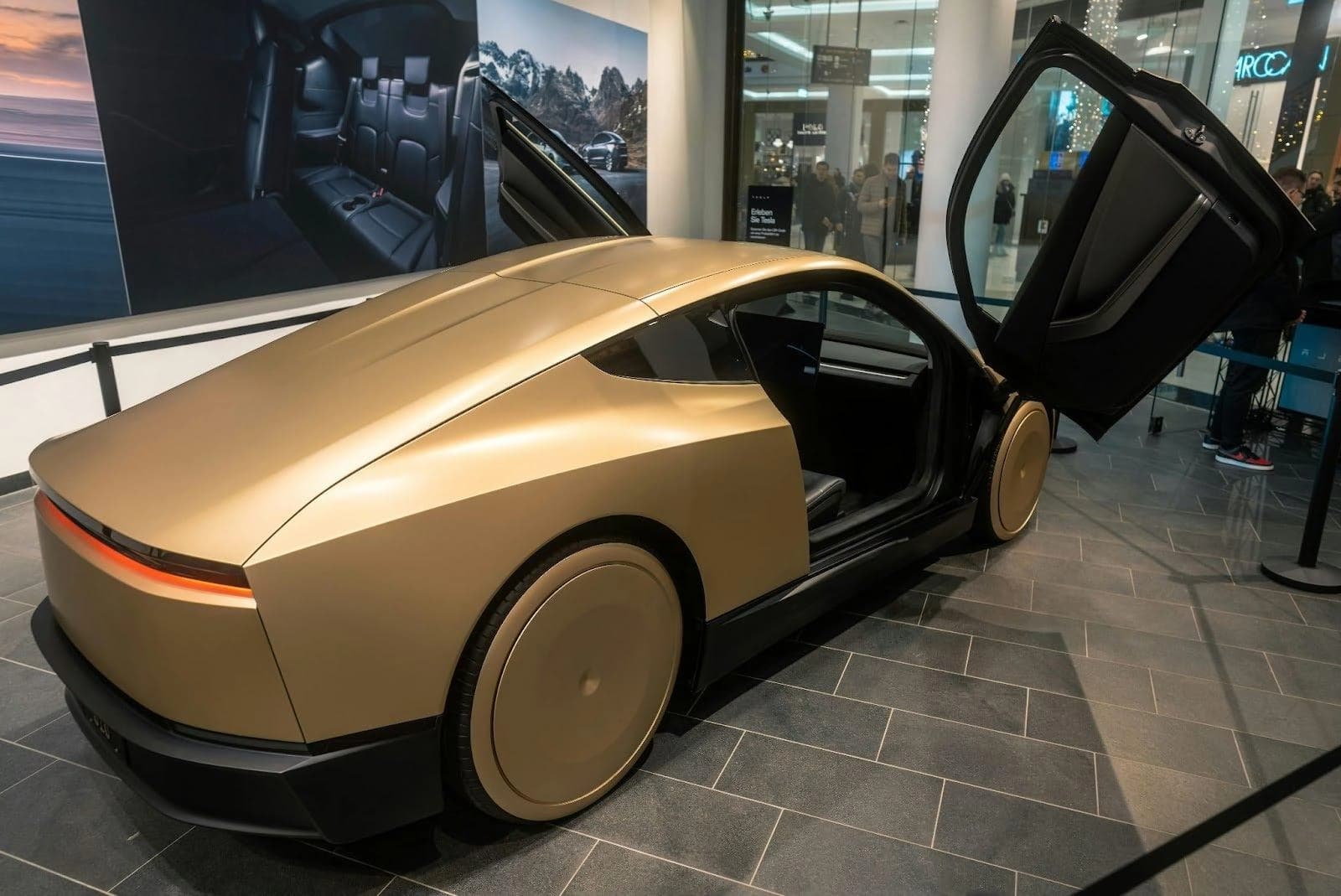
Tesla’s Cybercab just made its Asia-Pacific debut at the China International Import Expo in Shanghai, marking the company’s boldest step yet toward its robotaxi dream. The futuristic pod drew massive crowds, a mix of tech fans, investors, and curious regulators. While Tesla framed the showcase as proof that full autonomy is right around the corner, skeptics saw a carefully staged showpiece in a market where autonomous driving rules are still a minefield.
Visually, Cybercab is peak Musk minimalism: smooth curves, a pod-like silhouette, and an interior that looks like an iPhone on wheels. There’s no steering wheel, no pedals, just a wide bench and screens that look like they were stolen from a Star Trek set. It’s designed for comfort, efficiency, and of course, data capture—because every ride doubles as a rolling experiment in human behavior.
The Shanghai debut wasn’t random. China is the epicenter of the robotaxi arms race. Baidu, AutoX, and Pony.ai have been running pilot programs in select cities, all under close government supervision. Tesla’s entrance into this ecosystem is as much about optics as engineering: it’s signaling to Chinese regulators that it wants a seat at the table. Whether they’ll get it is another story entirely.
Regulatory approval is the elephant in every autonomous room. China has strict controls over data sharing, map access, and real-world testing zones. Tesla, already under scrutiny for how it handles vehicle data, will need to make concessions if it wants to operate robotaxi fleets there. Still, showing Cybercab in Shanghai is a flex—an invitation for the conversation to begin.
Beyond regulation, there’s a cultural question: do people actually want this? For all the hype, surveys consistently show that most riders are still uneasy about fully driverless rides. Trust takes time, and Tesla’s reputation for pushing software boundaries doesn’t always help. The company insists that its Full Self-Driving (FSD) system is approaching true autonomy, but experts remain unconvinced.
Still, there's a method in the madness. Cybercab gives Tesla a new way to monetize its autonomy stack beyond selling cars. If robotaxis become viable—even in limited cities—it could create a recurring revenue stream that rivals Uber’s without the payroll. And even if the Cybercab never reaches mass deployment, its design and software advancements will trickle down to consumer models.
So was the Shanghai debut a breakthrough or a bluff? Probably a bit of both. It proves Tesla’s intent to play globally in autonomous mobility. But until regulators, insurers, and everyday riders are ready to trust a driverless Tesla in rush-hour traffic, Cybercab remains more of a statement than a service. Still, in true Tesla fashion, that statement has already changed the conversation.