Scout Motors Returns From The Dead With Real Trucks And Solid Axles
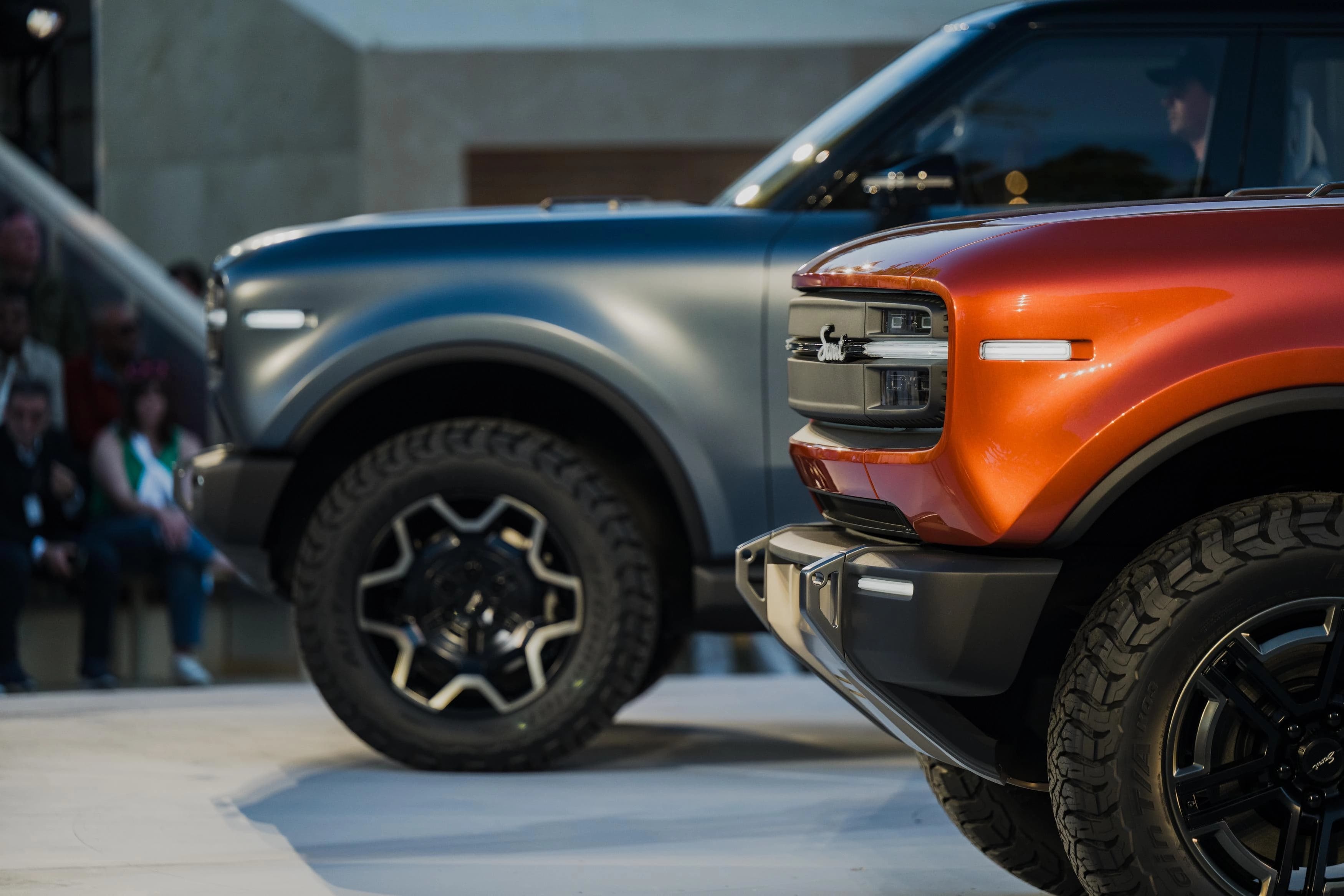
Image courtesy of Scout Motors
We have seen the future of Volkswagen’s American dream, and it looks a hell of a lot like the 1970s. Scout Motors, the VW-backed revival of the legendary International Harvester brand, just made its first auto show debut in Los Angeles, and they brought two vehicles that are shockingly… truck-like. In a world where "rugged" usually means "we added black plastic cladding to a unibody station wagon" or "we put all terrain tires on a crossover," Scout has gone the other direction. They have built actual trucks.
Meet the Terra (the pickup) and the Traveler (the SUV). These machines are built on a legitimate body-on-frame platform. They have solid rear axles. They have mechanical locking differentials front and rear. They are, in technical terms, the real deal. This is a massive departure from the industry trend of unibody "lifestyle" trucks. Scout isn't aiming for the Honda Ridgeline crowd; they are aiming directly at the Ford F-150 and the Jeep Wrangler.
For the uninitiated, the original International Scout was the tractor company’s answer to the Jeep CJ, and it was glorious—a simple, agricultural box that could climb a mountain and then rust away quietly in the driveway. The new Scout captures that brutalist, squared-off charm without looking like a cartoon caricature. The overhangs are short, the stance is wide, and the design is delightfully free of the "angry robot" aesthetic that plagues modern truck design (looking at you, Chevy Silverado). It looks like a tool, not a toy.
The interior is perhaps the biggest surprise. We live in an era where designers seem determined to bury every function inside a touchscreen menu. Want to turn on your heated seats? Tap three times. Want to adjust the AC? Navigate a sub-menu. Scout has rejected this dystopian future and embraced "Community UX." That’s marketing speak for "we kept the buttons."
There is a row of chunky, tactile toggle switches for the climate control and lockers. There is a volume knob. There are mechanical door handles. It feels like a vehicle designed for people who wear gloves, not just people who wear Apple Watches. It acknowledges that when you are bouncing down a trail at 15 mph, trying to hit a virtual button on a sleek glass screen is a miserable experience.
But the biggest news isn't the electric motors or the 800-volt architecture—it's the gas tank. Scout confirmed they will offer a "Harvester" range-extender option.
This is critical to understand: This isn't a plug-in hybrid in the traditional sense. In most PHEVs, the gas engine is connected to the transmission and drives the wheels. In the Scout Harvester system, the gas engine is purely a generator. It sits under the hood, humming along at an efficient RPM, recharging the battery on the fly. This boosts the range from a respectable 350 miles (BEV only) to a whopping 500+ miles.
This is the "killer app" for the American market. We love the instant torque of EVs (Scout promises nearly 1,000 lb-ft, which is enough to alter the rotation of the earth), but we hate sitting in a Walmart parking lot in Nebraska waiting for a charger that’s probably broken. The Harvester system solves the towing anxiety that plagues the Rivian R1T and Ford F-150 Lightning.
Towing with an EV is currently a nightmare; physics dictates that dragging a brick through the wind kills battery efficiency. You can lose 50% of your range instantly. With the Harvester, you don't have to panic. You want to tow a 7,000 lb boat to the lake? Fine. Bring gas. The Terra, notably, claims a towing capacity of over 10,000 lbs, putting it squarely in half-ton truck territory.
The pricing is the other shocker: Scout is targeting a sub-$60,000 starting price. If they can actually hit that number (and in the auto industry, that is a massive "if"), they aren't just competing with the premium Rivian; they are taking a shot at the mass market.
Of course, these are still prototypes. Production isn't slated until 2027 at a new plant in South Carolina, and a lot can go wrong in two years. VW’s software track record is, to put it mildly, spotty (ask anyone with an ID.4). But for now, Scout has done the impossible: they’ve made a German-owned electric vehicle feel authentically American. They understood the assignment. They didn't build a spaceship; they built a truck.