Rivian’s New ‘Adventure Charge Network’ Breaks Cover — A Faster, Multi-Brand Fast-Charging Push
Rivian has always understood something that other legacy EV makers (looking at you, GM and Ford) often miss: The charging network is the product. You can build the coolest, most capable electric truck in the world, but if it turns into a motionless brick three hours outside of Denver because the only charger around is a broken third-party unit, nobody cares. The truck becomes a paperweight.
Now, Rivian is doubling down on this philosophy. Leaked details from supplier briefings indicate the company is preparing to rebrand and massively expand its proprietary charging system into the "Adventure Charge Network."
The name change is a bit cheesy, yes. It sounds like a theme park ride. But the strategy behind it is sound, and potentially lucrative. The expansion reportedly includes significantly higher peak charge rates (essential for the massive 135kWh+ battery packs in the R1T and R1S to charge in a reasonable time) and a full rollout of dual-standard hardware supporting both CCS and NACS (Tesla’s plug). Crucially, the network will officially open to non-Rivian vehicles in 2026, creating a new revenue stream for the company.
But the real differentiator here isn't the plug—it's the location. While Tesla’s Superchargers dominate the interstates and major travel arteries, and Electrify America dominates the Walmart parking lots of suburbia, Rivian is targeting the "trailhead" corridors. They are putting fast chargers near national parks, in rural gateway towns, near popular off-road trails, and along the scenic byways that adventure-focused drivers actually use.
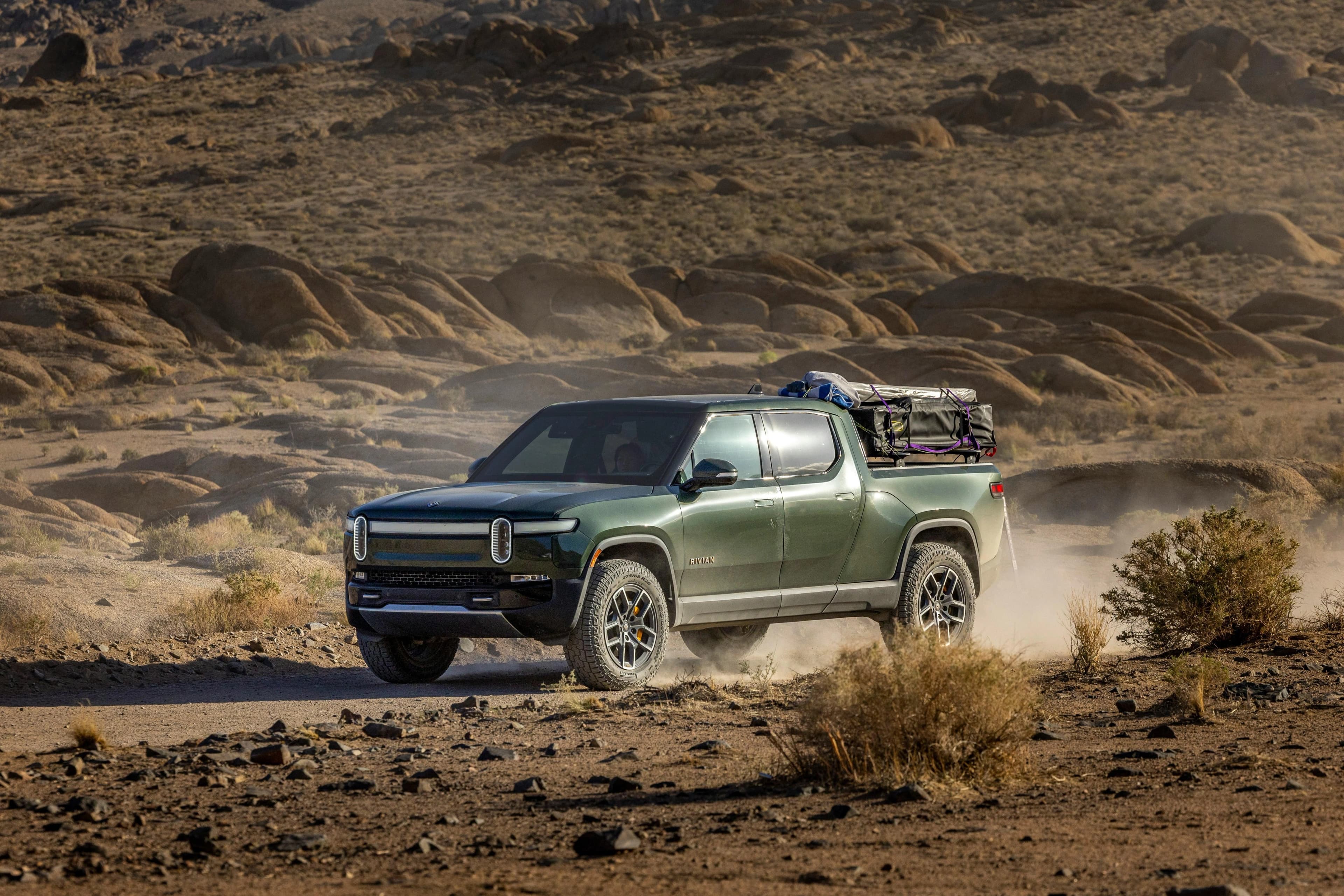
This is a brilliant branding play. By opening the network to other brands, Rivian turns every charging stop into a marketing activation. Picture the scene: You pull up in your Ford F-150 Lightning or your Kia EV9 to a charger located in a stunning mountain pass. The charger works perfectly. It’s branded "Rivian Adventure." You look at your generic crossover, then you look at the Rivian R2 charging next to you, covered in mud, with a roof tent, looking effortlessly cool. It’s psychological warfare. It positions Rivian not just as a car manufacturer, but as the gatekeeper to the outdoors.
For the EV market, this is vital infrastructure. Range anxiety isn't really about highway driving anymore; we've mostly solved that with 300-mile batteries. The new anxiety is "edge case" anxiety. It’s the fear that you can’t go camping, or skiing, or deep into the woods without getting stranded. It's the "what if" scenario that keeps people buying gas trucks. Rivian is trying to solve that specific anxiety.
If the leaks hold true, the "Adventure Charge Network" will effectively be the "Backcountry Supercharger" network. It acknowledges that EV owners want to do more than just commute to the office; they want to go places where the cell service is bad and the views are good. And in a world where everyone is building electric SUVs but nobody knows where to plug them in once they leave the suburbs, that is a very valuable patch of dirt to own. If Rivian can pull this off, they won't just sell trucks; they'll sell the confidence to actually use them.