Porsche Admits Taycan Batteries Aren't Immortal After All
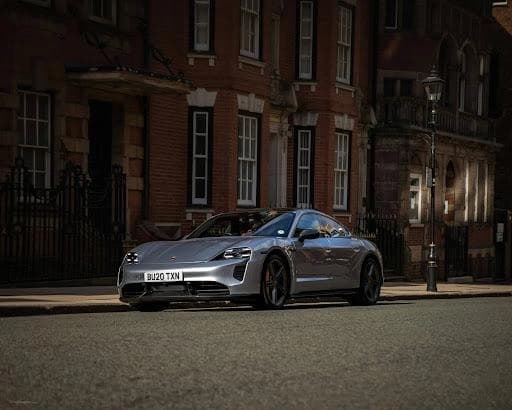
In news that surprises absolutely nobody who understands basic chemistry, Porsche has quietly acknowledged that Taycan batteries might not last quite as long as they originally suggested. The company issued a service bulletin this week addressing battery degradation concerns, and while they're being very careful with their language, the message is clear: your $150,000 electric Porsche might eventually need a very expensive battery replacement.
The bulletin specifically addresses 2020-2022 Taycan models, noting that some batteries are experiencing faster-than-expected capacity loss. We're not talking catastrophic failure here, but rather a gradual decline that sees some vehicles losing 10-15% of their range after just three years and 50,000 miles. That's notably worse than Porsche's initial projections of less than 5% degradation over that period.
Porsche's being very German about this, emphasizing that this is "within acceptable parameters" and "not a safety concern." Which is technically true, but also kind of misses the point. When you buy a Taycan with 300 miles of range and it drops to 255 miles after three years, that's a problem. Not a break-down-on-the-side-of-the-road problem, but definitely a "I-paid-how-much-for-this" problem.
The root cause appears to be Porsche's aggressive fast-charging capability. The Taycan can handle up to 270 kW charging, which is fantastic for road trips but apparently less fantastic for long-term battery health. Repeated high-speed charging sessions generate heat, and heat is the mortal enemy of lithium-ion batteries. It's like running your laptop plugged in all the time – sure, it works, but you're slowly cooking the battery.
Porsche's solution? A software update that will supposedly optimize charging curves and battery management. They're also extending warranty coverage for affected vehicles, which is nice but doesn't exactly inspire confidence. The company insists that newer Taycan models have improved battery chemistry and thermal management, which is their way of saying "we learned from our mistakes, so good luck to the early adopters."
Here's the thing that really stings: battery replacement for a Taycan isn't cheap. We're talking $25,000 to $30,000 for a new pack, which is roughly the price of a decent used car. Porsche hasn't officially announced pricing for out-of-warranty replacements, but industry sources suggest it's somewhere in that eye-watering range. That's a tough pill to swallow for a car that was supposed to represent the future of driving.
The broader implication here is that first-generation EVs are going to age differently than traditional cars. A well-maintained combustion engine can easily run 200,000 miles with basic maintenance. Battery degradation is a different beast – it's inevitable, it's expensive to fix, and it fundamentally changes the value proposition of the vehicle. Today's $80,000 used Taycan might be tomorrow's $30,000 car with a ticking clock on its battery pack.
This doesn't mean the Taycan is a bad car. It's still brilliant to drive, stupidly fast, and genuinely practical. But it does mean that buying one requires thinking differently about ownership costs and resale values. That three-year lease is starting to look a lot more attractive than a seven-year loan, because at least you can hand the depreciation problem back to Porsche Financial Services.
The good news? This is the kind of problem that gets solved with time and technology. Battery chemistry is improving rapidly, and manufacturers are learning hard lessons about balancing performance with longevity. The bad news? Those lessons are being learned on the backs of early adopters who trusted the promises of worry-free EV ownership. Sometimes being an early adopter means you get to enjoy the future first. Sometimes it means you get to pay for it twice.