NHTSA Finally Admits Your Car's Voice Assistant Is Distracting You to Death
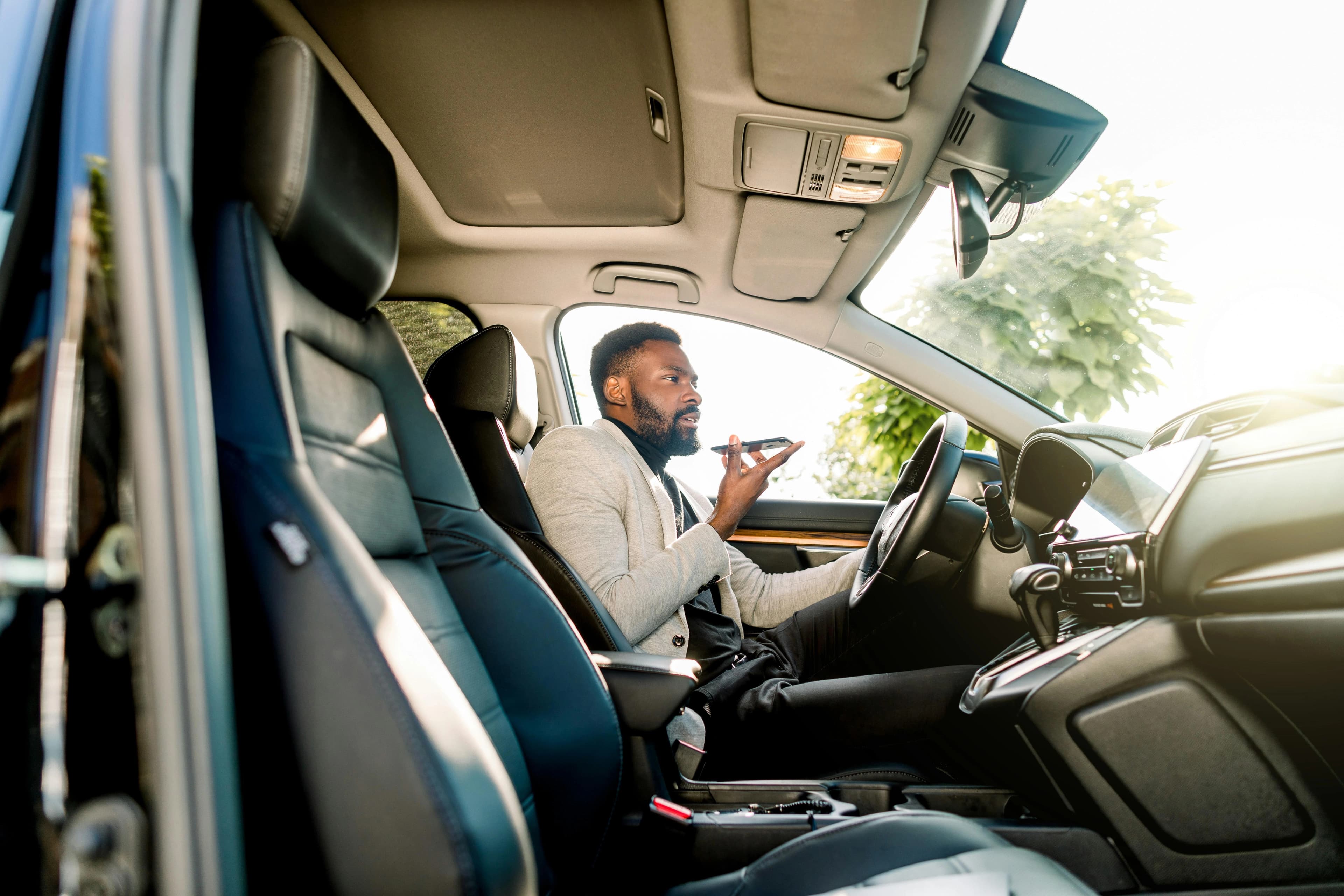
For the last decade, the automotive industry has been gaslighting us. They systematically removed our volume knobs. They buried our climate controls three menus deep in a glossy, fingerprint-smudged touchscreen. And when we complained—when we pointed out that taking our eyes off the road to adjust the seat heater was terrifying—they gave us the "solution": Voice Control.
"Just say, 'Hey Manufacturer, I'm cold!'" they chirped in the commercials. "It's hands-free! It's safe! It's the future!"
Well, the National Highway Traffic Safety Administration (NHTSA) has finally decided to call their bluff. In a Federal Register notice posted this week (Docket No. NHTSA-2025-0059, for those of you who like light reading), the agency announced it is launching a formal investigation into the safety risks of "Modern Voice Command Interfaces."
The gist of the probe is something anyone who has driven a modern car already knows: cognitive distraction is just as dangerous as visual distraction. In fact, it might be worse, because it lasts longer.
The investigation cites preliminary data suggesting that the "cognitive load" required to get a voice assistant to understand you is actually higher than the load required to just turn a physical knob. Think about the mechanics of it. When you turn a knob to lower the volume, you use muscle memory. You know where the knob is. You reach out, you twist, you’re done. Your eyes never leave the road, and your brain never stops processing the traffic flow.
Now, compare that to the Voice Command Loop. First, you have to find the "Push to Talk" button (or shout the wake word). Then, you have to articulate a command: "Set passenger temperature to 70 degrees." Then—and this is the killer—you have to wait. You enter a state of suspended animation while the car’s processor thinks. Then, inevitably, it says: "Calling Mom." Now you are angry. You have to cancel the action. You have to try again. You are shouting. Your blood pressure is up. You are looking at the screen to see what it thought you said.
For that entire 15-second interaction, your brain was not driving the car. Your brain was fighting a robot. This phenomenon is called "Cognitive Tunneling," and it essentially blinds you to your surroundings even if your eyes are technically open and facing forward.
The NHTSA filing explicitly mentions that they are looking into the "latency" and "error rates" of these systems. They are concerned that when a system fails to understand a command—which happens, conservatively, 50% of the time in real-world driving conditions—the driver’s frustration creates an adrenaline spike that leads to aggressive driving and a complete loss of situational awareness.
This is a massive deal for the industry. For years, automakers have used voice assistants as a regulatory loophole. They could legally remove physical buttons to save money (screens are cheaper than complex switchgear wiring harnesses) by claiming the voice assistant satisfied the requirement for "safe operation." If NHTSA determines that voice assistants are themselves a safety hazard, it blows a hole in the entire modern interior design philosophy.
Does this mean we will get our buttons back? Don't hold your breath. Re-tooling a dashboard to add physical HVAC controls costs millions. The likely outcome of this probe is just more "nanny" features—perhaps a system that locks you out of voice controls when the car detects you are "agitated," or more warning screens that you have to tap "I Accept" on while moving at 65 mph.
But for now, we can take a grim satisfaction in knowing that the government has finally acknowledged the obvious: yelling at your dashboard is not the future we were promised, and it’s certainly not safer than a simple, honest button.