Mercedes-Benz Reminds EQB Owners That Fire Is Bad for Your Living Room
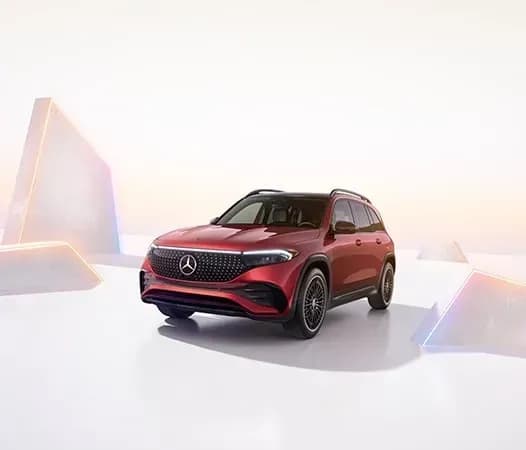
Mercedes-Benz has spent a lot of time and money trying to convince the world that the three-pointed star is the ultimate symbol of the electric future. However, that future currently involves a very specific request for owners of the EQB crossover: please park your car on the street and stay away from your house. The company has officially issued a recall for roughly 12,236 vehicles in the United States because their high-voltage batteries might decide to spontaneously combust. It is the kind of news that makes prospective EV buyers a little twitchy, but for the people already in the driver’s seat, it is a genuine headache that involves some very restrictive rules until a fix arrives.
The problem lies deep within the battery cells provided by Farasis Energy. According to documentation filed with the National Highway Traffic Safety Administration, certain production batches of these cells are less robust than they ought to be. When combined with a high state of charge or external stress factors, these cells can develop an internal short circuit. If you have ever seen a lithium-ion battery go through a thermal event, you know it is not something you want happening in your garage while you are sleeping. Mercedes is advising owners not to charge their vehicles past 80 percent and to avoid parking near structures. This effectively turns your luxury electric SUV into a very expensive yard ornament that you have to keep at a respectful distance.
This isn't actually the first time Mercedes has tried to fix this. They previously issued a software update that was supposed to monitor the battery and mitigate the risk, but that was apparently just a temporary band-aid. The definitive solution is a complete replacement of the high-voltage battery pack. For a dealer, this isn't a simple oil change. Replacing an entire EV battery is a complex, eight-hour job that requires specialized equipment and technicians who are comfortable working around enough electricity to power a small suburb. It is a massive logistical undertaking for the brand and a testament to the growing pains of the electric revolution.
Manufacturers are in a difficult spot here. They are under immense pressure to source batteries at scale to meet aggressive production targets, and sometimes, even with the most rigorous quality controls, defects slip through the cracks. Mercedes is doing the responsible thing by footing the bill for complete replacements, but the challenge lies in the sheer volume. Swapping out twelve thousand battery packs isn't something that happens overnight. It requires a supply chain of massive, heavy, and chemically sensitive components to move across the globe and land in service bays that are already struggling with technician shortages.
If you are currently shopping for a used EV or looking to trade in your current ride, these are the kinds of stories that highlight why transparency is so important. Buying a car shouldn't feel like a game of high-stakes poker where you don't know if the battery has a secret history of thermal anxiety. This is where a tool like Price360 can be a lifesaver. It provides a comprehensive vehicle history report and an AI-powered visual inspection that can help you understand exactly what you are getting into before you sign the paperwork. Whether you are a dealer trying to keep your inventory safe or a buyer looking for peace of mind, knowing the history of recalls and repairs is the only way to shop with confidence.
The EQB is actually a pretty decent little crossover when it isn't threatening to turn into a bonfire. It offers seven seats in a footprint that doesn't require a commercial driver’s license to park, and the interior is exactly what you would expect from something with a Mercedes badge. But as the brand transitions away from internal combustion, these battery hurdles represent a significant challenge to their reputation for engineering excellence. The company is handling the situation by replacing the packs free of charge, which is the right move, but the wait for parts could be long. In the meantime, EQB owners might want to invest in a very long charging cable and a comfortable pair of walking shoes for that trek from the curb to the front door. It is a humbling moment for the pioneers of the internal combustion engine, proving that even after a century of building cars, the learning curve for high-voltage systems remains steep and occasionally very hot.