Mercedes-AMG Admits Four Cylinders Weren’t Enough Soul For The GLC53
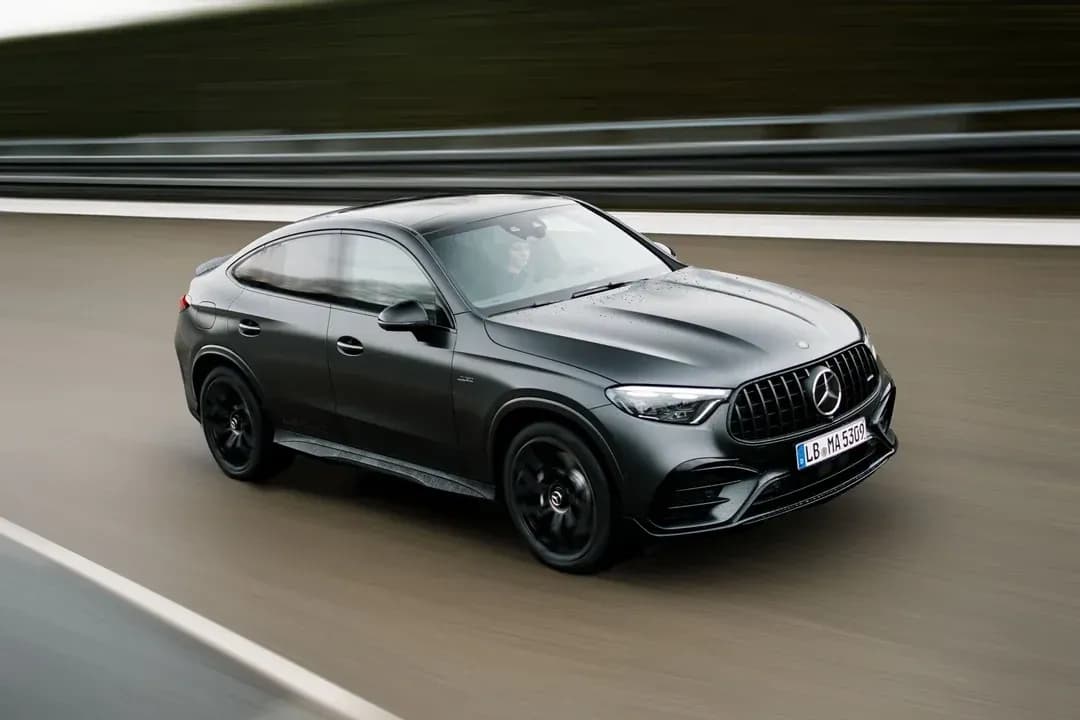
Image courtesy of Mercedes
It is a rare and beautiful thing when a massive German automaker looks at a spreadsheet full of efficiency gains and emissions credits and says, actually, nevermind. For a few years, Mercedes-AMG tried to convince us that a high-strung, turbocharged four-cylinder engine was the future of performance. They told us that with enough hybrid assistance and Formula 1-derived turbochargers, we wouldn’t miss the extra cylinders. They were wrong. The market has spoken, and for 2026, the GLC53 is welcoming back a proper 3.0-liter inline-six engine, proving that while you can replace displacement with technology, you cannot replace soul with software.
The previous experiment was technically impressive but emotionally vacant. It was like going to a concert where the band is replaced by a very high-quality recording of themselves. Sure, the notes are correct and the volume is there, but the energy just feels artificial. The new GLC53 aims to fix that. By dropping the M256 inline-six back under the hood, Mercedes is restoring the linear power delivery and the smooth, metallic snarl that defined the brand before the downsizing era took hold. This is not just a win for enthusiasts who like the sound of an engine that doesn’t sound like a disgruntled leaf blower; it is a strategic retreat from a trend that threatened to alienate the very people who keep AMG in business.
What makes this particularly interesting is how Mercedes handled the messaging. They didn’t come out and say their four-cylinder attempt was a mistake. Instead, they framed it as a response to customer demand for a more effortless driving experience. In the world of luxury performance SUVs, effort is the enemy. A small engine has to work very hard to move a heavy crossover, and you can feel that strain in the vibration of the steering wheel and the frantic shifting of the gearbox. An inline-six, by contrast, feels like it is barely breaking a sweat even when you are merging onto the highway with enough speed to concern the local authorities.
This shift back to six cylinders also highlights a broader industry correction. We are seeing several manufacturers realize that the push for extreme downsizing reached a point of diminishing returns. When a small engine is boosted to within an inch of its life to provide performance, real-world fuel economy often suffers, and long-term reliability becomes a giant question mark. By returning to a larger displacement engine paired with a 48-volt mild-hybrid system, AMG is finding a middle ground that provides the refinement customers expect without completely abandoning the need for better efficiency.
For those looking to pick up one of these new six-cylinder beasts, the used market for the older four-cylinder models is likely about to get very interesting. If you find yourself shopping for a pre-owned performance SUV and want to make sure the previous owner didn't hide any secret curbside mishaps, Price360 can be a huge help. Its AI-powered visual inspection can spot bodywork issues that might be missed by a quick glance, helping you ensure that the only drama in your AMG experience comes from the exhaust note, not the repair bill.
The 2026 GLC53 is a reminder that the automotive world is not a straight line toward a digital future. Sometimes, it is a circle that leads us back to the things that worked in the first place. The return of the six-cylinder engine is a sign of respect for the heritage of the brand and the intelligence of the consumer. It is an acknowledgement that while a computer can calculate the fastest way around a track, it cannot calculate the feeling you get when a well-balanced engine reaches the top of its rev range.