Mazda Finally Did It: The Rotary Returns in the "RX-9"
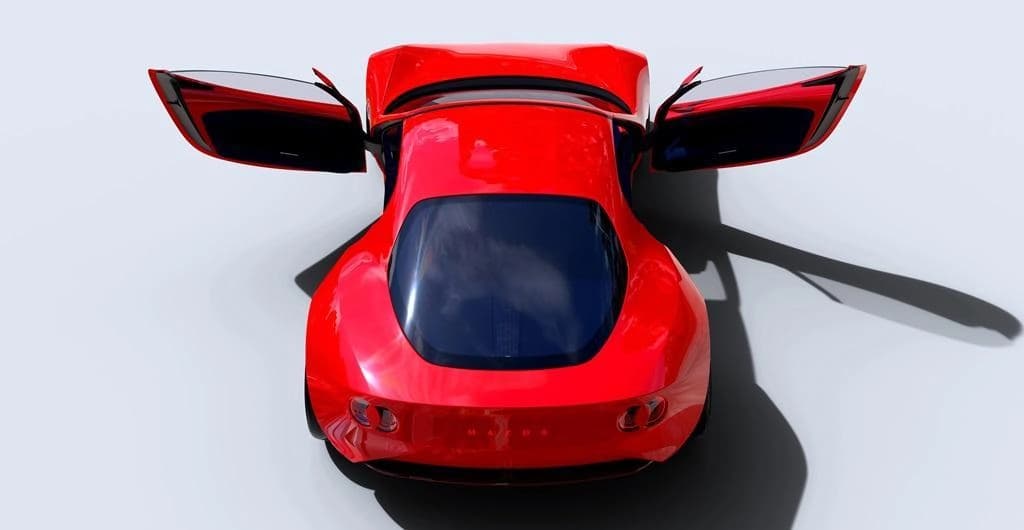
Image courtesy of Mazda
Pinch yourself. Go ahead, do it. Because this doesn't feel real. After years of teasing, rumors, and concept cars that broke our hearts by never becoming reality (looking at you, RX-Vision), Mazda has confirmed the impossible: The Iconic SP concept is going into production.
Speaking at the Tokyo Auto Salon, which wrapped up yesterday, Mazda’s design chiefs confirmed that the stunning "Viola Red" coupe is not just a pretty face—it’s the next flagship sports car. While the internet is already screaming "RX-9," Mazda is sticking to the project name for now, but the specs are what matter. And they are fascinating.
The car will retain the concept's unique powertrain: a dual-rotor rotary engine acting as a generator for an electric drive system. It’s a range-extender EV (EREV), similar in theory to the MX-30 R-EV that confused everyone a few years ago, but tuned for performance rather than grocery getting. We’re looking at around 370 horsepower in a package that aims to weigh significantly less than its battery-heavy rivals—Mazda is targeting a curb weight under 3,200 pounds.
This is the "have your cake and eat it too" engineering solution we’ve been praying for. You get the instant torque and low center of gravity of an EV, but you also get the mechanical soul and soundtrack of a rotary engine spinning at high RPMs to charge the small battery buffer. It’s Mazda saying, "We know you have to drive electric, but we refuse to let you be bored."
Critically, the rotary engine can run on carbon-neutral fuels, which is Mazda’s big play for keeping internal combustion alive in a carbon-constrained world. The packaging benefits of the tiny rotary engine allowed the designers to achieve an incredibly low hood line, giving the car a silhouette that looks more like a Ferrari Roma than a typical EV.
The design remains faithful to the concept—pop-up-ish headlights (they’re fixed but slim enough to fool you), smooth surfacing without a single fake vent in sight, and proportions that scream classic grand tourer. It’s a love letter to the RX-7, written in the language of 2026. The interior is pure minimalism, focusing on the driver with a simple instrument cluster and a manual-style shifter for the drive modes, proving that physical controls aren't dead yet.
Of course, production is still a year or two out, and pricing is going to be… well, let’s not ruin the mood just yet. Expect it to compete with the electric Porsche 718 Cayman, which likely puts it in the $70,000 range. But for now, let’s just celebrate the fact that the rotary engine isn't dead. It just got a promotion.