Lucid Motors Aims for Level 4 Self-Driving
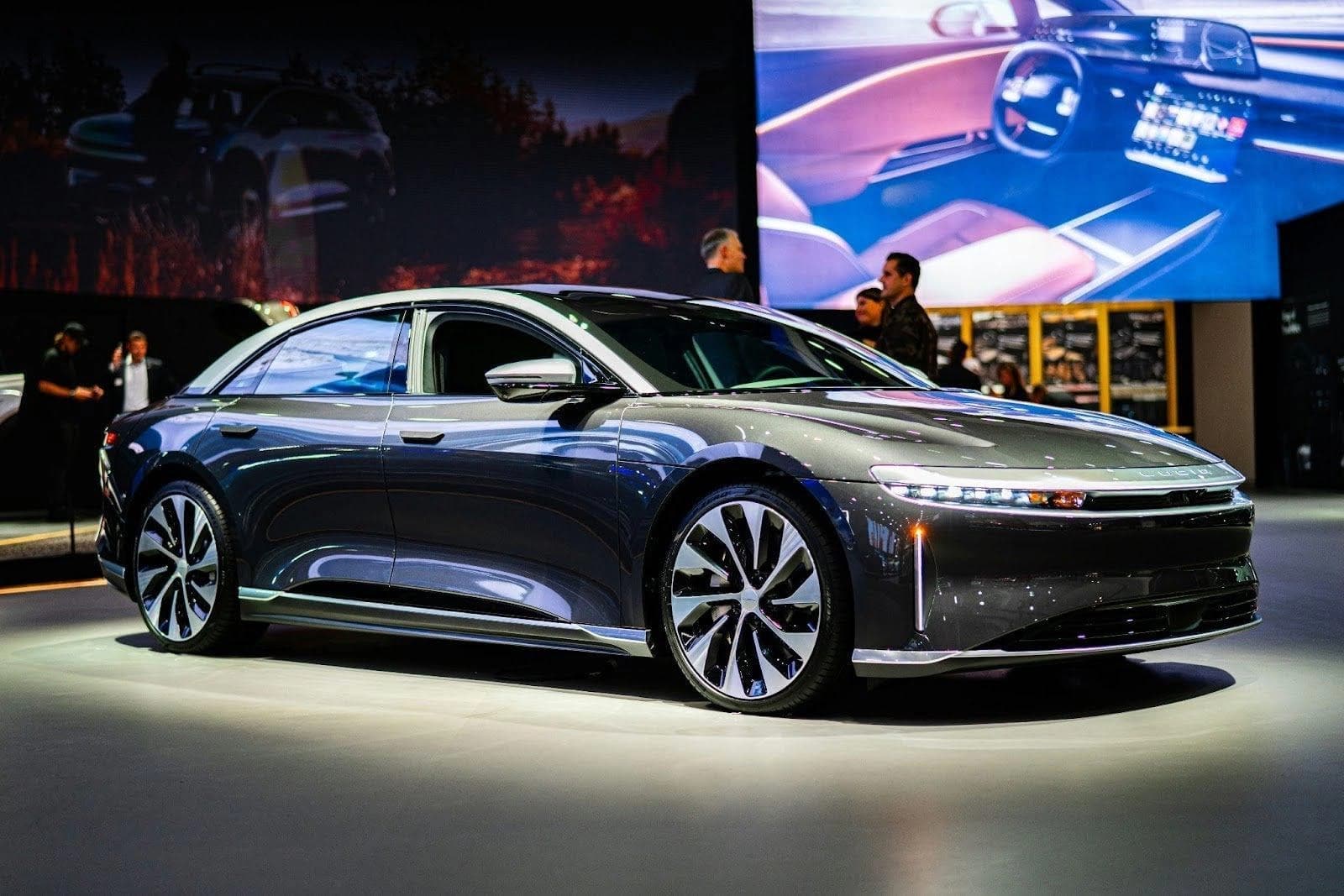
Lucid Motors announced on October 28th that they're partnering with NVIDIA to become the first automaker offering Level 4 autonomous driving in consumer-owned vehicles, which would be a remarkable achievement for a company simultaneously working through nearly a billion dollars in quarterly losses. It's an ambitious roadmap that highlights both Lucid's engineering confidence and the challenges of pursuing cutting-edge technology during a difficult financial period.
Let's start with what Level 4 actually means, because the industry loves to blur these lines. Level 4 is "eyes-off, hands-off, mind-off" autonomy where the car genuinely handles everything within certain conditions. No human driver needed, though operation is typically restricted to specific mapped areas. Currently, exactly zero consumer-owned vehicles operate at Level 4. Waymo does it with robotaxis in a few cities after spending over a decade and billions of dollars. Mercedes offers limited Level 3 (the step below) that maxes out at 40 mph on approved highways. Tesla's "Full Self-Driving" is still Level 2 and requires constant driver supervision despite the optimistic branding.
Lucid plans to put two NVIDIA DRIVE AGX Thor computers in each vehicle, delivering a combined 4,000 TOPS of computing power along with cameras, radar, and lidar. That's genuinely cutting-edge hardware. The challenge is that autonomous driving is primarily a software problem, and Lucid's current DreamDrive Pro system only added basic hands-free highway features in June 2025, putting them behind some competitors. They're proposing to advance from "catching up on Level 2" to "leading the industry in Level 4" in what interim CEO Marc Winterhoff vaguely described as "definitely in the coming years" but "not 2026."
Here's where the complexity becomes apparent. Lucid just reported a $978 million loss in Q3 2025, delivered only 4,078 vehicles, and relies substantially on funding from Saudi Arabia's Public Investment Fund, which now owns roughly 90 percent of the company. They've accumulated a $13.3 billion deficit and have cash runway into the first half of 2027, assuming continued investor support. This is a company prioritizing survival while simultaneously committing resources to one of the most capital-intensive technical challenges in the industry.
The timing is particularly notable given that GM just shut down Cruise after investing $10 billion trying to make Level 4 robotaxis work. If General Motors with its substantial capital reserves couldn't make the economics work, Lucid faces significant hurdles. It's worth noting that former CEO Peter Rawlinson told Semafor earlier this year that he doesn't expect true self-driving "till the 2030s" because people are "significantly underestimating" the difficulty. That was before Lucid announced this partnership, which suggests evolving internal perspectives on what's achievable.
The pragmatic scenario here is that Lucid benefits from a credibility boost through the NVIDIA partnership, the Uber investment announced in September provides some guaranteed volume (20,000 vehicles over six years for robotaxi service), and we'll see incremental progress updates as the technology matures. The hardware will be impressive, the software development will require patience, and by 2030 the company will have either established itself as a technology leader or pursued strategic alternatives.
To be fair, the technology itself is genuinely interesting. NVIDIA's Thor platform is remarkably powerful, and the plan to use it for manufacturing AI improvements through digital twins could meaningfully help Lucid's production efficiency. The question is whether pursuing consumer Level 4 autonomy makes strategic sense when the company is still establishing financial stability and building out its driver assistance capabilities.
The encouraging reality is that Lucid makes genuinely excellent EVs when they build them. The Air has incredible range, the Gravity SUV shows promise, and their core engineering is legitimately world-class. Finding the right balance between these foundational strengths and aspirational technology development will likely determine whether this NVIDIA partnership becomes a defining success story or an expensive lesson in prioritization. For now, it's a bold bet that reflects both Lucid's ambition and the high-stakes nature of the EV industry.