Jeep's "Gas-Electric" Loophole
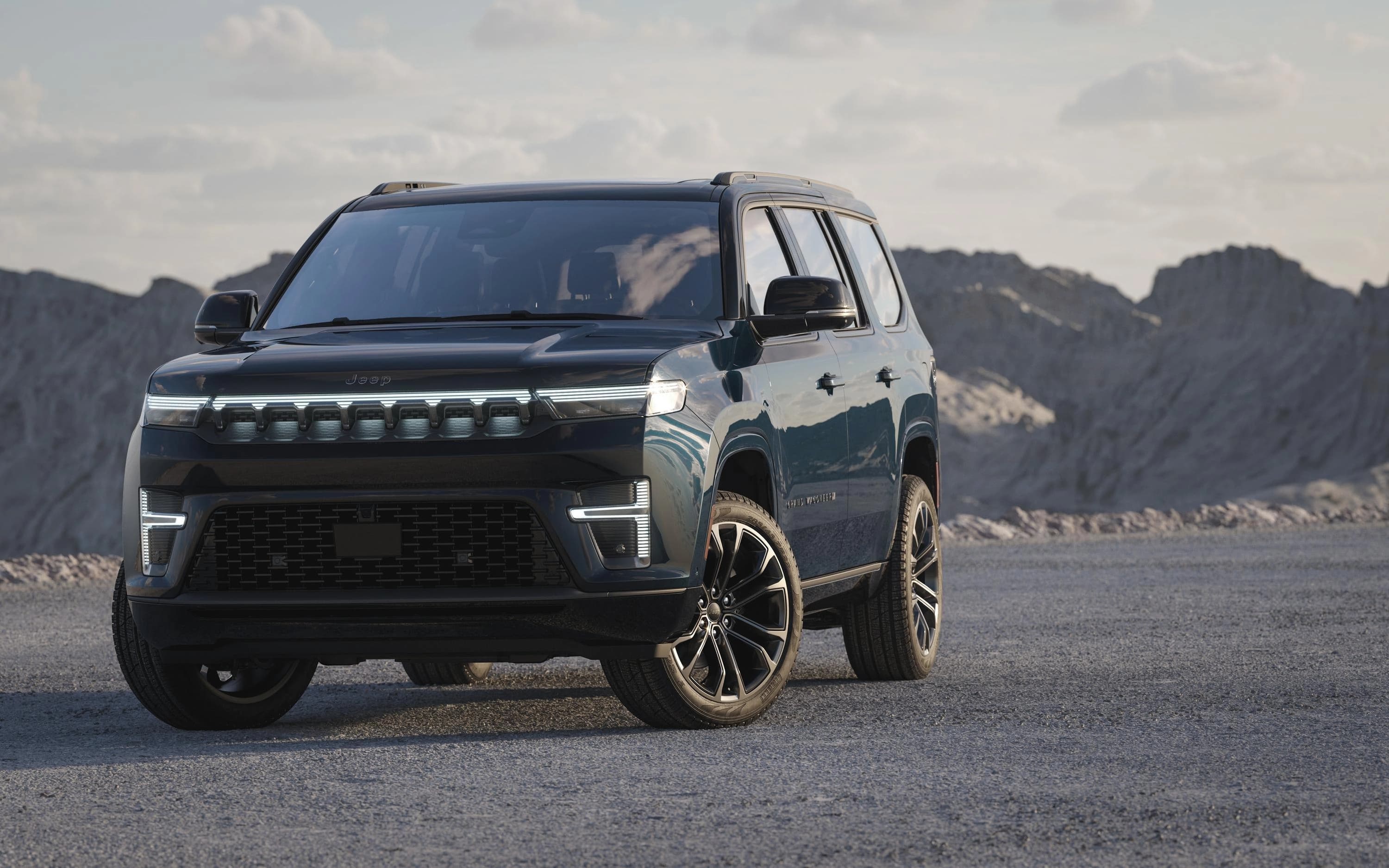
Image courtesy of Stellantis
Let’s be honest: The transition to electric vehicles has been messy. Range anxiety is real. Towing with an EV is a nightmare. And nobody wants to sit in a Walmart parking lot for 40 minutes charging their $80,000 SUV. Jeep looked at this problem, cracked a beer, and said, "What if we just put a generator in the trunk?"
Enter the 2026 Jeep Grand Wagoneer REEV (Range Extended Electric Vehicle). It might have the clunkiest name in the industry, but the technology underneath is arguably the smartest bridge to electrification we have seen yet.
Here is how it works: This is an electric vehicle. The wheels are powered 100% by electric motors—one in the front, one in the back. There is no transmission, no driveshaft connecting an engine to the axles. It has all the torque, smoothness, and instant acceleration of an EV. But under the hood, instead of a massive frunk, there sits a 3.6-liter Pentastar V6 engine.
That engine is not connected to the wheels. Its only job—its sole purpose in life—is to spin a generator that recharges the battery.
This solves the biggest problem with electric trucks: towing. When you tow with a regular EV, your range gets cut in half. With the Jeep REEV, when the battery gets low, the V6 kicks on and generates electricity on the fly. You can just pull into a gas station, fill up the tank, and keep driving. It has a total range of over 500 miles, and you never have to touch a charging cable if you don't want to.
Jeep (and its parent Stellantis) calls this a "paradigm shift," but history buffs will call it "The Chevy Volt, but huge." And they are right. The Chevy Volt used this same basic concept 15 years ago, but it was ahead of its time. Now, applied to a massive, 7,000-pound luxury fortress like the Grand Wagoneer, it makes perfect sense.
The specs are hilarious. It has a 92 kWh battery—which is bigger than what you get in a standard Tesla Model Y—giving it an EV-only range of about 150 miles. That covers 99% of daily driving. School runs, grocery trips, commutes? All electric. But when you want to tow your boat to the lake, you have the V6 safety net.
Combined, the system puts out 647 horsepower. That is supercar territory in a vehicle shaped like a brick. It will do 0-60 in around 5 seconds.
Critics will argue that hauling around a heavy gas engine that you might not use often is inefficient. And they are right. This is not the most energy-efficient vehicle on the planet. But it is a vehicle that solves the psychological barrier to EV adoption. It removes the fear of running out of juice. It removes the hassle of public charging infrastructure.
It allows you to be an "EV owner" Monday through Friday, and a "Gas Truck owner" on the weekend, without swapping cars. It is a loophole in the laws of physics and emissions regulations, and frankly, it’s brilliant. The Grand Wagoneer REEV is the anti-Tesla. It doesn't want to change your behavior; it just wants to get you to the mall and back without using gas, unless you really need to. And for most Americans, that is exactly what they are looking for.