Japan Mobility Show Drops Jaw-Dropping Concepts While Conveniently Forgetting What Powers Them
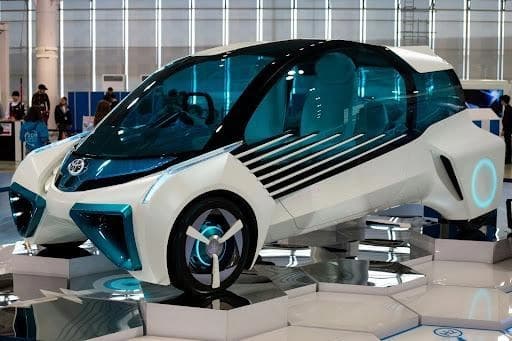
The Japan Mobility Show opened this week in Tokyo with the kind of automotive fever dream that only happens when Japanese automakers have home-field advantage and absolutely no obligation to explain how any of their wild concepts actually work. It's less a car show and more a carefully curated glimpse into alternate timelines where practicality took a permanent vacation.
Toyota absolutely dominated with an avalanche of concepts that ranged from "genuinely interesting" to "wait, what?" Leading the charge is the Land Cruiser FJ, a compact retro-styled bruiser that's basically Toyota saying "remember when the FJ Cruiser was cool? Let's do that again, but smaller." At 4.57 meters long and riding on the Hilux Champ platform, it's powered by a 2.7-liter four-cylinder making 161 horsepower. More importantly, it comes with a six-speed manual and switchable four-wheel drive, because apparently someone at Toyota still remembers that enthusiasts exist.
But the real headline grabber is the Century Coupe concept. Toyota's trying to position Century as its answer to Rolls-Royce and Bentley, which is bold considering most Westerners have never heard of Century. The concept is a massive lifted coupe with front-sliding doors and a three-seat interior layout that screams "I'm too wealthy to care about rear-seat passengers." As for what powers it? Toyota's being coy. Electric? Hybrid? Hopes and dreams? Your guess is as good as ours.
Then there's Lexus, which apparently decided that if you're going to make a luxury van, why stop at four wheels? The LS Concept is a six-wheeled behemoth that looks like someone took a luxury yacht and gave it an identity crisis. Lexus claims the traditional luxury sedan is dying, so naturally the solution is a six-wheeled van. Because nothing says "prestige" quite like driving what amounts to a fancy airport shuttle.
Mazda showed up with two concepts that perfectly capture the company's beautiful-but-unhinged energy. The Vision X-Compact previews the next-generation Mazda2, and at 3.83 meters long, it's properly tiny. Inside, there's a giant round steering wheel, a protruding speedometer, and—here's the kicker—no multimedia screen. Your smartphone handles that. It's either brilliantly minimalist or Mazda admitting defeat on infotainment. Probably both.
But Mazda's real party piece is the Vision X-Coupe, a gorgeous 5.05-meter four-door that supposedly packs 510 horsepower from a plug-in hybrid system featuring—wait for it—twin turbo rotary engines. Mazda claims 160 kilometers of electric range, 800 kilometers total range, and a system that captures CO2 emissions. It's the automotive equivalent of having your cake, eating it, and then telling everyone the cake was carbon neutral. Will it ever get built? Almost certainly not, but we can dream.
Honda brought the Super-N, a cheeky little electric city car that's genuinely close to production. It's based on the Japanese-market N-One kei car and promises to be actually affordable when it launches in 2026. There's also a mysterious Honda 0 Series prototype that Honda refuses to provide any details about, because apparently keeping us guessing is part of the fun.
Subaru dusted off the STI badge with performance concepts, Mitsubishi showed an electrified crossover for glamping enthusiasts, and Mini unveiled a Paul Smith Edition because British fashion designers and tiny cars apparently go together like tea and crumpets.
Here's what's both fascinating and frustrating about this show: when pressed about what actually powers most of these concepts, Toyota, Lexus, Honda, and Mazda representatives essentially shrugged. Battery? Hybrid? Hydrogen? Algae-fueled rotary magic? Nobody knows, and they're not particularly interested in figuring it out yet. It's concept cars at their purest—gorgeous design exercises with the technical specifications of a PowerPoint slide.
One automotive journalist nailed it: "In the same way that puppets often don't have a sexuality, concept cars often don't have powertrains." These vehicles exist in a beautiful vacuum where regulatory compliance, cost constraints, and physics are merely suggestions.
The Japan Mobility Show is a reminder that while Chinese EV makers are busy flooding the market with actual production vehicles, Japanese automakers are still perfecting the art of the tease. Will any of these concepts see production? Some will, heavily diluted and disappointingly practical. But for one glorious week in Tokyo, we get to imagine a world where six-wheeled Lexus vans and rotary-powered Mazdas roam free. Reality can wait.