Hyundai Wants to Park Your Car So You Never Have To
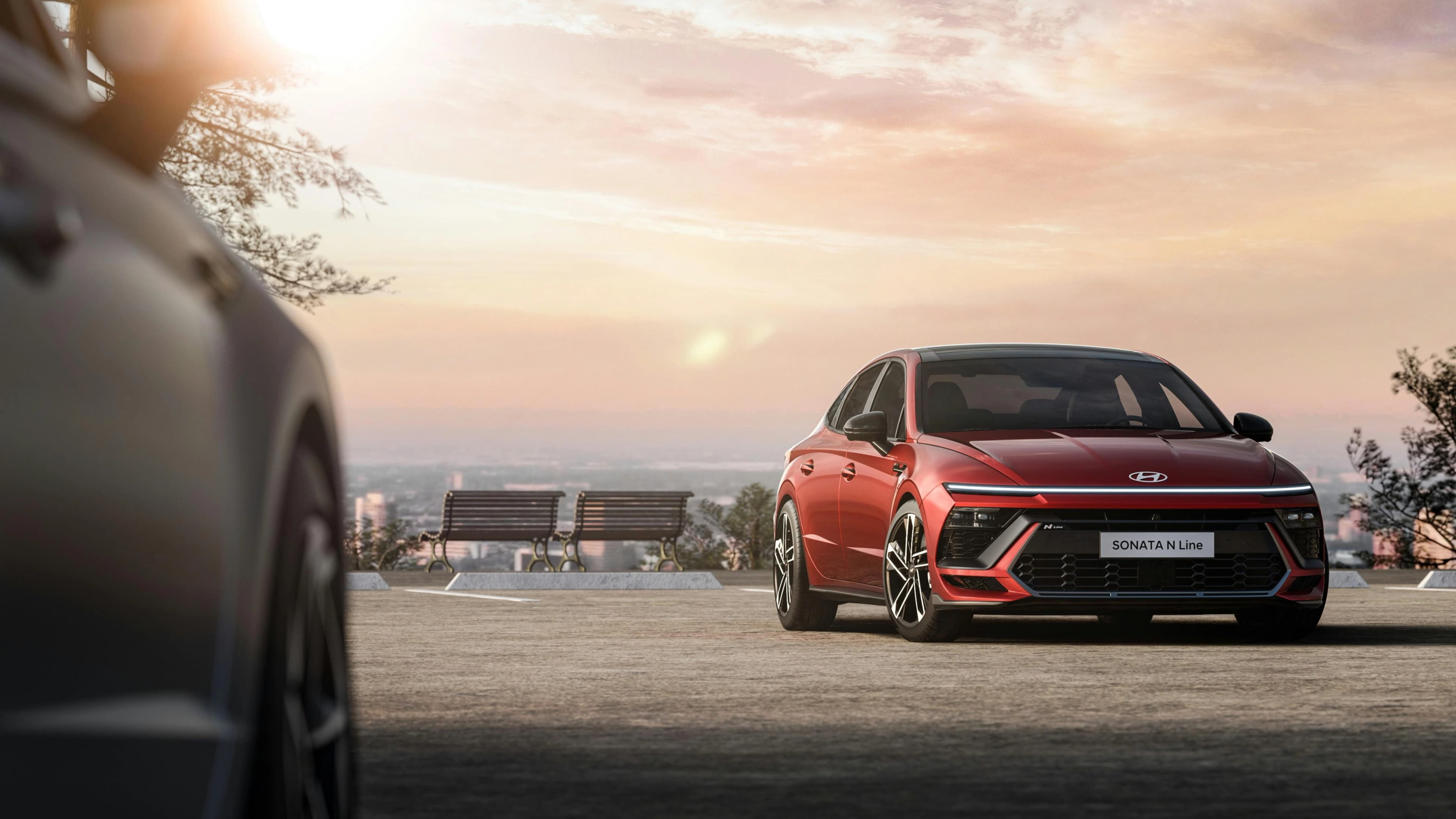
There are few things in modern life as soul-crushing as a parking garage in a congested city. The spirals that incite nausea, the spots marked "Compact" that wouldn't fit a bicycle, the looming concrete pillars that seem to jump out at your fenders. It is a high-stress, low-reward environment. Today, Hyundai debuted a production-ready system they call ‘Smart Valet,’ and if it works as advertised, it might just be the greatest contribution to mental health the auto industry has ever made.
This isn’t "Smart Summon," the party trick Tesla introduced years ago that allows your car to crawl toward you in an empty lot like a terrified toddler. Hyundai’s system is Level 4 autonomy applied specifically to the parking structure. The premise is the dream: You pull up to the drop-off zone at the entrance of the garage, you get out, you tap a button on your smartphone, and you walk away.
Your car then enters the garage, communicates with the building's infrastructure (V2X tech), locates an open spot, navigates the tight ramps, avoids the pedestrians who are inevitably walking in the middle of the lane, and backs itself perfectly into a space. When you return, you summon it, and it meets you at the pickup zone, cooled down (or heated up) and ready to go.
Why is this a big deal? Because it solves the "last mile" problem of driving. We enjoy driving (mostly). We hate parking. By automating the worst part of the trip, Hyundai is adding value that is instantly tangible. It also allows for tighter parking garages in the future—if no one needs to open the doors to get out, cars can be packed inches apart, saving massive amounts of expensive urban space.
Hyundai has a secret weapon here: Boston Dynamics. You know, the company that makes those terrifyingly agile robot dogs? Hyundai owns them. The sensor fusion, the spatial awareness, the ability to navigate complex, dynamic environments—that robotics DNA is clearly filtering down into their automotive division. Navigating a garage is actually harder than highway driving in some ways; it’s a chaotic environment with bad lighting, no lane markings, and unpredictable obstacles. If Hyundai is saying "we are ready to ship this," it means their confidence in their sensor stack is sky-high.
Of course, the lawyer in me has questions. Who is liable if your autonomous Tucson scrapes a Bentley while you’re eating sushi upstairs? Is it you? The garage? Hyundai? And what happens when the garage Wi-Fi goes down? Does your car just go dormant, blocking the ramp like a stubborn mule? These are the real-world hurdles that usually kill cool tech.
But let’s set the cynicism aside for a moment. This is a glimpse of autonomy that feels helpful rather than scary. We aren't being asked to trust a computer with our lives at 80 mph; we are asking it to handle a chore we despise at 5 mph. It’s a low-stakes introduction to a high-tech future. If ‘Smart Valet’ becomes a standard feature, it won't just change how we park; it will change how we view our cars. They stop being just machines we operate and start being assistants we command. And frankly, after spending 20 minutes circling the third floor of the mall garage last Christmas, I am ready to hand over the keys.