GM Is Rushing a Fix for the Chevy Traverse Because Dealers Actually Spoke Up
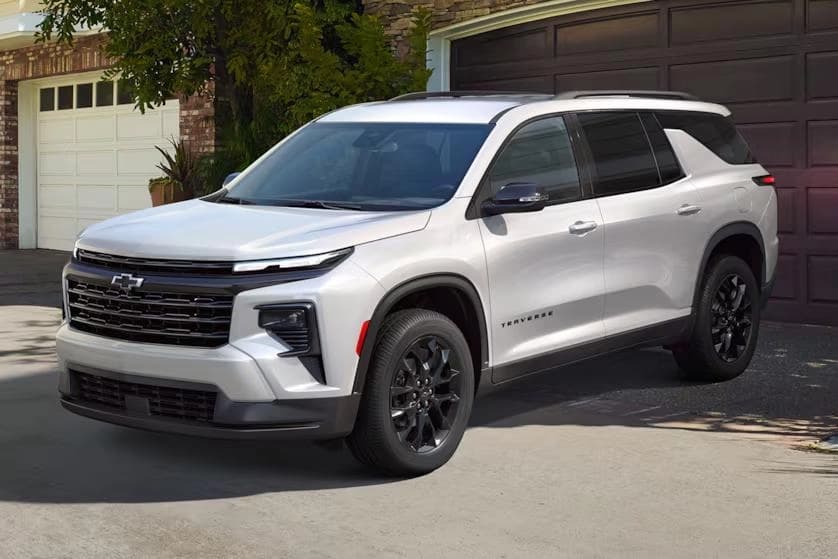
Image courtesy of Chevrolet
There is an old, well-earned stereotype about General Motors: It turns like an ocean liner. Decisions made today usually take three years to filter through the bureaucracy and reach the showroom floor. But every now and then, the General dances like a lightweight boxer, and it seems we are witnessing one of those rare moments with the Chevrolet Traverse.
GM has reportedly told its dealer network that it is accelerating a mid-cycle refresh for the Traverse, targeting a launch in mid-2026. To put this in perspective, this is highly unusual. The current generation Traverse is barely out of the wrapper, having just launched for the 2024-2025 cycle. In the traditional automotive timeline, a car sits unchanged for at least three or four years before the automaker bothers to swap the bumpers, change the headlight signature, and add a USB-C port.
So, why the rush? Apparently, the dealers got loud. And when the people who actually have to sell the cars get loud, sometimes Detroit listens.
Feedback from the showroom floor has been reportedly brutal regarding the interior material quality and the pricing ladder compared to fierce competitors like the Hyundai Palisade, Kia Telluride, and the new Honda Pilot. While the Traverse looks handsome on the outside—finally shedding its "minivan-in-denial" aesthetic for a proper, squared-off, truck-like jawline—the inside felt a bit... rental grade. Shoppers noticed. When you ask a customer to shell out $50,000+ for a High Country trim, the dashboard shouldn't sound like a Tupperware party when you tap on it. The "hard plastic everywhere" approach doesn't fly when Kia is offering quilted Nappa leather and open-pore wood for the same money.
Leaked details from recent dealer meetings suggest this "emergency" refresh will focus heavily on cabin tech and touchpoints. We’re hearing about upgraded soft-touch materials on the dash and doors (areas that customers actually touch), a revised center console with better storage, and a pricing structure that actually makes sense for human beings with budgets. There is also talk of simplifying the trim levels to avoid the confusion of features that seemed arbitrarily gatekept behind expensive packages.
This is significant for two reasons. One, it’s obviously good news for families who want a Traverse—it’s spacious, drives well, and has great engines—but couldn't stomach the feeling that they were overpaying for a budget interior. Two, and perhaps more importantly, it shows a shift in GM’s manufacturing philosophy. Modern digital design tools and more flexible assembly lines are allowing legacy automakers to react to market criticism much faster than before.
In the old days, if a car launched with a cheap interior, GM executives would just shrug and say, "Well, we'll fix it in the next generation in 2030." Now, they are realizing that in a market this competitive, with Korean and Japanese rivals constantly iterating, you can't afford to have a mediocrity sitting on the lot for five years. Brand loyalty is dead; product is king. If you’re shopping for a three-row crossover right now, the current Traverse is fine—it does the job. But if you can wait until 2026, it sounds like the one you actually want—the one finished to the standard it should have been at launch—is on the way.