Ford's $30,000 Electric Pickup Might Actually Happen
Ford just announced what it's calling a Model T moment for electric vehicles, and for once, the hyperbole might actually be justified. The company is investing approximately five billion dollars to develop an entirely new EV platform that will launch with a midsize electric pickup truck starting around thirty grand. If they pull this off, it could genuinely reshape the EV market.
The new Universal EV Platform promises to cut parts by 20 percent, reduce fasteners by 25 percent, and slash assembly time by 15 percent compared to traditional vehicles. More importantly, it's designed from the ground up to be affordable, which is something most legacy automakers seem to have forgotten how to do with electric vehicles.
Ford's secret weapon here is lithium iron phosphate batteries, the same LFP chemistry that Chinese manufacturers have been using to undercut everyone on price. These batteries are cheaper and more durable than the nickel-based cells most American EVs rely on, though they sacrifice some energy density. Ford claims the truck will offer more interior space than a Toyota RAV4 and enough range to be practical for most buyers, targeting somewhere in the 250 to 300 mile range.
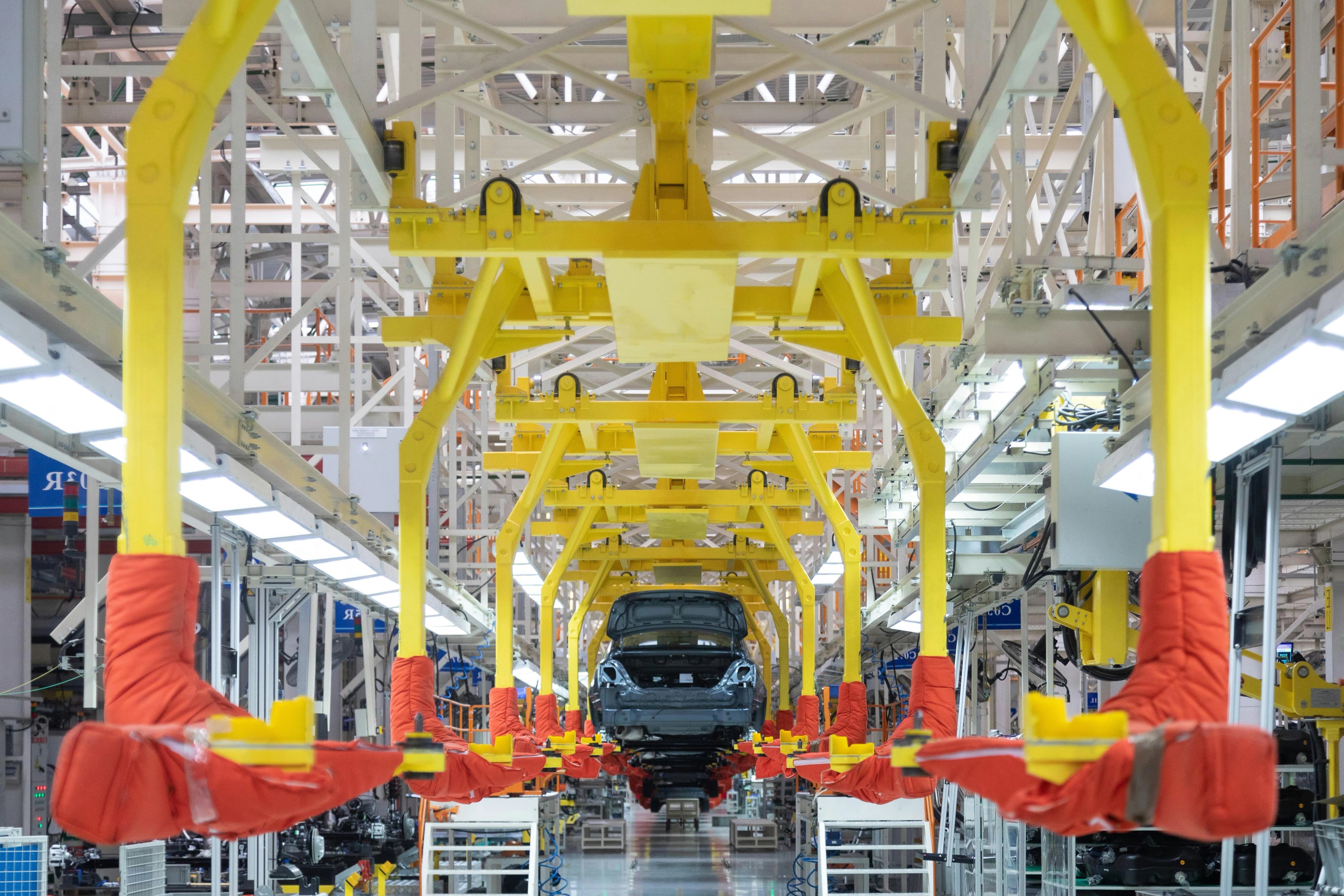
The manufacturing process is where things get interesting. Ford is ditching the traditional assembly line in favor of what they're calling an assembly tree system, where components are built in modular branches before converging on the main line. This approach, borrowed from more efficient global manufacturing practices, could cut production time by up to 40 percent. That's a staggering improvement if it actually works at scale.
Here's the context that matters: Ford CEO Jim Farley has been warning for months that Chinese EV makers pose an existential threat to Western automakers. He even imported a Xiaomi SU7 from Shanghai and drove it around Chicago for months, and by his own admission didn't want to give it up. The message is clear—Chinese manufacturers have figured out how to build genuinely good electric vehicles at prices American companies can't touch.
The new pickup is slated to launch in 2027, positioned somewhere between the Maverick and Ranger in terms of size. It's targeting a price point that undercuts gasoline-powered competitors like the Toyota Tacoma and Chevrolet Colorado, which currently start around thirty-three thousand dollars. Compared to the Tesla Cybertruck's seventy-nine thousand dollar starting price, Ford's aiming squarely at actual working-class buyers rather than tech executives.
Ford is throwing two billion dollars at its Louisville Assembly Plant in Kentucky to retool for this truck, plus another three billion at its BlueOval Battery Park in Michigan to manufacture the LFP cells domestically. The battery facility will start production next year, and the whole operation is expected to create or secure nearly four thousand jobs. That's real money and real employment, not vaporware promises.
The platform itself uses large aluminum castings to consolidate parts, and the battery pack doubles as the vehicle's structural floor, which lowers the center of gravity for better handling while maximizing interior space. Ford claims the truck will accelerate like an EcoBoost Mustang, hitting sixty miles per hour in around 4.5 seconds, which seems ambitious for a thirty-thousand-dollar work truck but we'll believe it when we see it.
The elephant in the room is execution. Ford has a spotty track record with EV launches. They recently paused production of the F-150 Lightning to address battery issues, and rumors suggest they're considering scrapping that truck altogether. The Mustang Mach-E has been decent but hardly revolutionary. Can Ford actually deliver on this ambitious promise of an affordable, competitive electric pickup by 2027?
There are legitimate concerns about LFP batteries in cold weather, where they charge slower and lose range faster than nickel-based alternatives. Expanding charging infrastructure remains a challenge, especially in rural areas where pickup buyers are concentrated. And Chinese manufacturers aren't sitting still—by 2027, they'll have their own improved offerings ready to compete.
But here's why this matters: if Ford actually pulls this off, it proves that American automakers can compete on price with Chinese manufacturers without sacrificing quality or capability. It demonstrates that affordable EVs for regular people are possible, not just luxury toys for wealthy coastal elites. And it might finally give buyers a compelling electric option that doesn't require taking out a second mortgage.
The Universal EV Platform is designed to underpin an entire family of future electric vehicles, not just this one truck. If successful, Ford could roll out additional affordable EVs across different segments, potentially reshaping their entire lineup. That's the kind of strategic thinking that could help legacy automakers survive the transition to electric powertrains.
So is this actually Ford's Model T moment? Maybe. Or maybe it's just another overpriced concept that gets watered down by the time production starts and ends up costing forty-five grand with all the mandatory option packages. We'll find out in 2027. Until then, consider this a glimmer of hope that someone in Detroit finally understands that not everyone can afford an eighty-thousand-dollar electric truck.