Carvana is Beating the Dealership Model by Just Buying Them
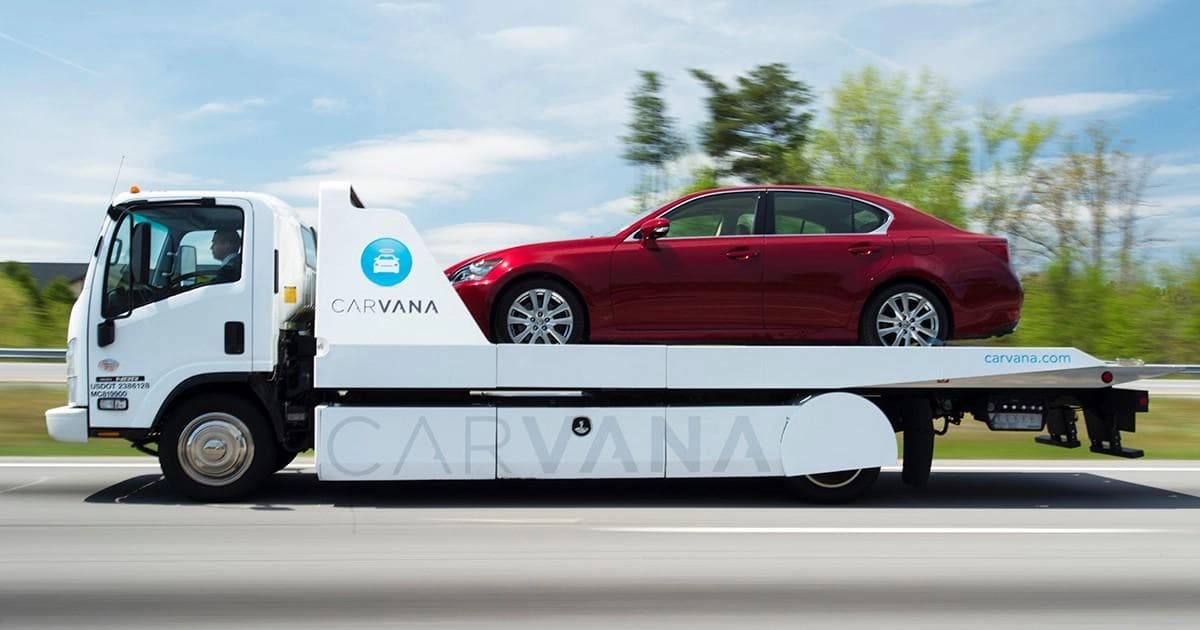
There was a time not so long ago when the automotive internet spent its days tracking the financial wobbles of Carvana. The used car giant with the massive glass vending machines seemed to be teetering on the edge of a deep financial chasm, causing many industry observers to wonder if the whole digital used car experiment was bound for the scrap heap. Fast forward to the present day, and the company has pulled off a spectacular corporate plot twist. Not only is it healthy, but it is valued higher than some of the legacy Detroit automakers. Now, it has officially crashed the traditional automotive party by quietly crossing over into the new car market.
According to recent industry updates and federal dealer filings, Carvana has quietly purchased seven brick-and-mortar franchised dealerships since last year. The acquisitions are focused heavily on Stellantis brands, meaning that the digital marketplace is now an authorized dealer for Chrysler, Dodge, Jeep, and Ram vehicles. The physical storefronts are spread across major metropolitan hubs, including locations in Sacramento, San Diego, Dallas, Atlanta, Boston, and a recent acquisition in the Cleveland area. But it is their very first purchase, a dealership tucked away in Casa Grande, Arizona, that has left the rest of the automotive retail world staring in absolute disbelief.
Before Carvana took over the keys to that Arizona location, the storefront was moving a thoroughly average thirty to fifty vehicles per month. Under the new digital-first management, that single store recently moved more than seven hundred brand-new vehicles in a single month. That staggering number catapulted the Casa Grande location to the absolute top of the national sales charts, making it the highest-volume Stellantis store in the entire United States. By marrying their massive online audience and sophisticated digital checkout process with a physical franchise point, they managed to squeeze decades worth of traditional growth into a single year.
To understand why this is such a massive disruption, one has to look at how car sales have operated in America for a century. For generations, traditional dealerships have been fiercely protected by state franchise laws. These strict regulations prevent automotive manufacturers from selling directly to consumers, which is the exact regulatory wall that Tesla has spent more than a decade fighting to dismantle in various state legislatures. Carvana looked at this entrenched, highly political battlefield and decided on a completely different strategy. Instead of spending millions of dollars trying to break the franchise system from the outside, they simply used their immense market capitalization to buy their way into the club.
This calculated move does a lot more than just give them a fresh stream of revenue from selling shiny new Ram trucks or Jeep Wranglers. Owning a franchised dealership unlocks the ultimate golden ticket in the automotive ecosystem: exclusive access to private, closed-door manufacturer auctions. These factory auctions are strictly off-limits to independent used car lots, and they represent the absolute best source for clean, low-mileage inventory. Furthermore, whenever a consumer decides to buy a new vehicle through their platform, Carvana is perfectly positioned to capture the trade-in. This creates a highly profitable, self-sustaining loop of used inventory that bypasses the expensive open market entirely.
There are still plenty of challenges ahead for this hybrid experiment. Traditional dealerships rest on a three-legged stool consisting of new car sales, finance and insurance, and parts and service. Carvana has already mastered the financing side, but parts and service is a completely different animal. Their iconic glass vending machines do not come equipped with hydraulic lifts or certified mechanics, and servicing vehicles is historically where traditional dealers make their most reliable profit margins. Ultimately, whether Carvana can successfully scale the physical maintenance side of their new empire remains to be seen, but they have already proven that the old way of selling cars is facing its biggest shakeup in a century.