Bugatti Says Goodbye to the Greatest Engine Ever Made
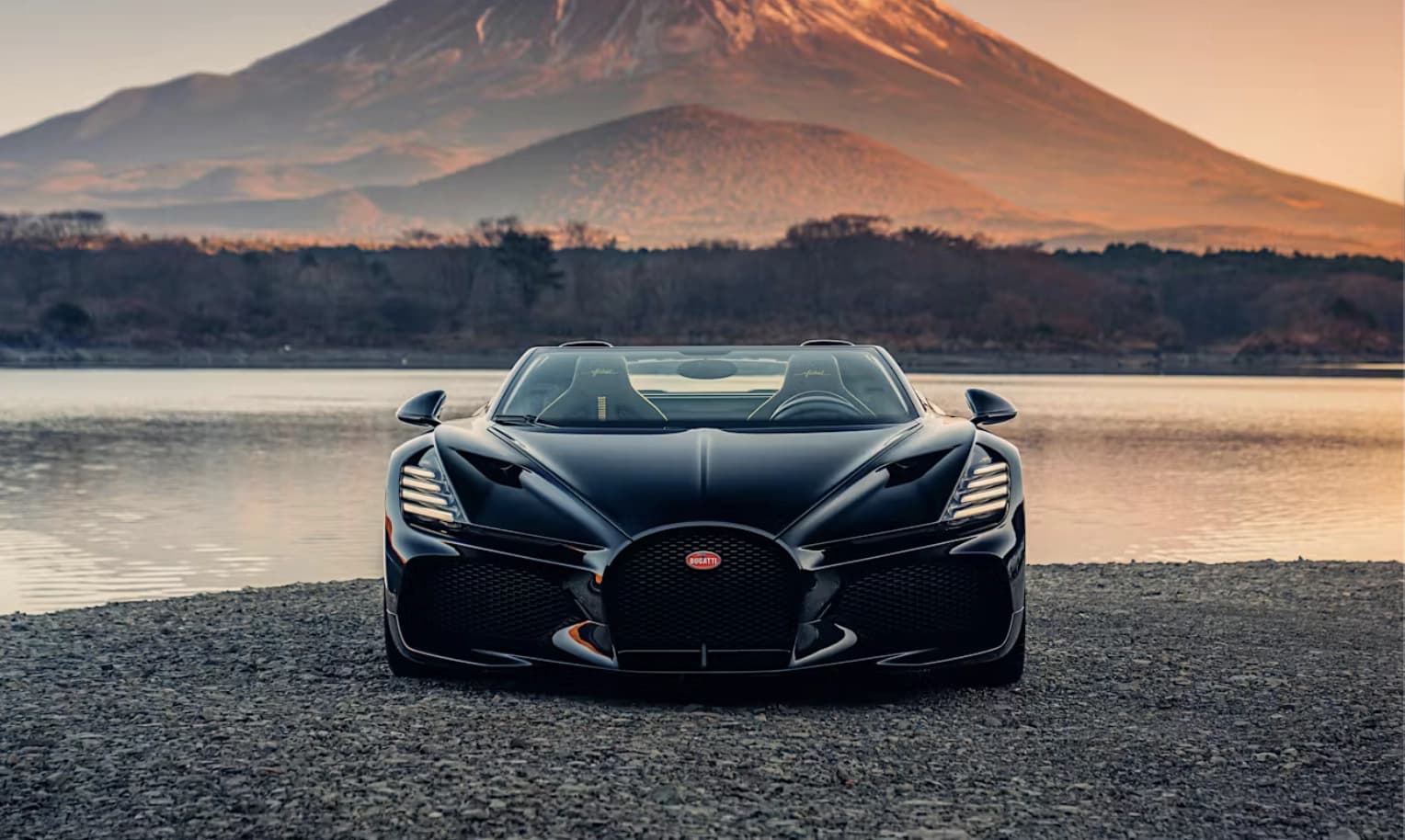
Image courtesy of Bugatti
In an era where everything is getting smaller, quieter, and more sensible, Bugatti has decided to go in the exact opposite direction. The legendary W16 engine is finally reaching the end of its production run, and it is doing so with the kind of theatrical flair that would make a Victorian opera singer jealous. The final Mistral roadster has been revealed with a pearlescent finish that looks like it was harvested from the inside of a giant space shell, serving as a four turbo goodbye to the most ridiculous internal combustion engine ever fitted to a production car.
The W16 was always a bit of a mad scientist project. When it first appeared in the Veyron, it was a statement of absolute dominance. It was eight liters of displacement arranged in a W configuration that effectively signaled the end of the horsepower wars because Bugatti had already won. Now, twenty years later, the automotive landscape is shifting toward electrification and hybridization. Even Bugatti is moving on to a V16 hybrid future with the Tourbillon, but the pure W16 remains the high water mark for mechanical complexity and sheer, unadulterated power.
Driving or even just witnessing a W16 in action is a reminder of what humans can do when they stop worrying about things like efficiency or practicality. It is a monument to the idea that more is always better. More cylinders, more turbos, more radiators, and more speed. The Mistral is the perfect vessel for this final act. Being an open top car, it allows the lucky owner to hear the four turbos inhaling the atmosphere with the intensity of a jet engine right behind their ears. It is a visceral, noisy, and beautiful experience that we will likely never see again in our lifetimes.
The pearlescent finish on this final unit is not just a paint job. It is a symbolic choice. It reflects the light in a way that suggests the car is already becoming a ghost, a legend of a bygone era. We are entering a time when cars will be judged by their software and their charging curves, but the W16 will always be judged by its soul. It is a piece of jewelry that happens to be capable of propelling two tons of carbon fiber and leather to speeds that would make a small plane nervous. It is the ultimate expression of the internal combustion era, and its departure leaves a sixteen cylinder hole in the heart of the enthusiast world.
Critics might argue that such a vehicle is an unnecessary excess in a world facing environmental challenges. But to see it that way is to miss the point entirely. The Bugatti W16 is art. You do not ask why a painting is so big or why a symphony has so many instruments. You simply appreciate the fact that someone had the audacity to make it. The W16 was never meant to be a sensible transportation solution. It was meant to be the best thing in the world, and for a very long time, it was.
As we look toward the future, we should be thankful that Bugatti pushed the envelope as far as they did. They proved that internal combustion could be refined to a level of performance that seemed impossible. While the next generation of hypercars will undoubtedly be faster and more efficient, they will struggle to capture the same sense of mechanical wonder. The W16 is a ghost now, but it is a ghost that will haunt the dreams of car enthusiasts for generations to come. It is the end of an era, and it smells like high octane fuel and success.