Audi Showed Us Its F1 Car and It Looks Surprisingly... Audi
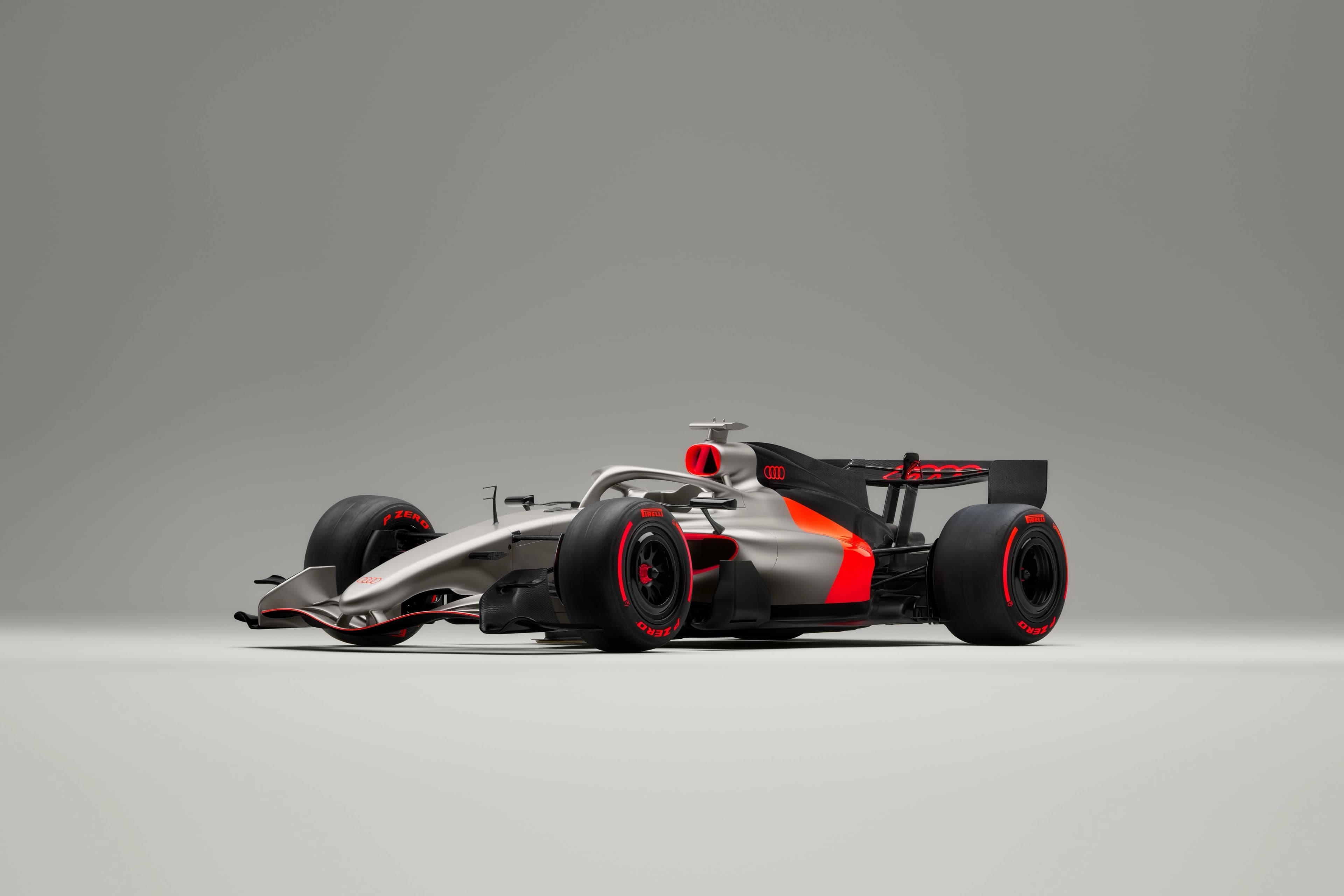
Audi threw a party in Munich this week to show off what they're calling the R26 Concept, which is basically a preview of their 2026 Formula 1 car. The livery features titanium silver up front, Audi Lava Red out back, and gloss black carbon fiber throughout. It's understated, it's classy, and it's very, very Audi. Some people might call it boring. Those people would have a point, but they'd also be missing the bigger picture.
This is Audi's first crack at F1 since the Auto Union days in the 1930s, which is a hell of a gap. They're not just dipping their toe in the water, either. Audi bought Sauber outright, set up a power unit facility in Neuburg, Germany, hired Mattia Binotto away from Ferrari to run the whole show, and convinced Jonathan Wheatley to be team principal. They've got Nico Hülkenberg and Gabriel Bortoleto as drivers, with sponsorships from BP, Adidas, and Revolut already locked in.
At the 'Audi One' event, CEO Gernot Döllner made it clear they're not here to make up the numbers. 'We want to win,' he said, which is what every team boss says when they enter F1. The difference is that Audi has the resources to back it up. They're also realistic about the timeline. Döllner laid out a plan: be challengers in 2026 and 2027, become real competitors from 2028 onward, and fight for championships by 2030.
That's actually a smart approach. F1 is unforgiving to newcomers. The established teams have decades of data, optimized workflows, and institutional knowledge that you can't just buy or hire your way into overnight. Audi's acknowledging that reality instead of promising they'll win races in year one, which shows a maturity you don't always see in these manufacturer entries.
The timing of their entry is deliberate. The 2026 regulations represent the biggest shakeup F1 has seen in years. Cars are getting smaller, lighter, and more aerodynamically complex. Active aero elements will let drivers adjust their wings mid-straight to manage energy recovery. The hybrid powertrains are moving to a nearly 50/50 split between electric and combustion output. It's a clean slate, and Audi's betting they can get up to speed faster in a reset year than they could joining mid-regulation cycle.
Binotto's involvement is particularly interesting. He spent nearly three decades at Ferrari, rising through the ranks from engine engineer to team principal. He knows what it takes to win, and he also knows what it takes to spectacularly fail under pressure. Ferrari's messy politics and strategic blunders during his tenure as team principal are well documented. Now he's at Audi, where he has control over both chassis and power unit development, which is exactly what he always wanted at Ferrari but never quite got.
The driver lineup is a nice mix of experience and potential. Hülkenberg's been around forever, knows how to develop a car, and won't make rookie mistakes. He's also proven this year at Haas that he can still drive the wheels off a car when given decent machinery. Bortoleto is the upside play, a kid who won back-to-back championships in Formula 3 and Formula 2. He's not expected to peak in year one. He's there to grow with the team.
Audi's also playing the long game with their branding strategy. The R26 Concept takes design cues from the recently revealed Audi Concept C, which is their new design language for future road cars. They're using F1 as a laboratory and a showcase for the brand transformation they're trying to pull off in the broader automotive world. Formula 1 gives them global exposure, access to younger demographics, and a platform to prove their electrified performance credentials.
The Neuburg facility where they're building the power unit is significant. It's the first time in over a decade that a Formula 1 engine is being developed and built in Germany. That's a point of pride for Audi and for Germany in general, even if it's mostly symbolic. What matters more is that Audi controls both the chassis and the power unit, giving them the integration advantages that customer teams simply can't match.
Winter testing starts in Q1 2026, with Audi running mules of the R26 on Audi, VW, and Scout branded vehicles to test everything in cold conditions. The actual car reveal happens in January 2026, followed by public testing in Barcelona in February. That's when we'll see if all this infrastructure and investment translates to actual speed.
Make no mistake, this is a massive gamble for Audi. F1 is expensive, unforgiving, and full of teams that have been doing this for decades. But it's also the perfect platform for a manufacturer trying to reposition itself as a technology leader in an era of electrification. If they can be competitive by 2030, it'll validate their entire strategy. If they can't? Well, they'll have spent billions of dollars proving that F1 is really, really hard. We'll find out which one it is soon enough.